📋 Table of Contents
Finding a reliable commercial muffin tray bulk supplier Kenya distributor can trust means balancing three constraints: minimum order quantities that do not tie up working capital, food-grade certification that satisfies Kenya Bureau of Standards inspections, and lead times that keep bakery-supply shelves stocked. Many Nairobi and Mombasa importers report difficulty sourcing muffin trays in mixed-material orders below container-load thresholds, forcing them to commit to single-SKU volumes that exceed local demand testing capacity.
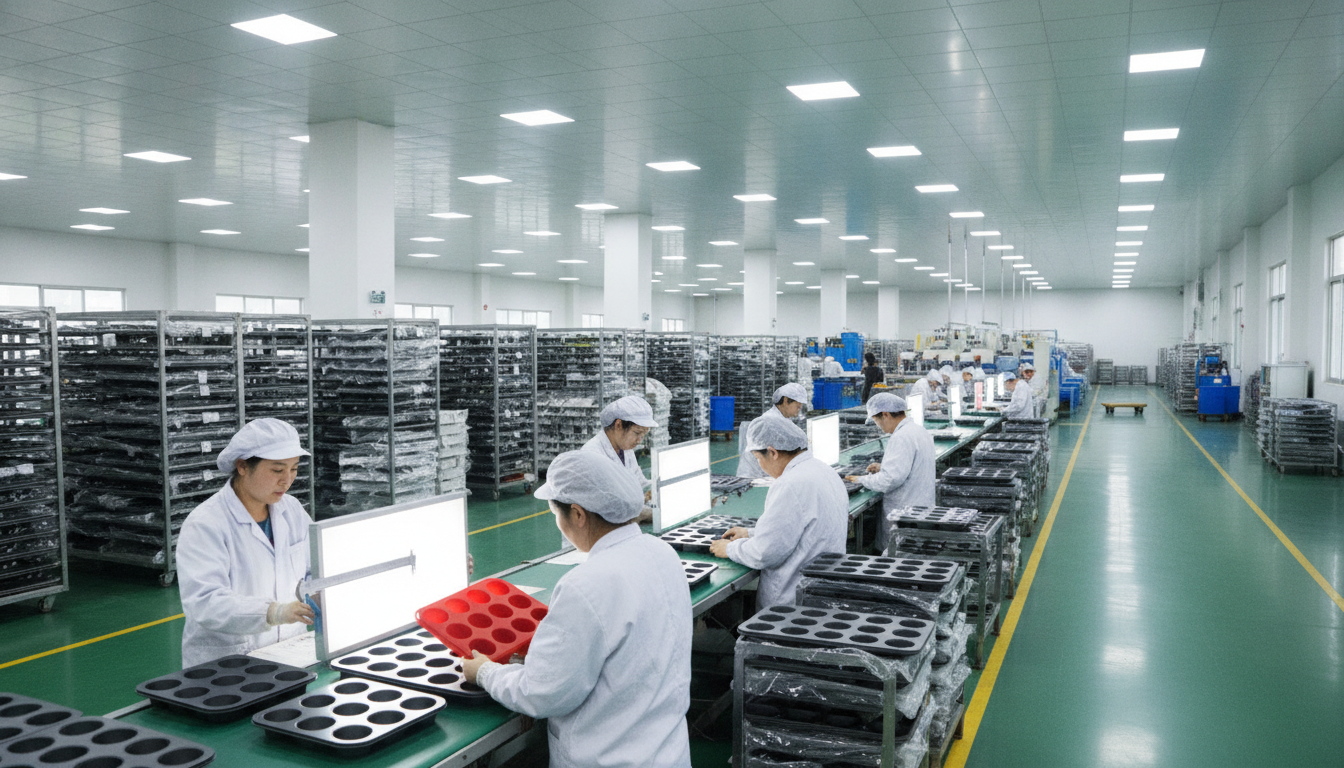
Bakery-supply chains in Nairobi, Mombasa, and Kisumu face consistent demand for 6-cup, 12-cup, and 24-cup muffin trays across hotel catering, school feeding programs, and retail bakeries. A common complaint buyers raise is that carbon steel pans warp under high-heat commercial ovens, especially when heating cycles exceed manufacturer specifications. Distributors who stock only one material type lose sales to competitors offering silicone alternatives for delicate batters or stainless steel for institutional durability.
Hotel chains and corporate catering kitchens in Nairobi require 12-cup and 24-cup trays that withstand daily high-volume baking cycles. Carbon steel trays with reinforced rims resist warping at temperatures up to 230°C, a threshold that standard gauge pans often fail to meet. Buyers prioritize suppliers who can ship mixed SKUs in a single container to serve both cupcake and muffin production lines without splitting orders.
Independent bakeries and home-based baking businesses favor 6-cup silicone trays for easy release and minimal greasing. Non-stick longevity is routinely over-claimed by suppliers, with coatings degrading sooner than advertised. Silicone trays eliminate coating failure risk entirely, a selling point Kenya distributors use to differentiate their inventory from carbon-steel-only competitors.
Government and NGO feeding programs require food-grade certified trays at budget-friendly price points. Aluminum trays offer even heat distribution and lighter weight for transport, but buyers must verify SGS or equivalent testing to satisfy Kenya Bureau of Standards import inspections. Suppliers who bundle certification documentation with shipments reduce clearance delays at Mombasa port.
Kenya importers source muffin trays through seven primary channels, each with distinct MOQ, lead-time, and certification trade-offs. The choice depends on whether the buyer prioritizes speed, cost, or material variety.
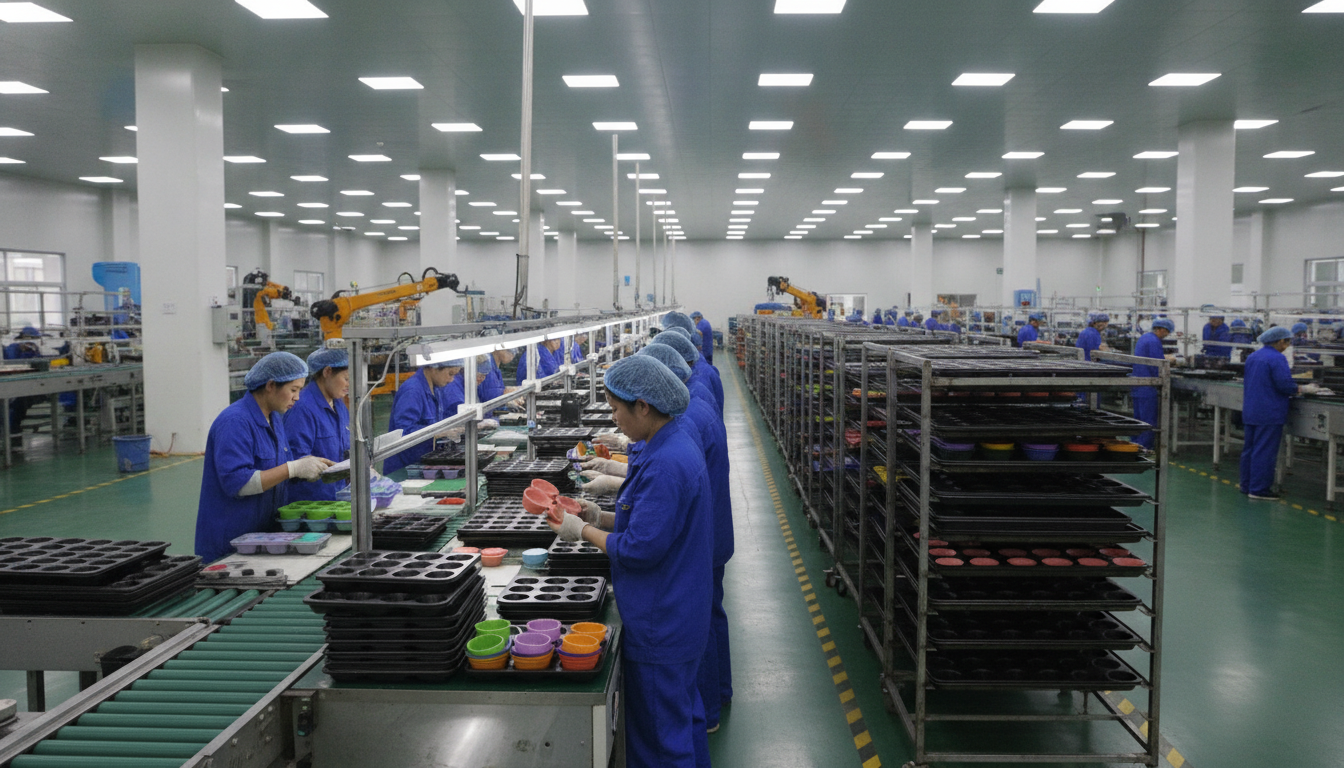
Sourcing directly from a commercial muffin tray bulk supplier Kenya importers can verify through factory audits eliminates middleman markups and allows mixed-material container loading. Shansen Bakeware ships carbon steel, silicone, stainless steel, and aluminum trays from a single Yongkang facility, with MOQ starting at 1 piece per SKU for sampling and 30 pieces per SKU for production runs. This structure lets Nairobi distributors test 6-cup silicone, 12-cup carbon steel, and 24-cup aluminum trays in one shipment without committing to single-material volume thresholds.
In practice: A Mombasa bakery-supply importer validated 4 muffin tray SKUs with 1-piece samples, then placed a 40-unit-per-SKU first order across carbon steel and silicone materials, fitting the entire shipment in a single 20-foot container to Mombasa port
Local wholesalers stock 10-50 pieces of common carbon steel SKUs for immediate pickup. This channel suits buyers who need emergency inventory replenishment but cannot wait for container shipments. The trade-off is limited SKU variety and per-unit pricing 20-30% above factory-direct rates.
Agents consolidate orders from multiple Kenya buyers to meet factory MOQs of 500-1,000 pieces. Lead times stretch to 45-60 days due to order aggregation cycles. Buyers lose control over shipment timing and material specifications, a risk when seasonal demand spikes require rapid restocking.
Dubai traders stock pre-imported inventory from China and India, offering 20-30 day delivery to Mombasa. The convenience premium adds 15-25% to landed cost. Certification documentation quality varies, with some shipments lacking SGS or FDA alignment required for Kenya Bureau of Standards clearance.
Platforms connect Kenya buyers with multiple suppliers but rarely verify factory production capacity or certification authenticity. A carbon steel pan rusted within the 45-day return window even after prep, a scenario one Reddit user documented when sourcing through an unvetted platform seller. Buyers must independently audit supplier claims before committing to bulk orders.
Johannesburg-based distributors serve East African markets with 15-25 day lead times. Freight from South Africa to Mombasa adds 8-12% to landed cost compared to direct China shipments. This channel works for buyers prioritizing speed over price optimization.
Kenya-based metal fabricators produce basic aluminum and carbon steel trays with 5-10 day lead times. Material variety is limited, and food-grade certification documentation may not meet export-standard rigor. Buyers use local manufacturers for low-volume custom sizes unavailable from import channels.
Material selection determines durability, release performance, and price point. Kenya distributors who stock all three materials capture broader market segments than single-material competitors.
Carbon steel trays with 0.6mm to 0.8mm gauge thickness resist warping in convection ovens running continuous 8-hour baking cycles. Reinforced rolled rims distribute heat stress evenly, preventing the edge-buckling common in thinner gauge pans. Hotel catering kitchens in Nairobi prefer 24-cup carbon steel trays for batch production efficiency. The material requires seasoning or parchment liners to prevent sticking, a step that adds labor cost but delivers superior structural durability over 500+ baking cycles.
Food-grade silicone trays rated to 230°C eliminate the need for greasing, reducing prep time and ingredient cost. Retail bakeries serving walk-in customers favor 6-cup and 12-cup silicone trays for cupcakes and muffins with delicate batters that tear easily during release. The material’s flexibility allows buyers to pop out individual muffins without metal tools that scratch non-stick surfaces. Buyers must verify SGS testing to confirm the silicone is free from fillers that off-gas at high temperatures.
Anodized aluminum trays distribute heat uniformly, preventing hot spots that cause uneven browning. School feeding programs prioritize aluminum for its lightweight transport advantage and lower per-unit cost compared to carbon steel. The material dents under rough handling, a consideration for institutional kitchens with high staff turnover and minimal equipment training. Buyers should confirm anodized or food-safe coating to prevent aluminum leaching into acidic batters.
Minimum order quantities determine whether a Kenya importer can validate market demand before committing working capital. Container loading optimization affects freight cost per unit and port dwell time at Mombasa.
Sample MOQ: 1 piece per SKU. Bulk MOQ: 30 pieces per SKU. Container capacity: 8,000 to 12,000 muffin trays per 20-foot container, depending on size mix.
Distributors testing new SKUs face a choice: commit to 500-piece MOQs before market validation, or source samples at prohibitive per-unit cost. Shansen Bakeware’s 1-piece sampling MOQ lets Kenya buyers order one unit of each candidate SKU, validate release performance and durability with local bakery clients, then scale to 30-piece production runs only for proven sellers. This structure eliminates the capital risk of stocking unvalidated inventory.
A 20-foot container holds approximately 8,000 to 12,000 muffin trays when loading a mix of 6-cup, 12-cup, and 24-cup sizes across carbon steel, silicone, and aluminum materials. Pre-configured container loading for wholesale bakeware sets reduces Mombasa port dwell time by ensuring carton dimensions and weight distribution meet Kenya Ports Authority handling specifications. Buyers who mix materials in one shipment avoid the freight inefficiency of partial-container loads.
Containers ship from Ningbo port with 25-35 day transit to Mombasa, depending on vessel schedule and transshipment points. Direct sailings reduce lead time by 5-7 days compared to routes with Singapore or Dubai stops. Buyers should coordinate with freight forwarders to book space during peak season (October to December) when container availability tightens.
Kenya Bureau of Standards requires food-contact bakeware to meet safety thresholds for heavy metals, PFAS, and material composition. Importers who lack proper certification documentation face clearance delays and potential shipment rejection at Mombasa port.
SGS testing verifies that muffin trays contain no detectable lead, cadmium, or per- and polyfluoroalkyl substances (PFAS) above regulatory limits. Carbon steel trays must pass leach testing to confirm coatings do not release heavy metals when exposed to acidic batters. Silicone trays require filler analysis to detect calcium carbonate or talc additives that compromise food safety. Buyers should request SGS test reports dated within the past 12 months, as formulation changes can occur between production batches.
FDA 21 CFR 177.2600 sets food-contact safety limits for silicone bakeware before it can be sold as food-grade. While Kenya does not mandate FDA certification, alignment with FDA standards signals that a supplier follows internationally recognized safety protocols. Distributors who stock food-grade SGS FDA certified bakeware differentiate their inventory from uncertified competitors, a selling point for hotel chains and institutional buyers conducting vendor audits.
Mombasa customs requires a commercial invoice, packing list, SGS test report, and certificate of origin for bakeware imports. Missing or incomplete documentation triggers physical inspection, adding 3-7 days to clearance time and incurring demurrage charges. Buyers should verify that the supplier provides a full documentation package before shipment departs Ningbo port.
Lead time from sample request to bulk delivery determines whether a Kenya distributor can restock inventory before seasonal demand peaks. Sampling speed affects time-to-market for new SKU introductions.
Factory-direct suppliers ship 1-piece samples within 7-10 days of order confirmation, using DHL or FedEx for air freight to Nairobi. Buyers receive samples, test release performance and gauge thickness, then approve or request modifications before bulk production begins. This cycle allows a distributor to validate 4-6 SKUs in a single month, compared to 45-60 day timelines when sourcing through import agents who aggregate orders.
Bulk orders of 30 pieces per SKU enter production within 3-5 days of sample approval. Manufacturing takes 10-15 days for carbon steel and aluminum trays, 12-18 days for silicone trays due to curing time. Ocean freight from Ningbo to Mombasa adds 25-35 days. Total lead time from bulk order placement to port arrival is 38-53 days, a timeline Kenya buyers use to plan inventory replenishment around holiday and school-term demand spikes.
Buyers who visit the Yongkang factory or Yiwu sourcing showroom can inspect pre-production samples in person, verifying rim reinforcement, coating uniformity, and cavity depth before bulk manufacturing begins. This step catches specification mismatches that photos and video calls miss. Distributors who cannot travel to China should request detailed sample photos showing rim detail, cavity depth measurement, and coating close-up before approving production.
In practice: A Nairobi hotel-supply distributor requested 1-piece samples of 12-cup carbon steel and 6-cup silicone trays, tested them with three bakery clients over two weeks, then placed a 50-unit-per-SKU order that arrived at Mombasa port 42 days later, in time for the December holiday baking season
Minimum order quantity starts at 1 piece per SKU for sampling and 30 pieces per SKU for bulk production. This structure allows Kenya distributors to validate market demand with small test orders before committing to container-load volumes. Mixed-material orders combining carbon steel, silicone, and aluminum trays can fit 8,000 to 12,000 units in a 20-foot container shipped from Ningbo to Mombasa port.
Factory-direct suppliers ship 1-piece samples within 7-10 days of order confirmation using DHL or FedEx air freight to Nairobi. Buyers can test release performance, gauge thickness, and coating quality, then approve or request modifications before bulk production begins. This timeline lets distributors validate 4-6 SKUs in a single month.
Kenya Bureau of Standards requires food-contact bakeware to meet safety thresholds for heavy metals and PFAS. SGS testing verifies that muffin trays contain no detectable lead, cadmium, or per- and polyfluoroalkyl substances above regulatory limits. FDA 21 CFR 177.2600 alignment signals that a supplier follows internationally recognized food-grade safety protocols. Buyers should request SGS test reports dated within the past 12 months and confirm the supplier provides a complete documentation package for Mombasa customs clearance.
Carbon steel trays with 0.6mm to 0.8mm gauge thickness and reinforced rolled rims resist warping in convection ovens running continuous 8-hour baking cycles. Hotel catering kitchens in Nairobi prefer 24-cup carbon steel trays for batch production efficiency. The material requires seasoning or parchment liners to prevent sticking but delivers superior structural durability over 500+ baking cycles compared to aluminum or silicone alternatives.
A 20-foot container holds approximately 8,000 to 12,000 muffin trays when loading a mix of 6-cup, 12-cup, and 24-cup sizes across carbon steel, silicone, and aluminum materials. Pre-configured container loading ensures carton dimensions and weight distribution meet Kenya Ports Authority handling specifications, reducing Mombasa port dwell time. Buyers who mix materials in one shipment avoid the freight inefficiency of partial-container loads.
Ready to source certified muffin trays with flexible MOQ for your Kenya distribution network?
Request 1-Piece Samples Now →
Written by the Shansen Bakeware Export Team.
MOQ 1 set on stock configurations. Tell us what you need and we reply on WhatsApp.
Click the button below to open WhatsApp. If you're not logged in to WhatsApp Web yet, scan the QR code first — then come back here and copy the message into the chat.