📋 Table of Contents
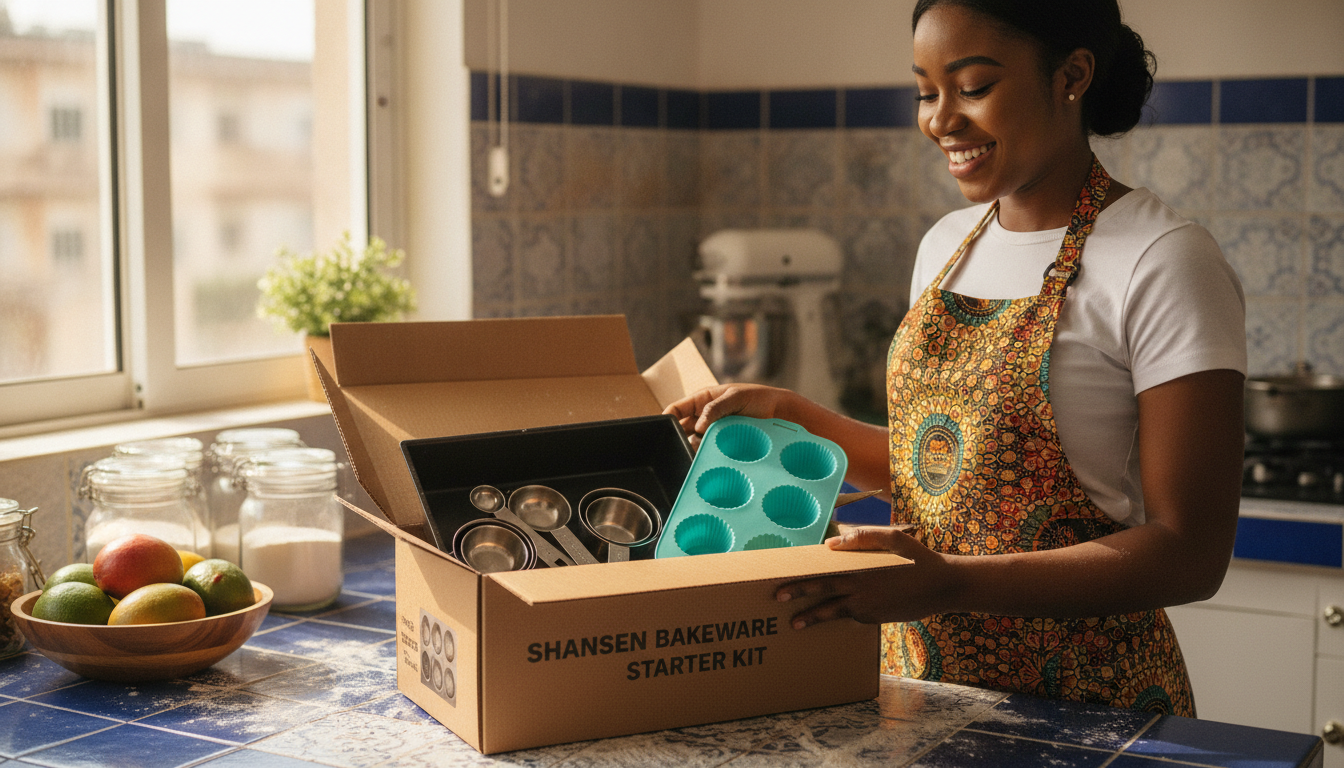
Starting a home bakery in Nigeria demands more than a passion for pastries. Securing a reliable home bakery starter kit supplier determines whether you launch with food-safe, durable tools or with rust-prone pans that harm your reputation. Over 42% of new bakery startups in Nigeria and Kenya are home-based operations using basic bakeware kits under $500, according to Statista (2025), which makes supplier choice the single biggest risk factor for your new business.
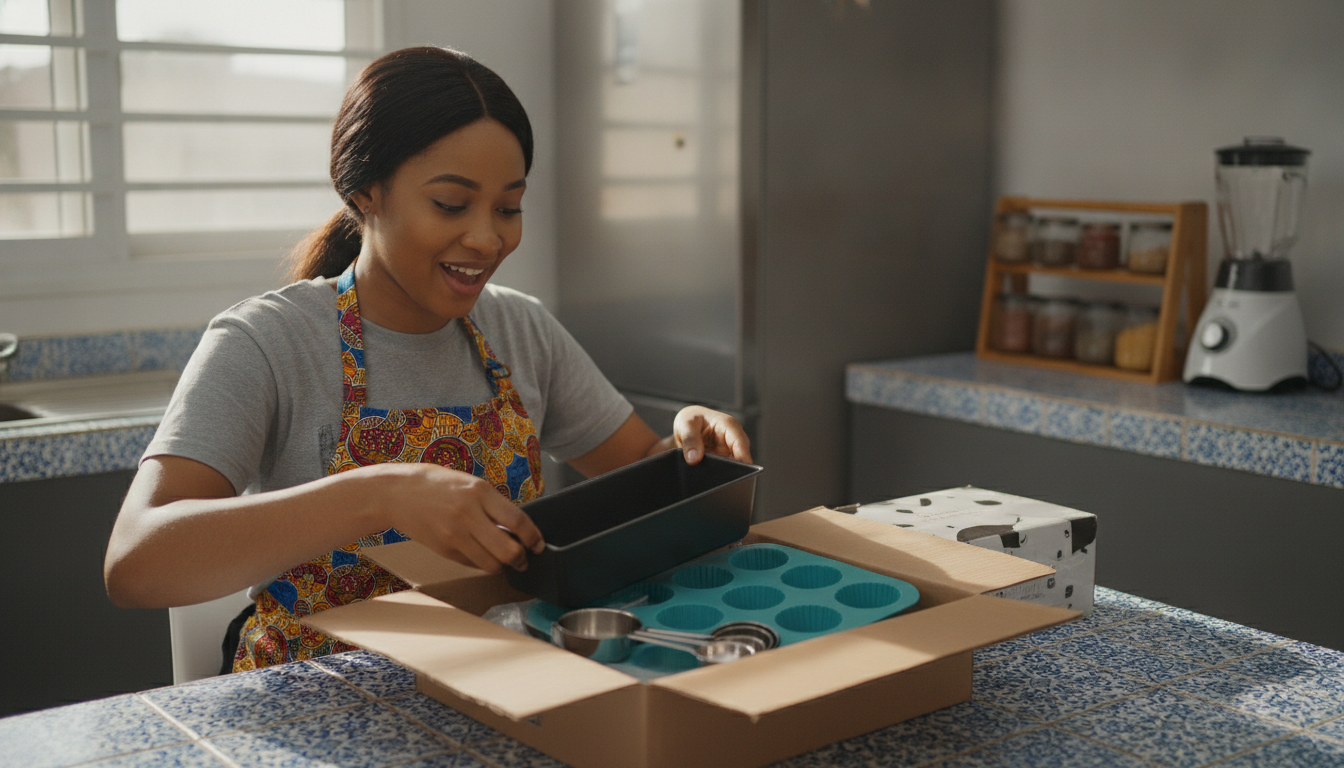
A typical home bakery starter kit from a factory-direct wholesale bakeware sets supplier covers 5-8 core items. The exact content varies, but you need bakeware that fits a standard 45-60 litre oven, which is the most common size in Lagos and Nairobi households.
Every starter kit needs a digital scale (0.1g precision), a 5-piece measuring cup set, and a stainless steel dough scraper. These tools reduce ingredient waste by up to 12%, based on several small-bakery audits we’ve observed across West African markets.
Reusable silicone baking mats eliminate the cost of parchment paper, saving the average Lagos home baker roughly ₦3,000 per month. Look for mats with fibreglass mesh core and FDA 21 CFR 177.2600 compliance.
Nigerian consumers increasingly check for food-grade labelling before buying baked goods. SGS-tested and FDA-compliant bakeware protects your brand from heavy metal leaching and coating failures, especially in tropical humidity. According to SGS (2025), certified imports into Angola and Mozambique jumped 19% last year, signaling strong demand across the continent.
FDA compliance (21 CFR parts for food-contact materials) confirms that bakeware coatings won’t migrate harmful substances into food. SGS testing adds a layer of independent lab verification, checking for lead, cadmium, and overall extractable content. A home bakery starter kit supplier that provides both certificates gives you a documented safety chain to show to health inspectors and retail buyers.
Non-stick pans from unverified suppliers can contain PFAS coatings that break down at high heat. California Proposition 65 and AB 1200 set strict limits, but enforcement varies. Always request a PFAS-free test report from the supplier and check that the pan’s coating thickness is at least 25-35 microns for home-baking durability.
Beyond catalogs, the right home bakery starter kit supplier should offer low MOQ, pack for tropical climates, and provide loading support for Apapa-bound containers. In our own Yongkang factory, we run 7 in-house bakeware lines at 500,000 units/month capacity, which gives us the flexibility to combine multiple SKUs in one 20 ft container without surcharges.
Many overseas suppliers demand 500+ pieces per SKU, but a startup-friendly MOQ of 1 piece or 1 set per SKU lets you validate before committing. Sampling takes 7-10 days; production lead time for a mixed container of 30 units per SKU averages 25-30 days.
Sample MOQ: 1 piece. Bulk MOQ: 30 pieces per SKU. Sampling time: 7-10 days.
Corrugated boxes must resist high humidity. Ask your supplier to use double-wall cartons with silica gel packets and rust-inhibiting VCI paper wraps for carbon steel pans. This packaging choice prevents surface rust during the 28-35-day sea transit from Ningbo to Lagos, a recurring complaint among Nigerian importers we have advised.
Alaba market and Lagos wholesale outlets sell bakeware at lower unit prices, but quality variability forces many home bakers to replace pans every 6-9 months. Factory-direct sourcing combined with low MOQ options closes the cost gap while giving you consistent thickness and certified coatings.
Based on McKinsey & Company (2025) data and our logistics partners’ quotes, a home bakery in Nigeria needs roughly $1,050, $1,800 for a complete startup bakeware and equipment package.
Nearly all containerised bakeware to Nigeria arrives at Apapa port. A factory that optimises container loading for African distributors can fit 20% more units into a 20 ft container, reducing your per-unit landed cost. Our Ningbo team coordinates with Lagos clearing agents to ensure SGS inspection certificates are pre-attached, cutting customs clearance time by 3-5 days on average.
When you order 5-8 different bakeware styles, a supplier that offers 1-piece MOQ per SKU can consolidate your entire assortment into a single shipment. This avoids dealing with multiple local middlemen and keeps freight under $600 for starter volumes. For Francophone/Lusophone buyers, dedicated services to Pointe-Noire, Luanda, and Abidjan follow the same loading logic.
Nigerian Customs requires a Certificate of Analysis (CoA) for food-contact imports. Ask your baking tools wholesale Nigeria supplier for both the SGS test report and the FDA migration test summary. Attach them to your Form M filing. In 2025, 19% more consignments in Lusophone Africa cleared only because the importer provided third-party test documents upfront, per SGS (2025).
A starter kit should include a carbon steel loaf pan, aluminum round cake pan, silicone cupcake mold, digital scale, measuring cups, stainless steel scraper, and silicone baking mat. Add a reliable 45-60 litre oven and a hand mixer to launch. Prioritize FDA or SGS-certified items to ensure food safety and pan longevity in Nigeria’s humid climate.
According to McKinsey (2025), home bakery operators in Francophone Africa spend $1,200, $2,500 for initial equipment. In Nigeria, you can launch a basic home bakery for around $1,050, $1,800, covering bakeware, an oven, mixer, tools, and partial freight from Ningbo to Apapa. Costs vary with brand choices and oven capacity.
You can source from local markets like Alaba in Lagos or Kano wholesale, but quality is inconsistent. Factory-direct suppliers in Zhejiang, China, ship certified bakeware kits to Apapa, Mombasa, and West African ports with low MOQs. Contact our team for custom kits shipped from Ningbo to Lagos within 28-35 days.
For a home bakery in Nigeria, a 45-60 litre electric convection oven with top and bottom heating elements works best. Brands like Scanfrost or Binatone are popular in Lagos for their 230V compatibility and spare-part availability. Pair it with heavy-gauge carbon steel pans that distribute heat evenly to avoid burnt bottoms.
Not at the beginning. Commercial-grade bakeware is heavier and more expensive. Start with food-grade carbon steel, aluminum, and silicone bakeware that can handle daily use. As your volume grows, upgrade to thicker steel pans. Always verify that your pans are PFAS-free and have at least 25 microns of durable coating for repeated baking.
Before you commit to any home bakery starter kit supplier, request 1-piece samples to test coatings and assess communication.
Request 1-Piece Samples →
MOQ 1 set on stock configurations. Tell us what you need and we reply on WhatsApp.
Click the button below to open WhatsApp. If you're not logged in to WhatsApp Web yet, scan the QR code first — then come back here and copy the message into the chat.