📋 Table of Contents
African bakery-supply buyers face a common dilemma when sourcing aluminized steel vs carbon steel cake pan Africa inventory: which material withstands humid coastal climates in Lagos, Mombasa, and Durban without rusting, yet delivers even baking and fits a tight MOQ budget? Distributors report rust claims within 45 days when carbon steel pans arrive uncoated or improperly seasoned, while aluminized steel’s reflective coating promises corrosion resistance but raises questions about heat performance and food-grade compliance.
Aluminized steel is carbon steel coated with an aluminum-silicon alloy through a hot-dip process. The coating typically comprises 90 percent aluminum and 10 percent silicon, applied at thicknesses between 20 and 40 microns. This layer reflects heat and forms a barrier against moisture and oxygen, the two elements that trigger rust in bare carbon steel.
The hot-dip process bonds the aluminum-silicon alloy to the steel substrate at temperatures exceeding 650 degrees Celsius. The silicon component improves adhesion and prevents the aluminum from flaking during forming operations. Manufacturers stamp, roll, or press the coated sheet into cake pans without cracking the protective layer, maintaining corrosion resistance at edges and corners.
The bright aluminum surface reflects radiant heat, slowing browning on cake bottoms and sides. Bakers in African markets using gas stoves with uneven flame distribution report lighter crust color compared to darker carbon steel pans. This reflective behavior suits sponge cakes and chiffon recipes that require gentle, uniform heat rather than intense bottom heat.
Aluminized steel pans require minimal seasoning. The factory coating resists moisture during shipping and warehouse storage in humid African climates. Distributors avoid the pre-seasoning step that carbon steel demands, reducing labor before retail shelves. Hand-washing with mild detergent preserves the coating; abrasive scrubbing removes the aluminum layer and exposes the carbon steel core to rust.
Carbon steel bakeware contains 99 percent iron and less than 1 percent carbon, with no protective coating in its raw state. The material conducts heat rapidly and develops a natural non-stick patina when seasoned with oil at high temperatures. Professional bakeries favor carbon steel for its responsiveness to temperature changes and durability under repeated high-heat use.
Carbon steel transfers heat 30 percent faster than aluminized steel because no reflective coating slows radiant energy. Dense cake batters like pound cake and fruitcake bake evenly in 5 to 8 minutes less time in a carbon steel pan compared to an aluminized steel pan of identical gauge. Gas ovens common in Nigerian and Kenyan bakeries benefit from this rapid heat response, reducing fuel consumption per batch.
New carbon steel pans arrive with a factory oil coating to prevent rust during transit. Buyers must strip this coating, then season the pan by baking a thin layer of vegetable oil at 230 degrees Celsius for 60 minutes. The oil polymerizes into a dark, slick surface that repels batter and blocks moisture. Distributors report that improper seasoning or skipped steps lead to rust claims within weeks in humid African climates.
With repeated use, carbon steel pans darken as layers of polymerized oil build up. This patina improves non-stick performance and corrosion resistance over time. However, the initial weeks require careful drying after washing to prevent surface rust. Bakeries in coastal cities like Mombasa and Durban face higher rust risk during this break-in period due to salt-laden air.
Humidity levels in Lagos, Mombasa, and Durban average 70 to 85 percent year-round. Moisture accelerates oxidation on unprotected carbon steel, forming visible rust spots within 7 to 14 days if pans sit unseasoned in warehouse storage. Aluminized steel’s aluminum coating blocks oxygen and water vapor, maintaining a rust-free surface for months even in open-air market stalls.
Port cities introduce salt aerosols that penetrate warehouse ventilation and accelerate corrosion. Carbon steel pans stored near Lagos Apapa or Mombasa port facilities show rust at weld seams and rolled edges within 30 days unless individually wrapped in vapor-barrier film. Aluminized steel resists salt-induced pitting because the aluminum layer oxidizes into a stable aluminum oxide film rather than iron oxide rust.
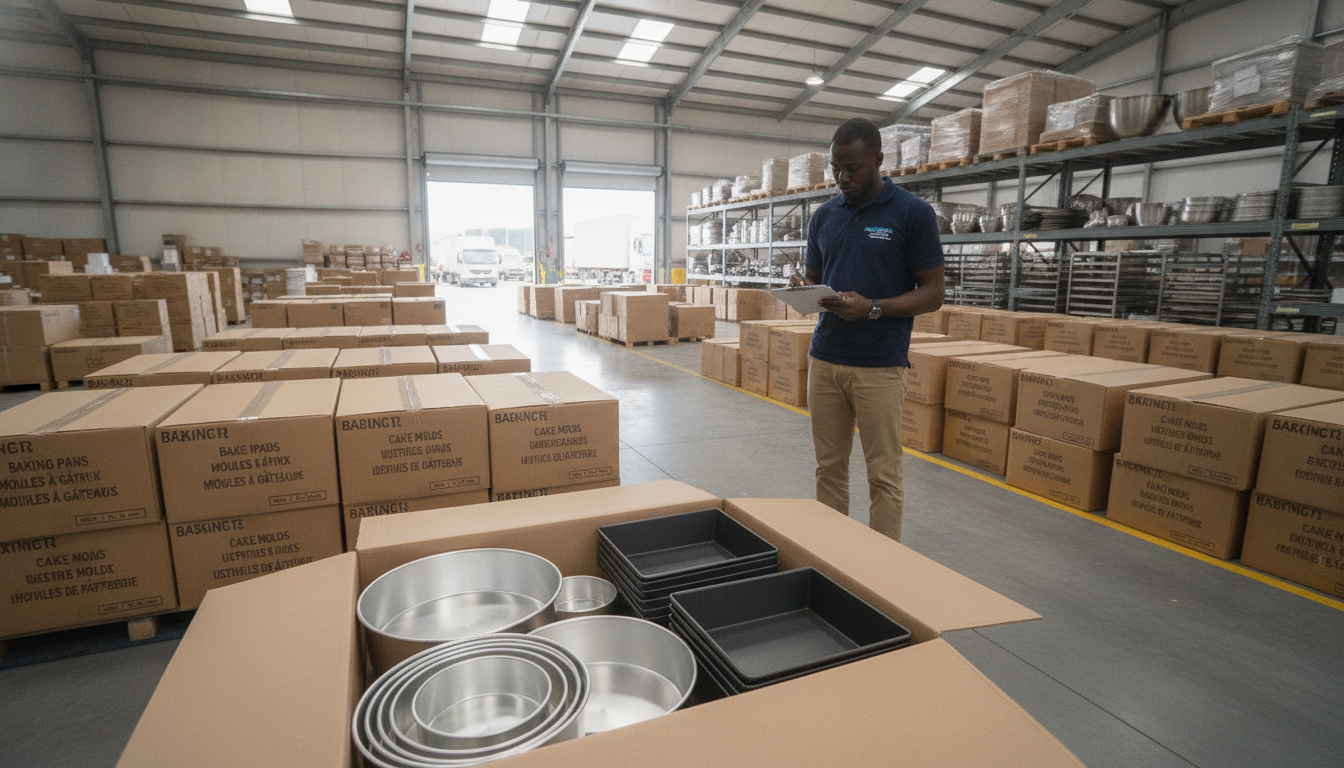
Distributors importing wholesale bakeware sets into African markets often lack climate-controlled storage. Stacked cartons in non-air-conditioned warehouses experience temperature swings and condensation. Aluminized steel pans tolerate these conditions without surface degradation. Carbon steel requires silica gel desiccant packs in each carton and poly-bag wrapping per pan to prevent rust before retail distribution.
Retail buyers in African markets may store pans for weeks before first use. A common complaint buyers raise involves carbon steel pans rusting within the return window even after proper seasoning, especially when customers wash and air-dry pans in humid kitchens. Aluminized steel eliminates this return risk, reducing distributor warranty claims and building buyer confidence in product durability.
Heat conductivity determines bake time, crust color, and crumb texture. Carbon steel’s direct metal-to-batter contact transfers heat efficiently, while aluminized steel’s reflective coating slows heat absorption. The choice between aluminized steel vs carbon steel cake pan Africa depends on the cake type and oven characteristics prevalent in the target market.
Pound cakes, fruitcakes, and butter cakes contain high ratios of fat and sugar, requiring sustained bottom heat to set the structure. Carbon steel pans deliver this intense heat, producing a golden-brown crust and fully cooked center in 45 to 50 minutes at 175 degrees Celsius. Aluminized steel pans extend bake time by 8 to 12 minutes and yield a lighter crust, which some bakers prefer for visual appeal but others find under-browned.
Sponge cakes and chiffon cakes rely on whipped egg foam for structure and benefit from gentle, even heat. Aluminized steel’s reflective surface prevents over-browning on the bottom while the top sets, producing a uniform golden color. Carbon steel pans risk dark bottom crusts if oven heat concentrates at the base, a common issue in gas ovens without convection fans used across Nigerian and Kenyan home bakeries.
Gas ovens dominate African markets due to inconsistent electricity supply. Gas flames produce radiant heat that carbon steel absorbs quickly, sometimes causing hot spots. Aluminized steel diffuses this radiant energy, reducing the risk of burnt edges. Electric ovens with coil elements distribute heat more evenly, allowing carbon steel to perform without over-browning. Distributors should match pan material to the oven types their retail customers use.
Lifespan under commercial bakery use separates entry-level pans from professional-grade tools. Carbon steel pans last 8 to 12 years in high-volume bakeries when properly maintained, while aluminized steel pans show coating wear after 4 to 6 years of daily use. Distributors targeting home bakers versus commercial clients should weigh initial cost against replacement frequency.
Repeated baking cycles and washing gradually thin the aluminum-silicon coating. Edges and corners wear first, exposing the carbon steel core. Once exposed, these areas rust rapidly in humid climates. Home bakers using pans twice weekly see coating integrity for 5 to 7 years, while commercial bakeries running 15 to 20 batches daily experience wear within 3 to 4 years. Coating thickness at purchase directly affects lifespan; 30-micron coatings outlast 20-micron versions.
Carbon steel’s seasoned patina improves with use rather than degrading. Each baking cycle adds polymerized oil layers, enhancing non-stick performance and corrosion resistance. Pans dropped or dented retain functionality; the patina reforms after re-seasoning. This durability appeals to professional bakeries that value tools lasting a decade or more, offsetting the higher maintenance effort compared to aluminized steel.
Pan gauge affects both materials’ durability. Thin-gauge pans (0.4 to 0.6 millimeters) warp under high heat, especially on induction cooktops that heat extremely fast. A common complaint buyers raise involves carbon steel pans warping on induction surfaces, rendering them unusable. Thick-gauge pans (0.8 to 1.2 millimeters) resist warping and distribute heat more evenly, justifying the 20 to 30 percent cost premium for distributors serving professional bakeries.
Cost per unit and minimum order quantity determine whether a distributor can test a new product line without over-committing capital. Aluminized steel pans typically cost 15 to 25 percent more than carbon steel pans of the same gauge due to the coating process. MOQ policies vary by factory, with some requiring 500 to 1,000 pieces per SKU while others accommodate smaller trial orders.
Distributors entering the aluminized steel vs carbon steel cake pan Africa market need sample units to test baking performance, assess coating quality, and validate food-grade certifications before committing to container orders. Factories offering 1-piece sample MOQ enable buyers to compare both materials side-by-side in their target market’s oven types and humidity conditions. This validation reduces the risk of importing 3,000 pans that rust or under-perform, protecting distributor cash flow.
A 20-foot container holds approximately 8,000 to 12,000 cake pans depending on size and nesting efficiency. Distributors mixing aluminized and carbon steel SKUs in one shipment maximize market coverage, offering rust-resistant options for coastal retailers and high-performance carbon steel for inland bakeries. MOQ of 30 pieces per SKU allows 15 to 20 different pan sizes and shapes per container, building a comprehensive low-MOQ bakeware catalog without excess inventory.
Factory-direct pricing from Yongkang, Zhejiang reflects material cost, coating process, and order volume. Aluminized steel round cake pans in 9-inch diameter typically cost 12 to 18 percent more than equivalent carbon steel pans at the 500-unit order level. Volume discounts apply at 1,000, 3,000, and 5,000-unit thresholds, reducing per-unit cost by 8 to 15 percent. Distributors should calculate total landed cost including shipping, import duties, and warehouse storage to determine retail pricing that covers replacement risk from rust or coating wear.
Sample MOQ: 1 piece per SKU. Bulk MOQ: 30 pieces per SKU. Sampling time: 7 to 10 days. Production lead time: 21 to 28 days after sample approval.
In practice: A Kenyan kitchenware importer ordered 1-piece samples of both aluminized and carbon steel 9-inch round pans, tested them in gas and electric ovens common in Nairobi bakeries, then placed a 30-unit-per-SKU first order mixing both materials to cover coastal and inland retail channels without tying up cash in untested inventory.
Food-grade compliance protects distributors from liability and meets import regulations in Nigeria, Kenya, and South Africa. Both aluminized and carbon steel pans must pass SGS and FDA food-contact testing to confirm the absence of heavy metals, PFAS, and other restricted substances. Buyers should request test reports before finalizing orders, especially when sourcing from new factories.
SGS laboratories test bakeware for lead, cadmium, and other heavy metals that migrate into food during baking. FDA food-contact limits restrict lead to below 0.1 parts per million in the final product. Aluminized steel’s aluminum-silicon coating must not contain lead-based stabilizers, while carbon steel’s raw material must originate from certified steel mills. Distributors should verify that test reports match the exact SKU and production batch being shipped, not generic factory certifications.
Per- and polyfluoroalkyl substances (PFAS) appear in some non-stick coatings but are banned or restricted in food-contact applications across the European Union and increasingly in African markets. Aluminized steel pans with additional non-stick coatings require PFAS-free test reports. Carbon steel pans develop natural non-stick patinas without synthetic coatings, eliminating PFAS risk. Buyers importing food-grade SGS FDA certified bakeware should request third-party lab confirmation rather than relying on factory declarations alone.
Nigerian, Kenyan, and South African customs authorities require food-contact declarations and test reports for bakeware imports. Missing or incomplete documentation delays container clearance and incurs demurrage fees at Lagos Apapa, Mombasa, and Durban ports. Factories shipping to African markets should include SGS test reports, material safety data sheets, and packing lists with each container, reducing customs clearance time from 7 to 10 days down to 3 to 5 days.
Efficient container loading maximizes the number of SKUs per shipment and reduces per-unit freight cost. Cake pans nest inside each other, allowing 8,000 to 12,000 units per 20-foot container depending on size. Shipping from Ningbo port to Lagos, Mombasa, and Francophone West African ports takes 28 to 35 days, with container loading optimized for mixed bakeware shipments.
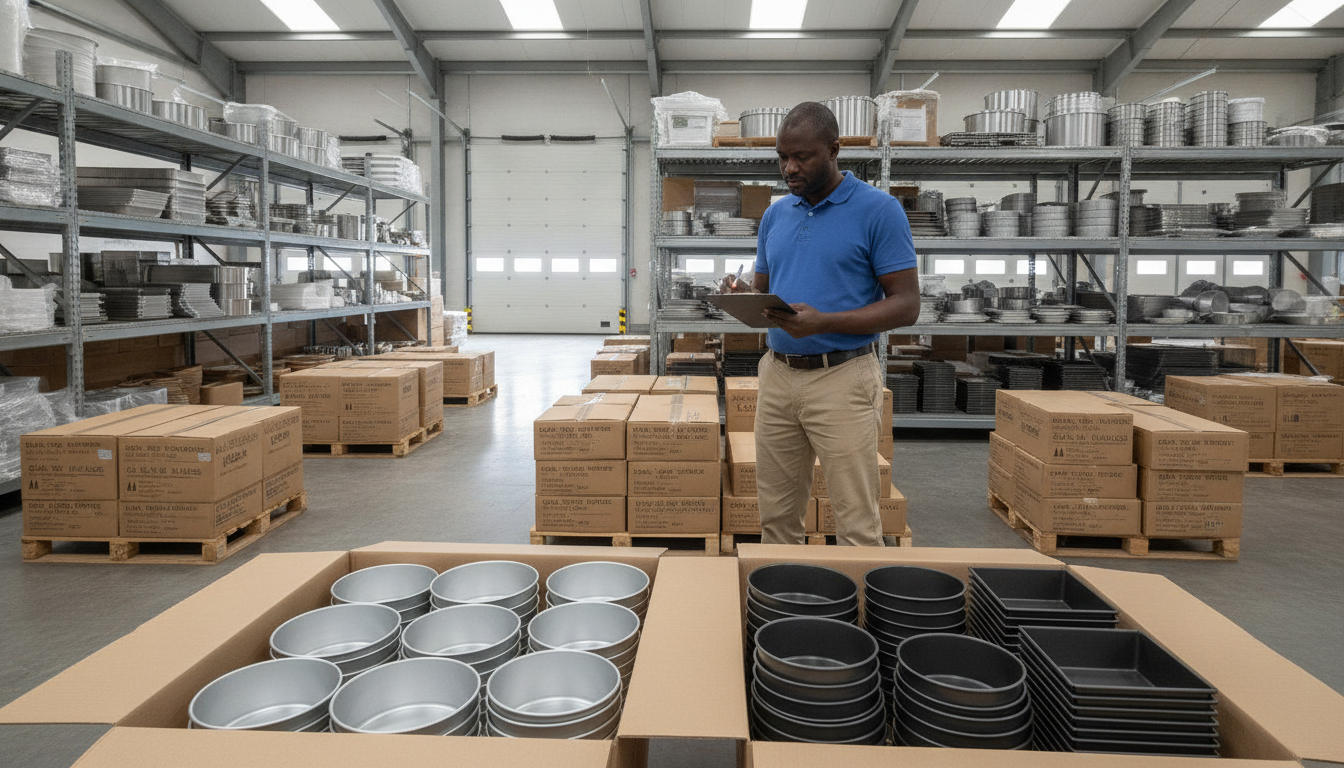
Round cake pans nest in stacks of 12 to 24 units, reducing carton volume by 40 to 50 percent compared to non-nesting designs. Square and rectangular pans nest less efficiently, requiring separate carton planning. Distributors mixing aluminized and carbon steel pans in one container should allocate carton space proportionally to expected retail demand, avoiding over-stocking slow-moving SKUs. Factories offering custom OEM private label bakeware can adjust nesting depth and carton size to fit distributor warehouse racking systems.
Ningbo port serves as the primary export hub for Yongkang and Yiwu bakeware manufacturers. Direct shipping lines to Lagos Apapa take 32 to 35 days, Mombasa 28 to 31 days, and Francophone West African ports (Abidjan, Dakar) 35 to 40 days. Transit time affects inventory planning; distributors should order 60 to 90 days before peak baking seasons (Christmas, Easter, Ramadan) to ensure stock availability. Aluminized steel pans tolerate longer transit and warehouse storage without rust risk, while carbon steel requires vapor-barrier packaging to prevent moisture damage during the 4 to 5-week ocean voyage.
Import duties on bakeware vary by African country. Nigeria applies a 20 percent duty plus 7.5 percent VAT on kitchenware imports. Kenya charges 25 percent duty under the East African Community common external tariff. South Africa’s duty ranges from 15 to 20 percent depending on material classification. Distributors should calculate total landed cost including freight, insurance, duties, and port handling fees to determine retail pricing. Accurate HS code classification (typically 7323.93 for steel bakeware) prevents customs disputes and ensures smooth clearance at African ports.
Carbon steel pans conduct heat 30 percent faster than aluminized steel, producing even baking for dense cakes like pound cake and fruitcake. Aluminized steel’s reflective coating slows heat absorption, making it better for delicate sponge and chiffon cakes that require gentle, uniform heat. The best material depends on the cake type and oven characteristics in your target market.
Aluminized steel resists rust in humid African climates without seasoning, reducing warranty claims for distributors. Carbon steel delivers faster heat transfer and develops a natural non-stick patina, lasting 8 to 12 years in commercial bakeries. Aluminized steel suits coastal markets with high humidity, while carbon steel fits inland bakeries prioritizing baking performance over corrosion resistance.
Unseasoned carbon steel pans rust within 7 to 14 days in humid African climates if stored without vapor-barrier packaging. Proper seasoning with vegetable oil at 230 degrees Celsius for 60 minutes creates a polymerized coating that blocks moisture. Coastal cities like Lagos, Mombasa, and Durban require extra care during the initial break-in period due to salt-laden air accelerating oxidation.
Stainless steel contains chromium and nickel alloys that resist corrosion without coatings, but conducts heat poorly and costs 40 to 60 percent more than aluminized steel. Aluminized steel is carbon steel coated with an aluminum-silicon alloy, offering moderate corrosion resistance and faster heat transfer at lower cost. Stainless steel suits high-end retail markets, while aluminized steel fits mid-market distributors balancing performance and price.
Professional-grade cake pans measure 0.8 to 1.2 millimeters thick, resisting warping under high heat and distributing heat evenly across the pan surface. Thin-gauge pans (0.4 to 0.6 millimeters) warp on induction cooktops and produce hot spots in gas ovens. Thick-gauge pans cost 20 to 30 percent more but last 8 to 12 years in commercial bakeries, justifying the premium for distributors targeting professional clients.
Ready to source rust-resistant aluminized steel or high-performance carbon steel cake pans for your African distribution network?
Request 1-Piece Samples Today →
Written by the Shansen Bakeware Export Team.
MOQ 1 set on stock configurations. Tell us what you need and we reply on WhatsApp.
Click the button below to open WhatsApp. If you're not logged in to WhatsApp Web yet, scan the QR code first — then come back here and copy the message into the chat.