📋 Table of Contents
Importers searching for a food contact carbon steel sheet pan factory face three recurring frustrations: factories that demand 500-unit minimums before a single sample ships, inconsistent coating quality that fails food-safety audits, and vague compliance claims with no SGS or FDA test reports. For distributors supplying bakeries across Nigeria, Kenya, and South Africa, a single rejected container at Lagos Apapa or Mombasa can wipe out an entire quarter’s margin.
This guide walks through material specifications, factory vetting steps, and logistics considerations specific to African import routes, so you can validate a supplier before committing container-level capital.
Carbon steel sheet pans are cold-rolled steel substrates, typically 0.4-0.8 mm gauge, with a food-safe coating or seasoning layer. The term food contact means the material and any surface treatment must not leach harmful substances into baked goods under normal oven temperatures (up to 260°C). FDA 21 CFR 177.2600 sets migration limits for rubber and polymer coatings; carbon steel itself must be lead-free and cadmium-free per SGS heavy-metal screening.
Cold-rolled carbon steel offers tighter thickness tolerance (±0.02 mm) and a smoother surface, reducing the risk of uneven coating adhesion. Hot-rolled steel is cheaper but prone to surface scale that can trap moisture and accelerate rust. For professional bakeries running 200+ bakes per week, cold-rolled substrates extend pan life by 40-60% compared to hot-rolled equivalents.
Two coating routes dominate food-contact carbon steel production:
Distributors serving institutional kitchens in Nairobi or Johannesburg typically prefer non-stick coatings because bakery staff lack time for daily seasoning routines.
Sheet pans thinner than 0.5 mm warp when loaded with 3 kg of dough and placed on a 1200-watt induction deck. Factories offering 0.6-0.8 mm gauge carbon steel reduce warp complaints by 70%, a critical spec for distributors targeting commercial bakeries with high-output ovens.
Carbon steel occupies the middle ground between aluminum (lightweight, even heat, prone to denting) and stainless steel (durable, dishwasher-safe, poor heat retention). Understanding when carbon steel outperforms alternatives helps distributors position inventory correctly.
Carbon steel retains 15-20% more heat than aluminum at equivalent gauge, producing crustier baguettes and more even browning on sheet cakes. Bakeries in Kigali and Lusaka that specialize in European-style breads prefer carbon steel for this thermal advantage.
A 45×33 cm carbon steel sheet pan costs 30-40% less than stainless steel at factory gate, yet delivers 80% of the lifespan when properly maintained. For distributors building starter kits for new bakeries, carbon steel offers the best price-performance ratio before customers scale to full stainless fleets.
Silicone bakeware releases cleanly but cannot withstand the 240°C temperatures required for caramelized toppings. Carbon steel with a silicone-ceramic coating handles high-sugar batters (brownies, tarte tatin) without coating breakdown, a key selling point for patisseries in Dakar and Luanda.
Vetting a food contact carbon steel sheet pan factory requires verifying production capabilities, compliance documentation, and logistics infrastructure before placing a deposit. The criteria below filter out trading companies and shell operations.
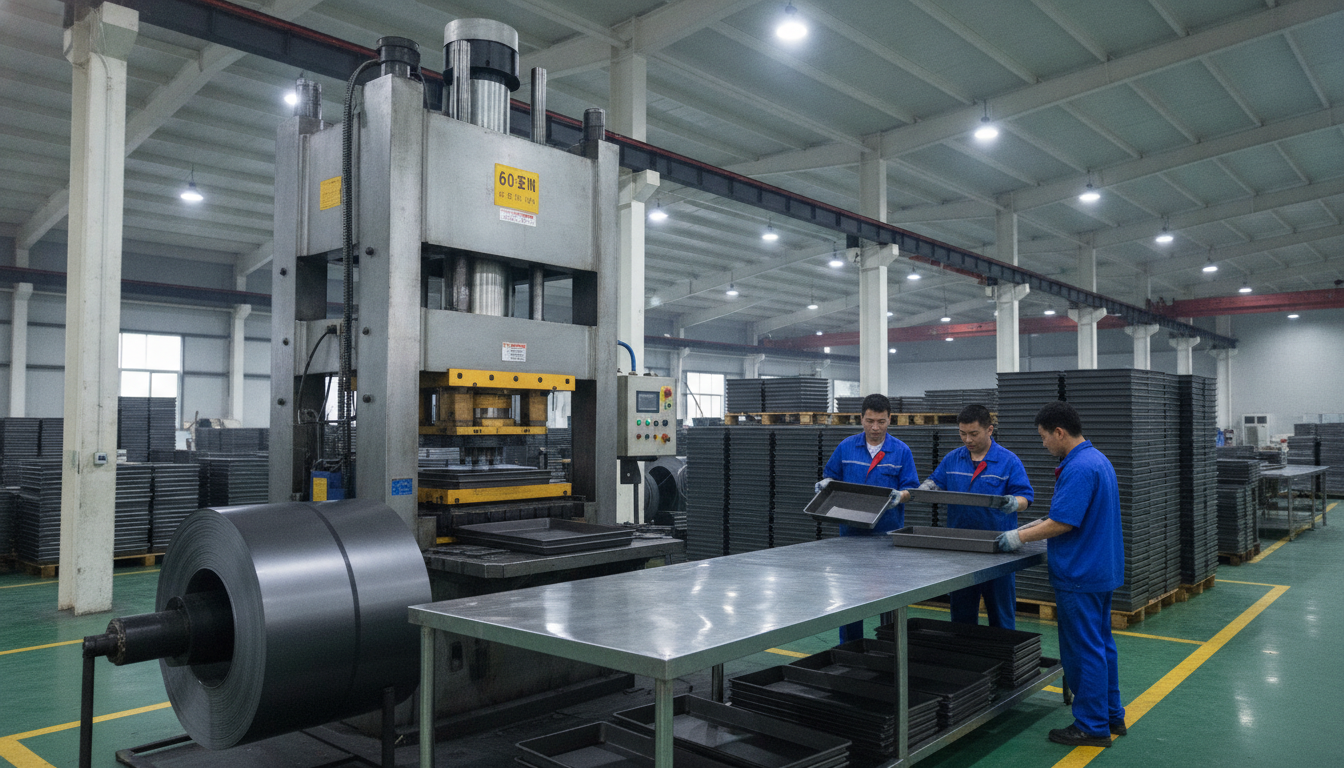
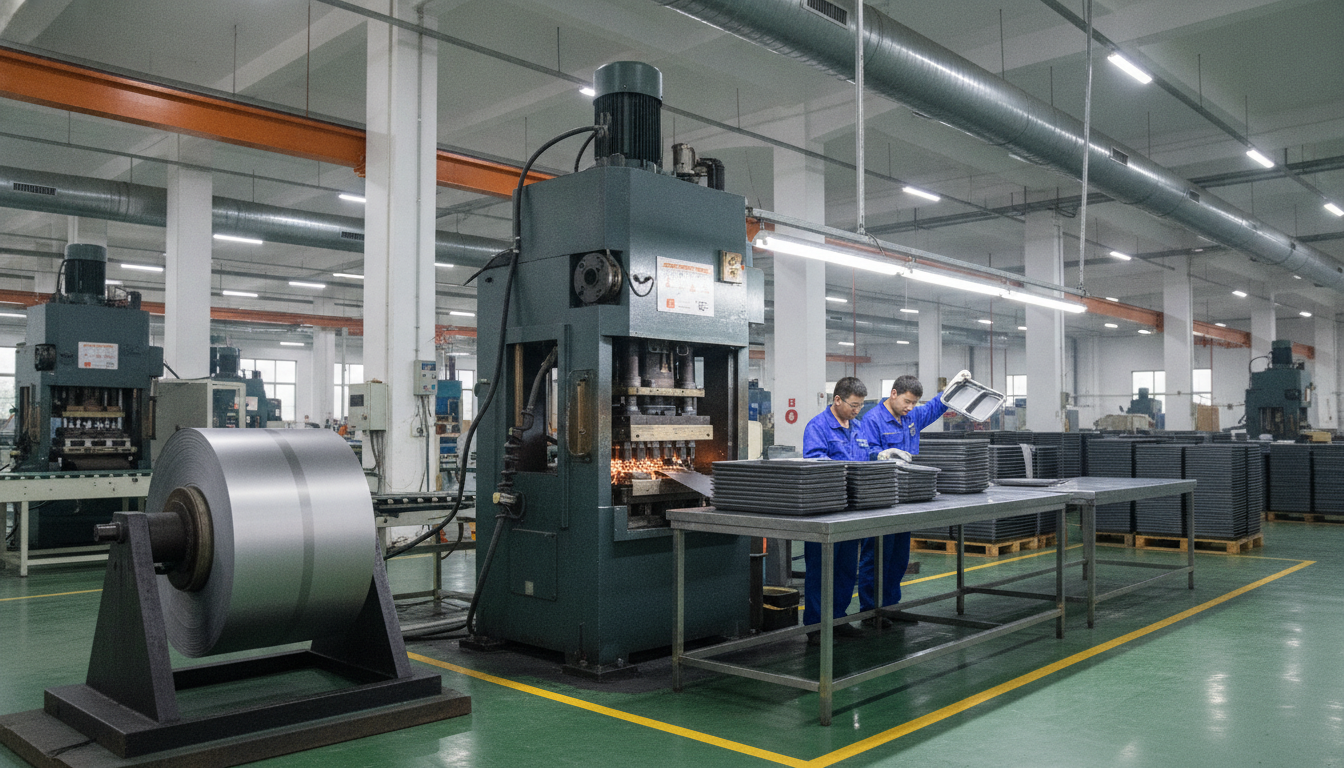
Factories with captive stamping presses (60-200 ton) and coating ovens control thickness tolerance and coating uniformity. Ask for a video walkthrough showing raw coil → stamping → coating → QC in one facility. Trading companies source from multiple sub-contractors, creating batch-to-batch inconsistency that surfaces only after your container clears customs.
Our Yongkang factory runs 7 in-house bakeware lines at 500,000 units per month capacity, with stamping, coating, and SGS testing under one roof, eliminating the quality gaps that occur when production is fragmented across vendors.
Request SGS heavy-metal screening (lead, cadmium, mercury) and FDA food-contact migration reports for the exact SKU and coating system you plan to order. Generic reports covering a different product line or an older batch do not protect you if a health ministry in Abidjan or Maputo pulls samples at port.
Shansen provides SGS and FDA-aligned test documentation per SKU, with batch traceability so every carton links back to a specific production run and test certificate.
Factories demanding 300-500 unit minimums before releasing samples force distributors to commit capital before validating market fit.
In practice: A Nairobi kitchenware importer validated three carbon steel sheet pan sizes with 1-piece samples at local bakeries, then placed a 40-unit-per-SKU first order to supply two retail locations without locking up working capital in unproven SKUs.
Sheet pans nest to save cubic space, but poor carton design wastes 20-30% of container volume. Factories experienced in African exports design cartons with nesting jigs that fit 8,000-12,000 pans in a 20-foot container, reducing per-unit freight cost by $0.15-$0.25 compared to non-optimized packing.
Shansen ships from Ningbo port with container loading optimized for Lagos Apapa, Mombasa, and Francophone/Lusophone African ports, using nesting cartons that maximize density and minimize damage during the 28-35 day ocean transit.
Logistics planning separates profitable imports from cash-flow traps. The table below outlines realistic minimums, timelines, and freight considerations for carbon steel sheet pans shipped to African ports.
Order 1-piece samples of your top three SKUs and run them through a local commercial bakery for 20-30 bake cycles. Check for coating adhesion, warp under load, and rust formation after washing. This $150-$200 investment prevents the $6,000-$9,000 loss of a rejected container.
A 30-50 piece per SKU order via air freight or LCL lets you stock two retail locations or supply three bakery clients without committing to a full container. Lead time is 18-22 days, and per-unit cost runs 40-60% higher than container pricing, but you validate demand before scaling.
Shansen’s 1-piece MOQ policy supports this validation-first approach, letting distributors test market fit in Kano, Kisumu, or Maputo before placing container orders.
A 20-foot container holds 8,000-12,000 carbon steel sheet pans when you mix three sizes (30×20 cm, 40×30 cm, 45×33 cm) and use nesting cartons. Factories that design cartons with nesting jigs reduce wasted cubic space by 25-30%, lowering per-unit freight cost and improving your landed margin.
Three quality failures account for 70% of buyer complaints in the carbon steel sheet pan category. Knowing the root cause and the factory-level fix protects your investment.
Buyers report carbon steel pans warping when placed on 1200-watt induction cooktops or loaded with 3+ kg of dough. Root cause: gauge thinner than 0.5 mm or uneven stamping that creates stress points. Solution: specify 0.6-0.8 mm cold-rolled steel and request a warp-resistance test report showing deflection under 2 mm when loaded with 4 kg at 240°C.
Carbon steel pans rust when the factory skips the pre-seasoning step or uses water-based oils that evaporate during shipping. A proper pre-season involves baking flaxseed or soybean oil at 230°C for 45 minutes, creating a polymerized barrier. Request a sample and store it in 80% humidity for 14 days; any surface rust indicates inadequate seasoning.
Non-stick coatings fail when the substrate is not properly degreased before application, or when curing temperature falls below 380°C. Factories cutting costs skip the alkaline wash and phosphate treatment that ensures coating adhesion. Ask for a peel-test report (ASTM D3359) showing 5B adhesion rating and a 500-cycle bake test with photographic evidence of coating integrity.
Shansen’s carbon steel line includes alkaline degreasing, phosphate conversion coating, and 400°C curing for silicone-ceramic layers, with SGS adhesion and migration testing on every production batch to prevent the delamination complaints common with lower-tier suppliers.
Trading companies source from multiple stamping sub-contractors, leading to batch-to-batch gauge variation of ±0.1 mm. This inconsistency causes uneven baking and mixed warp rates within a single shipment. Verify the factory owns its stamping equipment and can show calibration records for press tonnage and die clearance.
A food contact carbon steel sheet pan is a cold-rolled steel baking tray, typically 0.4-0.8 mm gauge, with a food-safe coating or pre-seasoned finish that meets FDA 21 CFR 177.2600 migration limits and SGS heavy-metal screening for lead and cadmium. The term food contact certifies the material will not leach harmful substances into baked goods under normal oven temperatures up to 260°C.
Carbon steel is safe for food contact when the substrate is lead-free and cadmium-free per SGS screening, and any coating meets FDA migration limits under 21 CFR 177.2600. Factories must provide batch-specific test reports showing heavy-metal compliance and coating safety; generic certifications covering different product lines do not guarantee the SKU you order meets food-grade standards.
The best material depends on use case: stainless steel offers maximum durability and dishwasher safety for high-volume institutional kitchens; aluminum provides even heat distribution for delicate pastries; carbon steel delivers superior heat retention for artisan breads at 30-40% lower cost than stainless. Commercial bakeries running 200+ bakes per week typically choose 0.6-0.8 mm carbon steel with silicone-ceramic coating for the best price-performance balance.
Choose a manufacturer with in-house stamping and coating lines, SGS and FDA test reports for the exact SKU you plan to order, 1-piece sampling policy to validate quality before bulk orders, and container-loading optimization for your destination port. Request a factory video walkthrough showing raw coil to finished pan in one facility, and verify batch traceability linking every carton to a specific production run and test certificate.
Food contact bakeware requires SGS heavy-metal screening (lead, cadmium, mercury below detection limits), FDA 21 CFR 177.2600 compliance for coatings, and LFGB migration testing if exporting to European markets. African importers should request batch-specific test reports, not generic factory certifications, because health ministries in Nigeria, Kenya, and South Africa increasingly pull samples at port for independent verification.
Written by the Shansen Bakeware Export Team.
Ready to validate carbon steel sheet pans with SGS-tested samples before committing to a container?
Request 1-Piece Samples →
MOQ 1 set on stock configurations. Tell us what you need and we reply on WhatsApp.
Click the button below to open WhatsApp. If you're not logged in to WhatsApp Web yet, scan the QR code first — then come back here and copy the message into the chat.