📋 Table of Contents
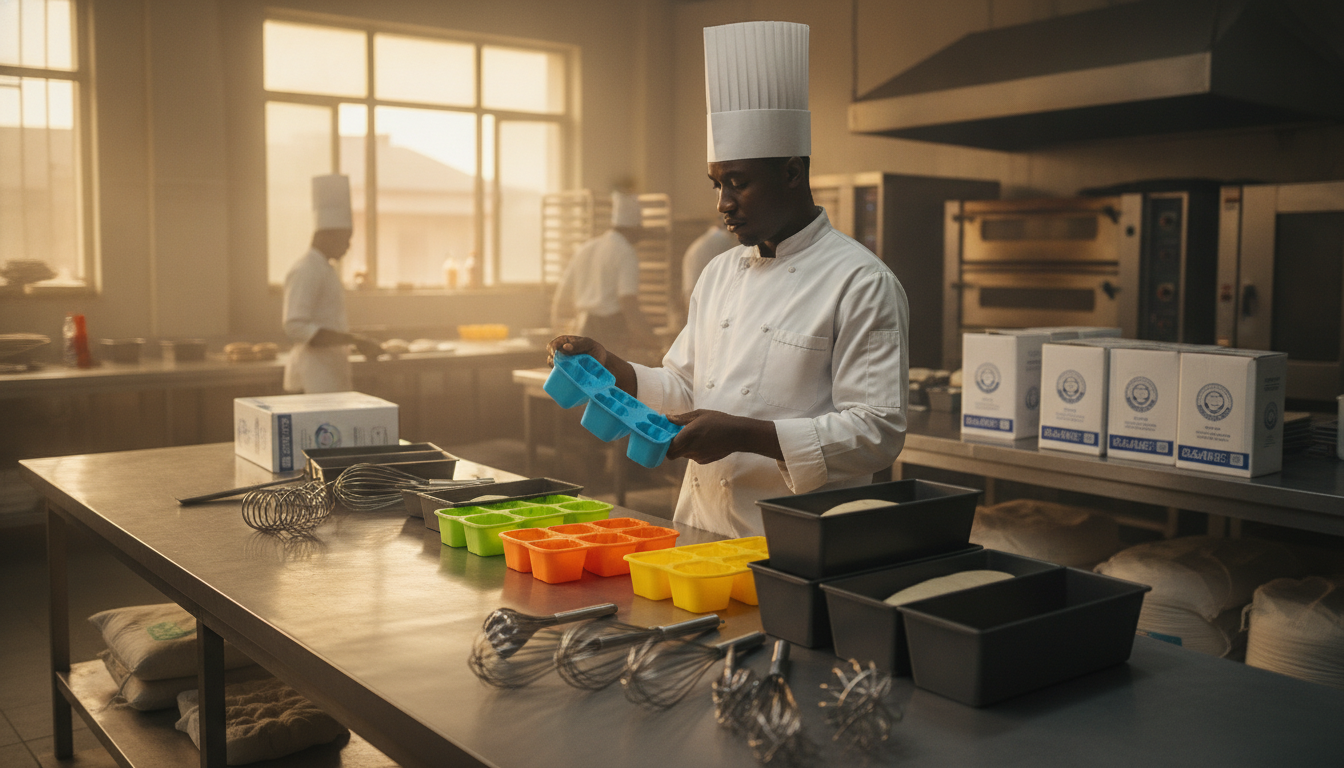
Nigerian baking entrepreneurs face a common sourcing headache: finding baking tools wholesale Nigeria suppliers who don’t demand container-load commitments. Many local distributors mark up prices 40-60% over factory costs, while global trade platforms often obscure the true manufacturer. The alternative is direct sourcing from China’s bakeware manufacturing clusters, where you can secure SGS-tested, PFAS-free tools with an MOQ as low as 1 piece per SKU, then ship to Lagos Apapa on an optimized schedule.
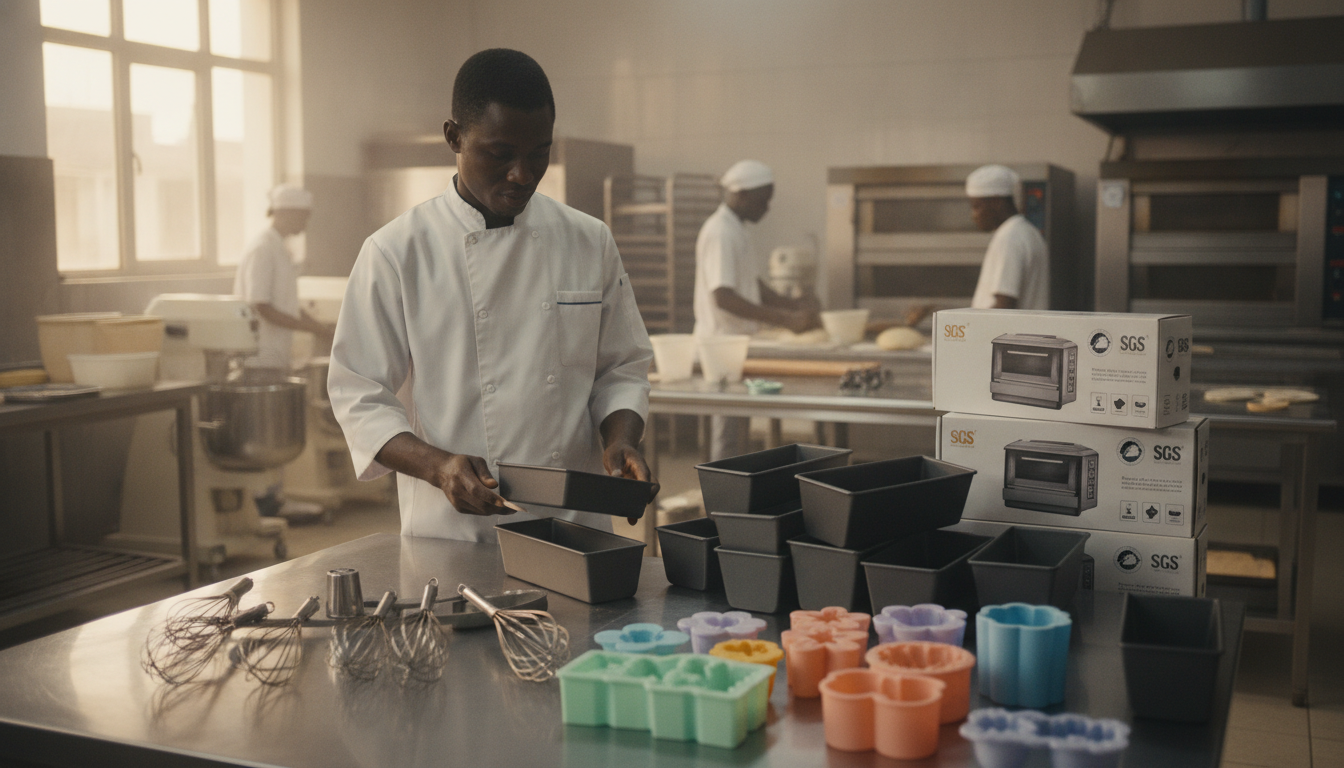
The Nigerian wholesale baking supply chain is fragmented, with most importers buying through Dubai or Chinese trading companies that add 15-25% surcharges. In our manufacturing experience, bypassing intermediaries and working directly with a wholesale bakeware sets factory gives you price stability, consistent quality, and control over food-safety documentation-critical when selling to upscale bakeries in Lagos or Abuja that demand proof of PFAS-free coatings.
Factory-direct sourcing eliminates reseller margins. A silicone macaron mat that a Nigerian wholesaler sells for ₦4,500 can land at under ₦2,000 per unit from a low-MOQ bakeware manufacturer. Shansen’s 7 in-house lines-silicone, carbon steel, stainless steel, aluminum, cake-decorating tools, strainers, and multi-piece sets-mean you consolidate purchasing without navigating 10 different suppliers. According to Mordor Intelligence (2026), breads commanded 34.78% of the premium bakery market in 2025, so carbon steel loaf pans are a staple volume driver worth sourcing directly. For wholesale orders, see wholesale rectangular loaf pans.
Regulators and high-end customers increasingly check for SGS test reports. Shansen’s bakeware is SGS-tested to FDA food-grade standards, PFAS-free, and lead-free-certifications that protect against shipment rejects at Nigerian customs or consumer complaints. As of 2026, Lagos Port Authority inspections have tightened for food-contact materials, making pre-shipment test reports more valuable. SGS-verified bakeware reduces this risk to near zero.
Sample MOQ: 1 piece. Bulk MOQ: 30 pieces per SKU. Sampling time: 7-10 days.
When you search for baking tools wholesale Nigeria on Alibaba or Google, you will see dozens of faceless Guangdong trading companies. Many claim to be manufacturers but are actually resellers with no quality control. You need a framework that separates factory-direct operations from shell companies. Below is a three-step vetting system we recommend to importers in Africa.
Request a live video tour of the production floor, not just the showroom. True factories like those in Yongkang have dedicated silicone press lines, carbon steel coating stations, and QC labs on site. Shansen’s factory runs all 7 categories under one roof, with real-time testing for non-stick coating thickness and silicone tensile strength. If the supplier cannot show the machines, you are talking to a middleman.
Do not accept “self-certified” claims. A factory that sells baking tools wholesale Nigeria should be able to email you recent SGS test reports for heavy metals, PFAS, and food-safety conformance within 24 hours. Shansen provides these before the first sample ships, which has saved Cameroon and Kenya importers weeks of back-and-forth with their local food safety agencies.
Shipping to Lagos Apapa requires precise container planning. A factory that has never loaded for Mombasa or Apapa may mis-calculate CBM or use palletization that causes damage. Ask for photos of previous African-bound shipments. Our Ningbo-based logistics team uses reinforced 5-layer cartons and custom crate options specifically for the trip to West African ports.
Logistics crush margins when not factored early. A 20-foot container from Ningbo to Apapa costs roughly $2,800-$3,200 depending on the shipping line, but the per-unit freight cost plummets when you load strategically. Combined with a 1-piece MOQ for sampling and 30 pieces per SKU for bulk, you can test the market without over-committing cash. Baking tools wholesale Nigeria importers often stagger orders: sample with 5 SKUs of 1 piece each, then scale.
To clear goods at Apapa, you need a commercial invoice, packing list, bill of lading, and a SONCAP certificate, plus the supplier’s SGS test report. Shansen provided pre-filled documentation packs that a Lagos clearing agent used in 2025 to clear silicone bakeware in under four days. Always confirm product HS codes match your supplier’s invoice to avoid duty disputes.
Our Ningbo logistics team has optimized 20-ft and 40-ft container loads for African distributors, mixing lightweight silicone mats with dense carbon steel pans to maximize value per cubic meter. This cut a Mombasa buyer’s freight cost by 22% on a 5-SKU order, according to his bill-of-lading analysis.
You can buy directly from Chinese bakeware factories like Shansen Bakeware, which ships to Lagos, or through local Nigerian wholesalers in Lagos markets like Idumota. Direct factory purchases often offer lower per-unit costs and certifications like SGS test reports, while local distributors may charge a 40-60% premium but provide faster delivery.
The best wholesale baking supplies include silicone mats, carbon steel bread pans, stainless steel mixing bowls, and cake decorating tools that carry SGS food-grade certifications. Sourcing multi-piece bakeware sets from a single factory like Shansen lets you standardize quality and reduce freight complexity for Nigerian ports.
Request a live factory video tour, review recent SGS test reports, and verify African shipping experience-suppliers like Shansen have loaded containers for Apapa and Mombasa. Avoid trading companies that cannot show production machinery or cite only generic certifications.
MOQ can be as low as 1 piece per SKU for samples or 30 pieces per SKU for bulk orders from manufacturers like Shansen Bakeware. This allows Nigerian importers to test new products before committing to large volumes, avoiding cash flow strain.
Some Nigerian wholesale suppliers ship regionally, but most source from China and handle redistribution themselves. Direct factory shipment from China to multiple African ports-including Lagos, Mombasa, and Dakar-is often more cost-effective, especially with optimized container loading.
Ready to test 1-piece bakeware samples before committing to bulk?
Request Samples & Catalog →
Browse OEM-ready bakeware from Shansen (SGS / FDA / PFAS-free / Pb-free, MOQ 1-50):
MOQ 1 set on stock configurations. Tell us what you need and we reply on WhatsApp.
Click the button below to open WhatsApp. If you're not logged in to WhatsApp Web yet, scan the QR code first — then come back here and copy the message into the chat.