📋 Table of Contents
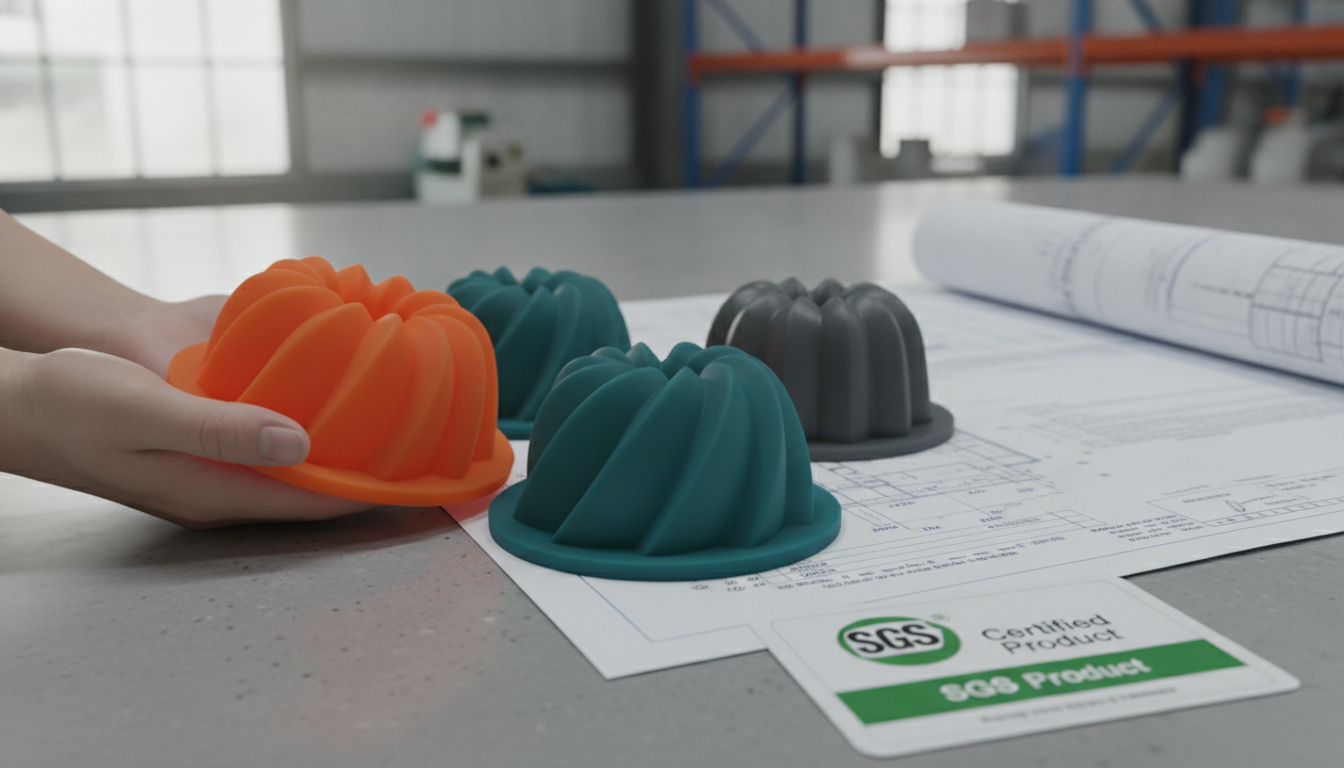
Finding a factory that accepts a custom silicone cake mold OEM order with an MOQ under 500 pieces can feel like hitting a wall. Most Nigerian importers discover that large suppliers won’t move unless you commit to a full container. Others promise custom shapes but ship molds with no SGS report or unclear food-grade documentation. When a shipment gets stuck at Apapa port because the lab flags it for cadmium or PFAS, the cost goes far beyond the product value. For wholesale orders, see novelty fish-shape silicone cake molds. For wholesale orders, see the 6-cavity rose silicone mold. For wholesale orders, see the 6-cavity snowflake silicone mold. For wholesale orders, see our custom-logo springform pan program.
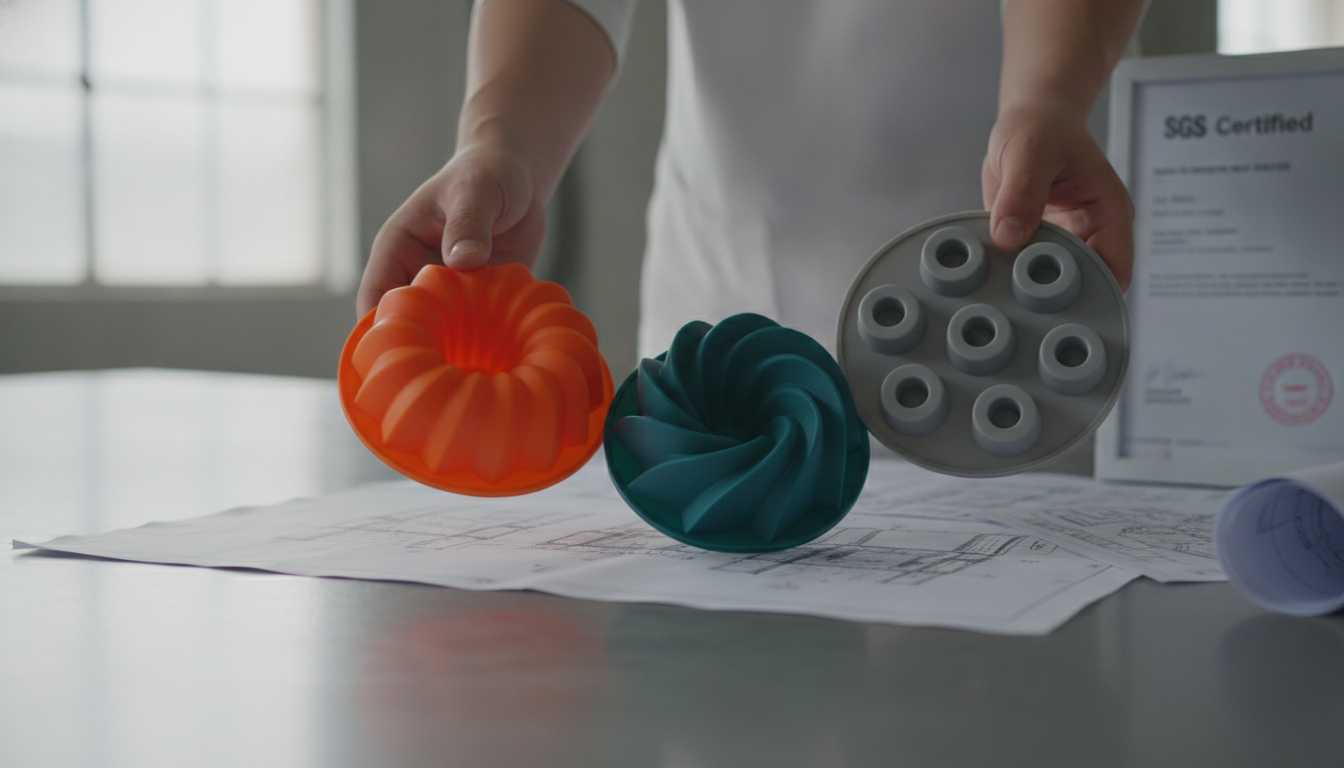
A custom silicone cake mold OEM engagement means you define the shape, size, color, and branding, and the factory manufactures exclusively to your design. This differs from ODM (you pick from existing mold catalogs) and private label (you add your logo to a generic design). For a Nigerian importer, OEM gives you control over molds that match local baking styles-geometric cake bars popular in Lagos, deep loaf pans for Agege bread cakes, or smaller portion sizes for street-corner bakeries.
Standard European and American mold shapes don’t always align with how baked goods are sold in Nigeria. A 2024 market survey by Euromonitor International noted that African consumers prefer smaller, individually portioned baked products, driving demand for mini cake pans and unique tray designs. OEM allows you to design molds that fit local consumption patterns without paying a premium for off-the-shelf shapes.
A legitimate silicone bakeware factory runs in-house liquid silicone injection molding machines, not just procurement plus assembly. It should provide a full SGS lab report per batch covering migration limits for volatile organic compounds and heavy metals like lead (Pb) and cadmium. In our 12+ years manufacturing bakeware in Yongkang, we’ve seen too many buyers accept a vague “food-grade” claim that evaporates when customs requests official documentation.
Food-grade isn’t a marketing term, it’s a set of measurable standards. For a custom silicone cake mold OEM that will be used in commercial ovens across Nigeria, three technical specs decide whether your product works or gets rejected after the first batch.
A printed label claiming “FDA” means little without a batch number and lab report. FDA 21 CFR 177.2600 sets clear migration limits for silicone articles used repeatedly in contact with food. According to SGS testing guidelines, a full food-contact test includes overall migration, heavy metals, and volatile organic compounds. Request the report, not just the certificate, before paying a deposit on a custom mold order.
Sampling MOQ: 1 piece. Bulk MOQ: 30 pieces per SKU. Sampling lead time: 7-10 days for existing mold shapes. Custom mold creation: 15-20 days extra.
Nigeria’s Standards Organisation of Nigeria (SON) enforces conformity assessment under the SONCAP program. All imported bakeware, including custom silicone cake mold OEM shipments, must arrive with a SONCAP certificate issued from the country of export. Without it, your container can sit at Lagos Apapa for weeks accumulating demurrage charges.
Shipping from Ningbo to Lagos Apapa takes roughly 30-35 days. A factory that optimizes container loading for African ports can reduce your per-unit landed cost by up to 18%, according to 2024 Maersk supply chain benchmarking data for West African routes. Fluted molds, for instance, can nest inside larger pans to reduce wasted carton space. Our Yongkang factory runs 7 in-house bakeware lines at 500,000 units/month capacity, and we pre-configure mixed orders to maximize container efficiency for Nigeria baking tools wholesale clients.
A repeatable, low-risk sourcing flow for a custom silicone cake mold OEM looks like this:
The average Nigerian bakeware brand founder enters the market with ₦2 million to ₦5 million in working capital. Tying up 80% of that in a 500-piece MOQ order leaves no buffer for marketing, local distribution, and customer education. A manufacturer that offers low MOQ bakeware for startups, starting at 30 pieces per SKU, lets you test 4-5 shapes across 3 cities before scaling.
Real scenario from Lagos: A buyer tested 3 custom tart molds at 30 pieces each, sold out at Trade Fair Complex within 10 days, and doubled the order without ever storing a full container.
Many new importers conflate these terms. Here is the breakdown when you source a custom silicone cake mold OEM versus the other approaches.
For a Nigerian baker launching a branded line of cake pans, custom OEM private label bakeware combines mold exclusivity with the ability to test small batches using existing mold shapes first. This hybrid approach avoids tooling cost until you have proven demand.
Experienced importers learn these lessons through failed containers. You can learn them from a guide.
A Guangzhou office with no factory floor can sell you a custom silicone cake mold OEM by outsourcing to a workshop they’ve never audited. One sign: the company can’t provide a video walkthrough of their injection molding line on the same day you ask. Another: they claim certification but can’t produce an SGS report with your batch number.
Vivid orange or red silicone pigments sometimes contain cadmium or lead. Even if the base silicone is food-grade, the pigment may not be. According to California Proposition 65, cadmium and lead in food-contact cookware can cause cancer and birth defects. If your Nigerian target market includes premium hotels like Transcorp Hilton Abuja, a heavy metal failure destroys long-term contracts.
A mold that releases perfectly for the first 30 cycles might start sticking after 150 cycles. This is a compounding cost for bakery owners who restock supplies based on output. Demand a release-cycle guarantee and test it by running one sample through 250 cycles in your own kitchen before bulk.
Authentic factory-direct manufacturers can offer MOQ as low as 30 pieces per SKU for custom molds. Some, like Shansen Bakeware, allow 1-piece samples for shape validation before bulk. Trading companies often require 500 pieces, but a real factory with in-house mold tooling can amortize setup cost over your first order.
Request the full SGS lab report for the exact batch you will order, not a generic certificate. Confirm the silicone is platinum-cured, FDA 21 CFR 177.2600 compliant, and PFAS-free. Ask for a video of the liquid injection molding line and request a sample with your chosen pigment before placing a bulk order.
A SONCAP certificate is mandatory for all kitchenware imports into Nigeria. It must be issued by a SON-accredited third-party lab (SGS, Bureau Veritas, Intertek) after physical inspection. A PFAS-free attestation and heavy-metal test report are increasingly required by major Nigerian hotel and retail buyers.
Sampling takes 7-10 days for existing mold shapes. Custom mold creation adds 15-20 days. Bulk production for a first order of 30-200 units typically runs 18-25 days. Add 30-35 days for sea freight from Ningbo to Lagos Apapa port, including pre-clearance SONCAP inspection.
Yes, both custom logo debossing/embossing and fully custom shapes are standard OEM services. A factory with in-house mold tooling can develop a new shape from your sketch or 3D file. Logo customization adds no extra cost if placed during mold design; after-production laser engraving is also possible.
Ready to validate your first custom shape without overcommitting on inventory?
Request 1-Piece Sample & SGS Report →
Browse OEM-ready bakeware from Shansen (SGS / FDA / PFAS-free / Pb-free, MOQ 1-50):
MOQ 1 set on stock configurations. Tell us what you need and we reply on WhatsApp.
Click the button below to open WhatsApp. If you're not logged in to WhatsApp Web yet, scan the QR code first — then come back here and copy the message into the chat.