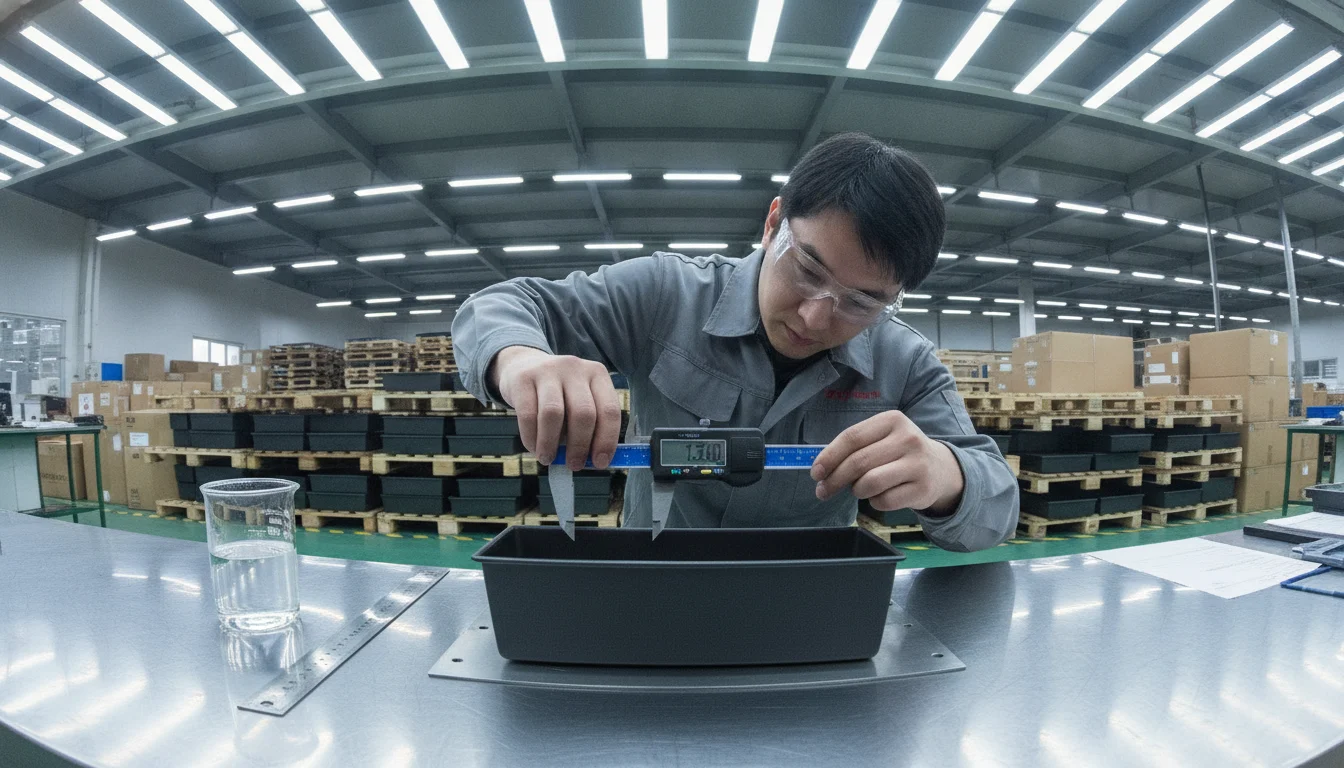
Loaf pan sizes are most commonly sold in three standard dimensions: 9×5 inches (23×13 cm, approximately 8-cup or 1.9-liter capacity), 8.5×4.5 inches (21.5×11.5 cm, roughly 6-cup or 1.4-liter capacity), and 10×5 inches (25.5×13 cm, about 10-cup or 2.4-liter capacity). Importers and private-label buyers should verify interior cavity measurements and usable depth, not just nominal exterior dimensions, because wall taper, rim design, and material gauge can reduce effective batter volume by 10-15% across carbon steel, aluminum, stainless steel, and silicone lines.
📋 Table of Contents
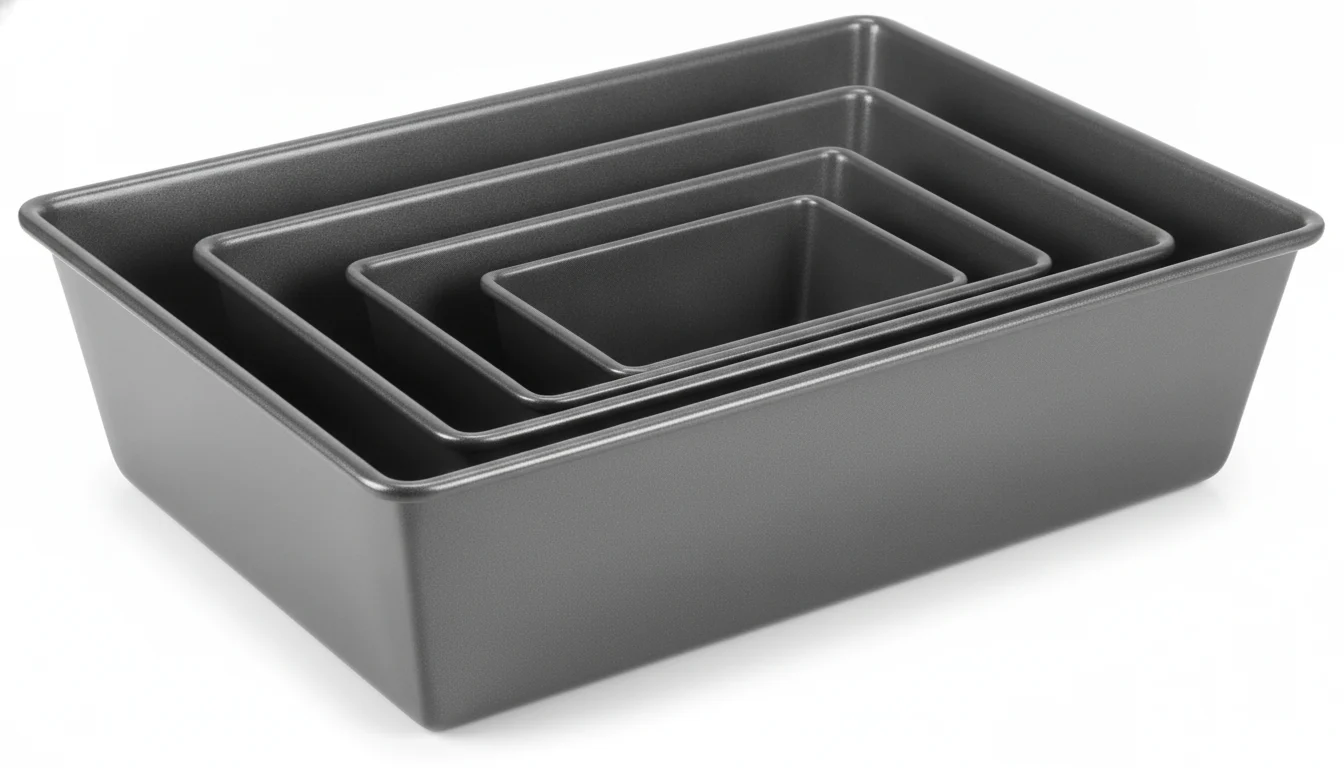
The 9×5-inch loaf pan is the most widely recognized standard across North America, the UK, Australia, and many African markets. Measuring 9 inches in length, 5 inches in width, and typically 2.5 to 3 inches in depth, this size holds approximately 8 cups (1.9 liters) of batter when filled to 80% capacity. The 8.5×4.5-inch pan, often called a 1-pound loaf pan, is slightly smaller and holds roughly 6 cups (1.4 liters), making it suitable for compact quick breads, banana bread, and single-serve pound cakes. The 10×5-inch pan, less common but growing in demand for artisan and sourdough loaves, offers about 10 cups (2.4 liters) of usable volume.
Length 9 inches (22.9 cm), width 5 inches (12.7 cm), depth 2.5-3 inches (6.4-7.6 cm). This dimension is the default for most American and European bread recipes published since the 1980s. Buyers purchasing for private-label retail lines should confirm that the interior base measurement is at least 8.7×4.8 inches to ensure consistent loaf rise and prevent overflow when batter expands during baking.
Length 8.5 inches (21.6 cm), width 4.5 inches (11.4 cm), depth 2.5 inches (6.4 cm). This size is preferred for recipes yielding 1-pound finished loaves, common in African bakery supply chains and Middle Eastern markets where portion control and retail packaging favor smaller units. The reduced footprint also improves oven efficiency, allowing bakers to fit more pans per rack.
Length 10 inches (25.4 cm), width 5 inches (12.7 cm), depth 3 inches (7.6 cm). Increasingly requested by specialty bakeries and sourdough brands, this size accommodates high-hydration doughs and longer fermentation periods. The extra depth prevents spillover when dough doubles in volume during proofing.
Capacity is the single most important specification for recipe conversion and commercial baking consistency. A 9×5-inch pan rated at 8 cups holds 1,900 ml when filled to the rim, but professional bakers fill to 70-80% capacity to allow for rise, which translates to 1,330-1,520 ml of usable batter volume. Importers sourcing for African and Middle Eastern markets should request capacity figures in both milliliters and cups, because recipe databases in Francophone and Lusophone regions often use metric measurements while Anglophone markets default to imperial.
A standard bread batter with 60% hydration weighs approximately 1.1 grams per milliliter. An 8-cup (1,900 ml) pan filled to 75% capacity holds 1,425 ml of batter, which weighs roughly 1,570 grams or 3.5 pounds. Buyers developing private-label bread mixes should test fill weights at 70%, 75%, and 80% to determine optimal rise without overflow, then specify that fill percentage in their production documentation.
When switching from a 9×5-inch pan to an 8.5×4.5-inch pan, multiply the original batter volume by 0.75 to maintain the same loaf height. For example, a recipe calling for 4 cups of batter in a 9×5-inch pan should use 3 cups in an 8.5×4.5-inch pan. This 25% reduction accounts for the smaller base area and prevents under-filled loaves that bake flat and dry.
Capacity reference: 1 US cup = 236.6 ml. 1 imperial cup (UK, AU, CA) = 284.1 ml. Always confirm which cup standard your target market uses before printing recipe cards or packaging instructions.
Material choice directly impacts dimensional stability, heat distribution, and the effective loaf pan sizes a buyer can rely on across production batches. Carbon steel, aluminum, stainless steel, and silicone each exhibit distinct thermal expansion rates, wall-thickness tolerances, and structural rigidity under batter load.
Carbon steel loaf pans typically use 0.4-0.6 mm gauge material, offering tight dimensional tolerances (±1 mm on length and width) and minimal warping under oven heat. The Shansen carbon-steel line carries SGS and FDA 21 CFR 175.300 certification for its non-stick coating, tested PFAS-free and lead-free in the 2020 report. Wall taper on carbon-steel pans is usually 2-3 degrees, which translates to a 0.2-0.3 inch reduction in base width compared to the top rim measurement. Buyers should specify interior base dimensions rather than exterior rim dimensions to ensure recipe consistency.
Aluminum pans are lighter and conduct heat faster than carbon steel, making them popular for high-volume commercial bakeries. Standard aluminum loaf pans use 0.5-0.8 mm gauge material. The softer metal is more prone to denting during shipping and stacking, so importers loading containers for Lagos Apapa or Mombasa ports should request corner reinforcement or nested packing with cardboard separators. Aluminum expands slightly more than steel under heat, so a 9×5-inch aluminum pan may measure 9.05×5.02 inches when hot, a negligible difference for home baking but relevant for automated bakery lines with fixed pan rails.
Stainless steel loaf pans, often 0.5-0.7 mm gauge, resist rust and corrosion in humid climates, making them a preferred choice for coastal African markets and Middle Eastern distributors. Stainless steel does not conduct heat as efficiently as aluminum or carbon steel, so loaves may require 5-10% longer baking times at the same temperature. The material’s rigidity means wall taper can be reduced to 1-2 degrees, yielding a larger usable base area for the same nominal top dimensions.
Silicone loaf pans are flexible, non-stick, and dishwasher-safe, but their dimensional consistency depends heavily on wall thickness and reinforcement design. Buyers report that silicone pans with walls thinner than 1.5 mm can bow inward when filled with dense batter, reducing the effective loaf width by 0.3-0.5 inches and producing misshapen loaves. Shansen silicone bakeware uses 2 mm minimum wall thickness with internal ribbing to prevent collapse. Silicone does not expand or contract significantly with temperature, so the stated dimensions remain stable from freezer to oven, a key advantage for frozen-dough workflows.
Buyers frequently discover that pans sold as 9×5 inches measure smaller at the base due to wall slope and rim design. A pan with 2.5-degree wall taper and a 0.5-inch rolled rim will have an exterior top measurement of 9×5 inches but an interior base measurement closer to 8.7×4.8 inches. That 0.3-inch reduction per side translates to roughly 10% less batter volume, enough to cause overflow if a recipe was developed for a true 9×5-inch interior cavity.
Place a ruler flat against the pan’s interior base, measuring the longest and widest points where batter will actually sit. Ignore the top rim and any decorative fluting. Record these numbers as the usable interior dimensions and request that the factory confirms them on the pre-production sample. For private-label orders, specify interior base dimensions in the purchase order rather than relying on nominal size labels.
Measure depth from the interior base to the point where the pan wall begins to curve outward or the rim starts. This is the usable depth, distinct from the overall height including the rim. A 9×5×2.5-inch pan may have only 2.3 inches of usable depth if the rim accounts for 0.2 inches. Bakers typically fill to 75-80% of usable depth, so a 2.3-inch usable depth allows for 1.7-1.8 inches of batter before rise.
Thicker walls reduce interior volume. A 0.6 mm carbon-steel wall adds 1.2 mm (0.047 inches) to each side, reducing the interior width by 0.094 inches total. Over a 5-inch nominal width, that’s a 1.9% reduction. Buyers ordering 500-piece runs should request a wall-thickness specification in the quote and verify it with calipers on the first sample.
In practice: Requesting both exterior and interior cavity measurements on the pre-production sample, along with wall-thickness confirmation via caliper, prevents recipe-conversion errors and ensures consistent loaf rise across production batches without tying up working capital in a full container of mis-sized pans.
Size preference varies by region, driven by local baking traditions, retail packaging standards, and oven capacity. Understanding these patterns helps importers select the right SKU mix for their target market.
The 9×5-inch pan dominates home baking and recipe publishing in the United States, Canada, the UK, and Australia. Most printed and digital bread recipes assume this size, making it the default for private-label retail brands targeting these markets. The 8.5×4.5-inch pan is positioned as a secondary or gift-set item, often bundled in multi-piece bakeware sets.
African markets show strong demand for 1 lb (8.5×4.5-inch) and 2 lb (10×5-inch) loaf pans, aligned with retail bread-loaf sizes sold in supermarkets and corner shops across Nigeria, Kenya, South Africa, and Francophone West Africa. Commercial bakeries in Lagos and Nairobi prefer the smaller 8.5×4.5-inch size because it allows more loaves per oven rack and matches consumer portion expectations. Shansen optimizes container loading for baking tools wholesale Nigeria routes, nesting pans to maximize units per 20-foot container when shipping from Ningbo to Lagos Apapa or Mombasa.
Middle Eastern distributors request both 9×5-inch and 10×5-inch pans, with the larger size used for enriched doughs and festive breads that require higher rise. Stainless steel is preferred over aluminum in Gulf markets due to its resistance to humidity and saltwater corrosion in coastal cities.
Mini loaf pans, typically 5.75×3.25 inches (14.6×8.3 cm) with 2-cup capacity, are growing in demand for individual-portion quick breads, muffin-loaf hybrids, and gift packaging. These are popular in the US and UK for home bakers producing small-batch artisan loaves and in African catering supply chains for single-serve bread service in hotels and restaurants.
Efficient procurement requires balancing SKU variety, minimum order quantities, and shipping-volume optimization. Loaf pans nest when stacked, reducing the cubic meters required per unit and lowering per-piece freight cost on long-haul routes from China to Africa, the Middle East, or North America.
Shansen Bakeware offers low MOQ bakeware for startups with 1-piece sampling on the carbon-steel and aluminum lines and 500-piece production runs per SKU. Multi-piece bakeware sets start from 1 set for initial market testing. Buyers can request a mixed-size sample pack containing one each of 8.5×4.5-inch, 9×5-inch, and 10×5-inch pans to validate dimensions and coating quality before committing to a full production order.
Loaf pans with 2-3 degree wall taper nest efficiently, typically 12-24 units per carton depending on size and material. A standard carton of 9×5-inch carbon-steel pans measures approximately 26×15×20 cm and weighs 6-8 kg, allowing 180-240 cartons per 20-foot container. Buyers shipping to African ports should confirm that carton dimensions fit standard pallet sizes (100×120 cm or 110×110 cm) to avoid re-palletization fees at the destination port.
Shansen ships from Ningbo port with container loading optimized for Lagos Apapa, Mombasa, and Francophone/Lusophone African ports including Abidjan, Dakar, Luanda, and Maputo. A 20-foot container holds approximately 2,800-3,200 units of 9×5-inch carbon-steel loaf pans when nested and palletized. A 40-foot high-cube container holds 6,500-7,200 units. Transit time to Lagos is typically 35-42 days, to Mombasa 28-35 days, and to Luanda 45-50 days, all confirmed at quotation based on current sailing schedules.
Buyers developing custom OEM private-label bakeware can specify interior base dimensions, wall thickness, rim style, and coating type on orders of 500 pieces or more. Custom packaging, including printed sleeves, hang tags, and multi-language care instructions, is available at 1,000-piece minimums. Lead time for a standard 500-piece carbon-steel run is 25-30 days from deposit to ex-factory, plus 5-7 days for SGS or FDA test-report issuance if requested.
Multiply the original batter volume by 0.75 to maintain the same loaf height in the smaller pan. For example, if a recipe calls for 4 cups of batter in a 9×5-inch pan, use 3 cups in an 8.5×4.5-inch pan. This 25% reduction accounts for the smaller base area and prevents under-filled loaves that bake flat. Alternatively, bake the full 4 cups in the smaller pan and expect a taller, domed loaf with 5-10% longer baking time.
Nominal dimensions often describe the exterior top rim, not the usable interior base. A pan labeled 9×5 inches may have an interior base of only 8.7×4.8 inches due to wall taper, rim design, and material thickness. This 0.3-inch reduction per side translates to roughly 10% less batter volume, causing shorter loaves or overflow if the recipe assumes a true 9×5-inch interior cavity. Always verify interior base dimensions on the pre-production sample before placing a full order.
Stainless steel resists rust and corrosion better than carbon steel or aluminum in coastal and high-humidity environments, making it the preferred choice for African, Middle Eastern, and Southeast Asian markets. Carbon steel with a certified non-stick coating (SGS and FDA 21 CFR 175.300) also performs well if stored dry and cleaned without abrasive scrubbers. Aluminum pans should be anodized or coated to prevent oxidation in humid storage conditions. Silicone is naturally resistant to moisture but requires thicker walls to maintain shape under batter weight.
Ready to source loaf pans with verified interior dimensions, material certifications, and container-optimized loading for your market?
Request a Sample Pack & MOQ Quote →
Written by the Shansen Bakeware Export Team.
MOQ 1 set on stock configurations. Tell us what you need and we reply on WhatsApp.
Click the button below to open WhatsApp. If you're not logged in to WhatsApp Web yet, scan the QR code first — then come back here and copy the message into the chat.