
📋 Table of Contents
Starting a small bakery in Lagos, Abuja, or Port Harcourt often begins with one question: where can I find a reliable small bakery equipment kit OEM that ships to Nigeria without locking up your cash in huge minimum orders? A factory‑direct wholesale bakeware sets supplier can cut out middleman markups while offering certificates you need for health‑conscious customers. For wholesale orders, see a round, square and heart springform set.
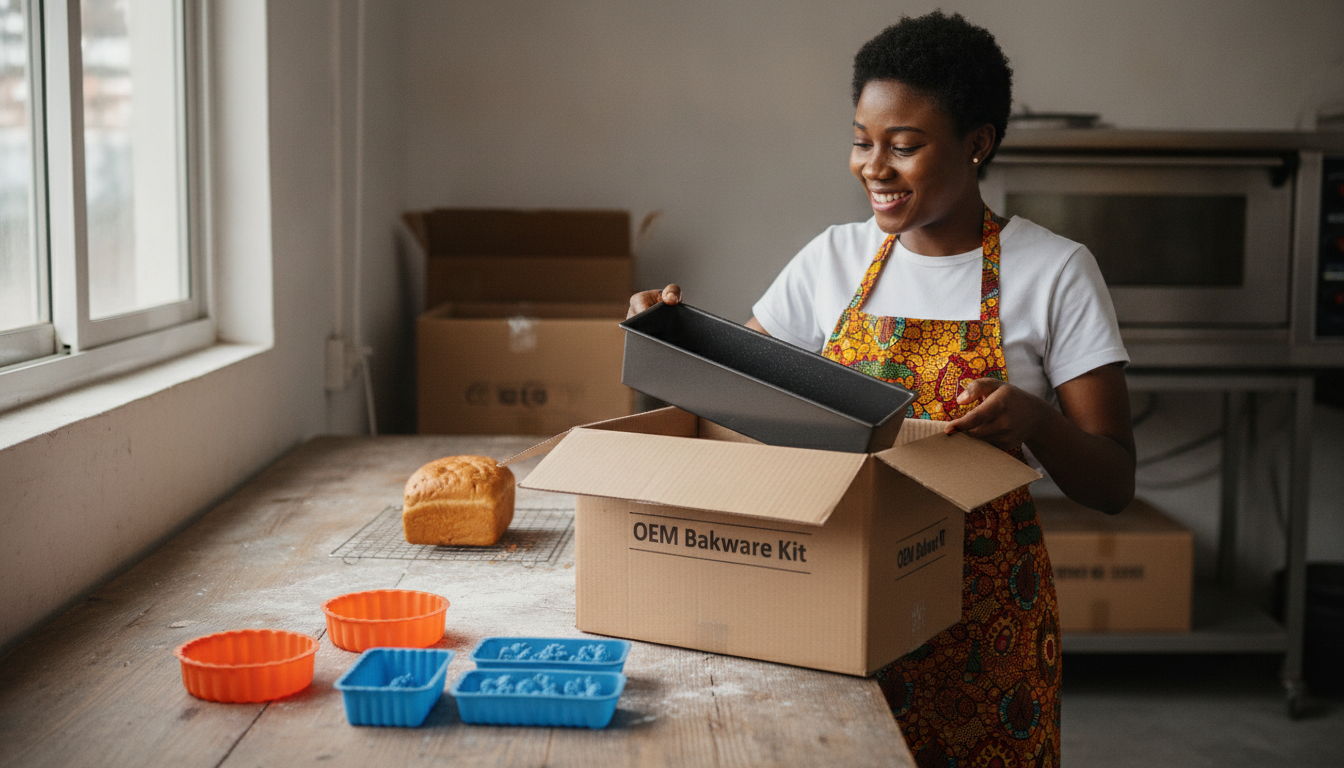
A small bakery equipment kit OEM bundles the core tools needed to produce bread, cakes, or pastries at startup volume, often with the option to private‑label the packaging. The kit typically combines baking pans, decorating tools, and handling accessories in quantities calibrated for a micro‑bakery producing 50 to 200 units per day.
In over a decade of manufacturing bakeware in Yongkang and exhibiting at Yiwu, we have seen Nigerian buyers successfully start with a core 30‑piece bundle, then scale by reordering best‑selling shapes. A custom OEM private‑label bakeware program lets you add your logo and retail packaging from the first shipment. For wholesale orders, see commercial round pizza pans (7″–11″).
The total spend for a small bakery equipment kit OEM depends on whether you are validating designs or launching a retail brand. Below is a tiered comparison using typical factory‑direct pricing ranges for mixed bakeware shipped to Lagos.
Sample MOQ: 1 piece. Bulk MOQ: 30 pieces per SKU. Sampling time: 7‑10 days.
A low‑MOQ bakeware program lets you mix 10‑15 SKUs in one shipment while staying under 500 total pieces, dramatically reducing warehousing risk in a new market.
Not all factories that advertise “OEM services” actually control their production. Use these verification steps before sending a deposit.
Request a live video walkthrough that shows the production floor, raw material stock, and QC station. A factory that only sends pre‑recorded clips may be a trading company operating out of an office. Our in‑house capacity of 500,000 units per month across 7 lines means mixed‑container orders move without delay; you can request a real‑time tour during your negotiation.
For Nigeria, insist on SGS‑tested, FDA food‑grade, PFAS‑free, and Pb‑free documentation. These certifications are increasingly demanded by Nigerian retailers and health‑conscious consumers. Cross‑check the report number on the testing lab’s website; forged reports are common. A genuine SGS‑certified bakeware supplier will share the full PDF without hesitation.
Ask the factory to record a short clip of your chosen molds being packed with your logo or neutral packaging. This confirms the line is active and that quality matches the pre‑production sample you received.
Does the supplier know which Lagos terminal (Apapa) handles bakeware containers? Can they advise on SONCAP documentation or Form M requirements? A partner with baking tools wholesale Nigeria experience will already have freight forwarder relationships and can provide a pro‑forma invoice tailored for Nigerian Customs.
Importing a small bakery equipment kit OEM into Nigeria requires specific paperwork. Missing one document can add 2‑3 weeks of demurrage at the port.
Total duties on bakeware imports into Nigeria typically range from 5% to 20%, depending on the material and HS classification. Factor in an additional 7.5% VAT and clearance agent fees (usually NGN 150,000, 300,000 per container).
Before confirming a pro‑forma invoice for your small bakery equipment kit OEM, run through this checklist.
A basic small bakery kit includes carbon steel loaf and cake pans, silicone molds for muffins and desserts, stainless steel mixing bowls and sifters, aluminum sheet pans, and a set of decorating nozzles. Aim for 30‑50 total pieces across 10‑15 SKUs to handle daily production of 50‑200 baked goods.
A factory‑direct starter kit can range from $150 to $600 for samples (1 piece per SKU) and $800 to $1,500 for a small‑batch order of 30‑50 pieces per SKU. Final cost depends on material, brand customization, and shipping to your port.
OEM (Original Equipment Manufacturer) means a factory produces bakeware according to your specifications and applies your brand name, logo, and packaging. This lets you sell under your own label without investing in tooling, as long as you meet the factory’s minimum order quantity.
Start by listing the 5‑7 products you will sell daily, then map each product to the specific pan or mold it requires. Choose a supplier who offers 1‑piece samples so you can test heat distribution and non‑stick performance in your own oven before ordering in volume.
For bread, focus on carbon steel loaf pans and perforated baguette trays; for cakes, invest in anodized aluminum round and square pans plus silicone molds for layered designs; for pastries, stock flat baking sheets and tart rings. A mixed kit that covers all three lets you pivot as customer demand shifts.
Ready to source your own small bakery equipment kit OEM with 1‑piece sample flexibility?
Request 1‑Piece Samples & Get Your Factory‑Direct Quote →
Browse OEM-ready bakeware from Shansen (SGS / FDA / PFAS-free / Pb-free, MOQ 1-50):
MOQ 1 set on stock configurations. Tell us what you need and we reply on WhatsApp.
Click the button below to open WhatsApp. If you're not logged in to WhatsApp Web yet, scan the QR code first — then come back here and copy the message into the chat.