📋 Table of Contents
Sourcing a professional baking tool bundle for the African market, whether you supply bakeries in Lagos, Nairobi, or Johannesburg, starts with matching material durability to local baking habits. Shansen Bakeware’s factory-direct model lets you validate 1-piece samples before committing to container volumes.
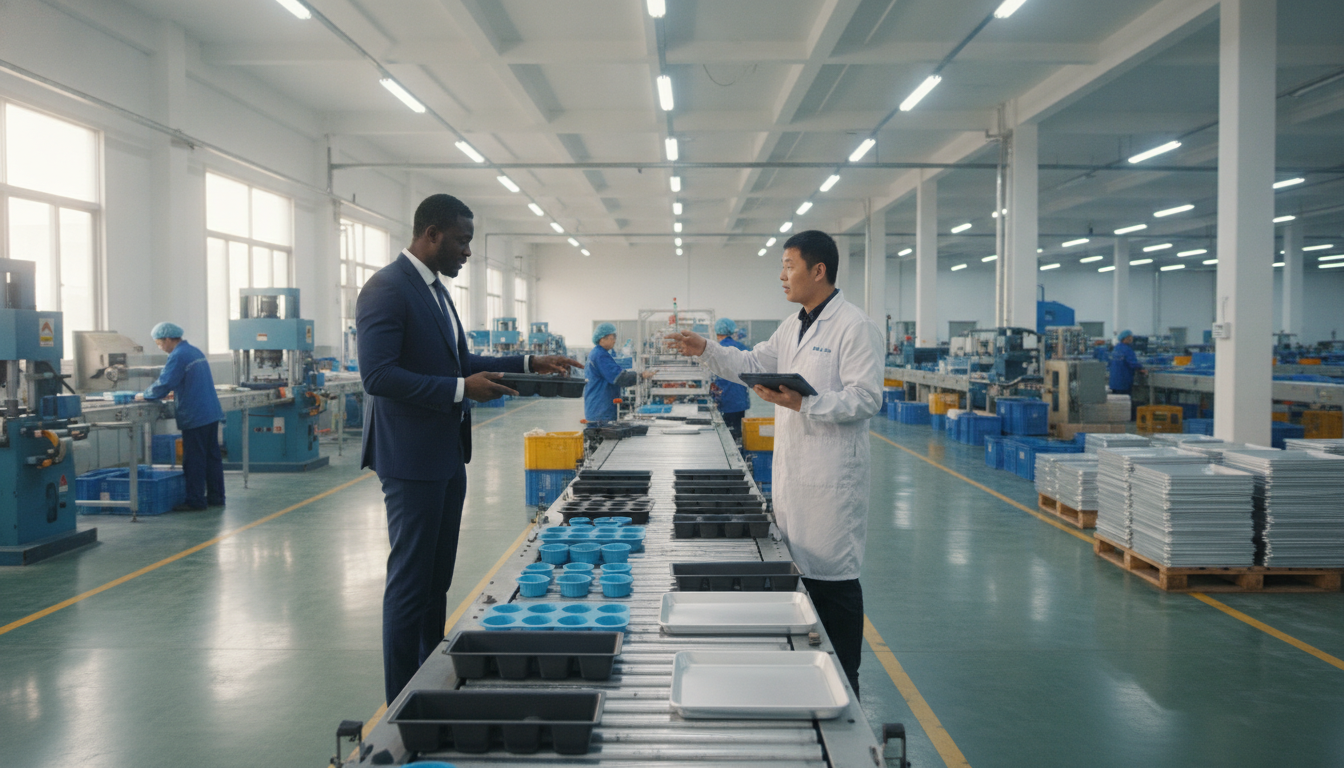
A professional baking tool bundle is a curated set of bakeware items, often combining materials like silicone mats, carbon steel loaf pans, and stainless steel spatulas, designed for commercial bakeries and catering suppliers. Instead of sourcing each SKU separately, a bundle gives you a ready-to-stock lineup that covers the most-used tools in professional kitchens. For African importers, this means fewer supplier relationships and lower shipping complexity per unit, while still offering variety that sells across bakery supply stores.
Choosing the right material inside a professional baking tool bundle directly determines how well the tools hold up to daily commercial use. Each material has distinct heat-handling, release, and durability profiles. Below, we break down the four main options.
Silicone bakeware is inherently non-stick without chemical coatings and handles from -40°C to 230°C. Since Shansen’s silicone lines are PFAS-free and SGS-tested to FDA food-grade, buyers avoid the leaching concerns common in low-grade imports. Silicone works best for muffin molds, cake pans, and pastry mats in high-volume bakeries.
Carbon steel heats fast and evenly, making it a favorite for loaf pans and tart tins. However, without proper seasoning, carbon steel can warp on induction cooktops or rust if stored damp-complaints common among end-users. Our carbon steel goes through a pre-seasoning treatment and is included in bundles with care instructions to extend non-stick life.
Stainless steel offers the highest durability and resistance to rust, denting, and acidic foods. In a bundle, stainless steel wire whisks, sifters, and bread knives complement softer-material pans. Because it won’t warp under fast temperature shifts, it’s a safe bet for bakeries that operate continuous conveyor ovens.
Aluminum distributes heat more evenly than carbon steel and weighs less than stainless. For African bakeries that rely on manual handling, lightweight aluminum sheet pans reduce fatigue. We finish aluminum items with an anodized layer to prevent corrosion, addressing the common complaint that bare aluminum pits after cleaning.
High minimums tie up capital before you know what sells. A professional baking tool bundle that ships with an MOQ as low as 1 piece per SKU changes the equation for distributors testing new markets or adding a baking line to an existing kitchenware portfolio. Our low MOQ bakeware for startups model lets you sample, test, and tweak before ordering bulk.
Request one silicone loaf pan, one carbon steel tart tin, and one stainless steel strainer as a sample. In 7-10 days, you receive the exact items you will later resell. Use this stage to photograph for your catalogue, test in a local bakery, and gauge buyer interest.
Once a product passes your quality check, order 30 pieces per SKU. This volume fits into less-than-container-load (LCL) shipments, keeping freight costs to a minimum. For a three-SKU bundle, that is only 90 total pieces, a manageable trial order for Lagos or Nairobi warehouse space.
When your bundle gains traction, scale to full container loads. Shansen’s loading teams are trained to optimize container cube utilization for African ports, ensuring you pay for product, not air. A 40-foot container can carry over 8,000 multi-piece sets when packed efficiently.
Regulatory bodies in Nigeria (NAFDAC), Kenya (KEBS), and South Africa (NRCS) increasingly enforce food-contact material compliance. Non-compliant bakeware gets held at port, costing you demurrage and lost sales. Our food-grade SGS FDA certified bakeware already aligns with these requirements.
Shipping from Ningbo port to Africa has proven routes that cut transit time and cost. A professional baking tool bundle consolidated in Yiwu moves to Ningbo, then onto Lagos Apapa, Mombasa, or Abidjan for Francophone West Africa. We arrange baking tools wholesale Nigeria shipments that also serve nearby ports in Cotonou and Lomé.
For LCL shipments, our packing team double-wraps carbon steel items with VCI paper to prevent sea-air corrosion, addressing the rust complaint that surfaces when steel pans spend weeks at sea.
Before you finalize a professional baking tool bundle, weigh these four factors against your market’s specific demands.
A bundle heavy on silicone works for cake-focused bakeries. Carbon steel suits bread bakeries with stable oven temps. Stainless steel tools round out any set. Choose the mix that reflects what your customers actually bake daily.
If you have a limited launch budget, start with the 1-piece sample approach then order 30 units per SKU. This strategy preserves cash while giving you real market feedback before heavy inventory investment.
Check NAFDAC, KEBS, or NRCS import guidelines and make sure each material in the bundle has the corresponding SGS test report. Missing a Pb-free certificate on a single strainer can hold an entire container at customs.
For brand-building, we offer OEM private label on any bundle item. Even at small volumes, you can add your logo to silicone spatulas and packaging, differentiating your bundle from generic imports.
A professional baking tool bundle is a curated set of bakeware essentials used in commercial kitchens-typically combining silicone, carbon steel, stainless steel, and aluminum tools. It saves bakeries and distributors the time of sourcing individual SKUs while ensuring material compatibility and cohesive branding across the kit.
The four most common materials are silicone (non-stick, PFAS-free), carbon steel (fast heating, requires seasoning), stainless steel (durable, rust-resistant), and aluminum (lightweight, even heat). The best bundles mix materials so each tool is used where its properties perform strongest.
If you are testing a new market, start with 1-piece samples per SKU. After confirming quality and demand, move to a 30-50 unit per SKU LCL order. This sequence minimizes holding costs and lets you validate which bundle composition sells fastest before committing to full containers.
Yes. Regulators like NAFDAC (Nigeria) and KEBS (Kenya) increasingly require SGS or FDA food-grade certification for food-contact materials. Without it, shipments face port delays, rejection, or destruction. Ensure your supplier provides batch-specific test reports for PFAS, lead, and overall food-safety compliance.
From Ningbo port, transit to Lagos Apapa takes 25-32 days, to Mombasa 22-28 days, and to Abidjan/Dakar 28-33 days. LCL and FCL services are available, and experienced suppliers optimize container loading to reduce per-unit freight cost on professional baking tool bundles.
Ready to source your first professional baking tool bundle with 1-piece samples?
Request samples now →
Written by the Shansen Bakeware Export Team.
MOQ 1 set on stock configurations. Tell us what you need and we reply on WhatsApp.
Click the button below to open WhatsApp. If you're not logged in to WhatsApp Web yet, scan the QR code first — then come back here and copy the message into the chat.