📋 Table of Contents
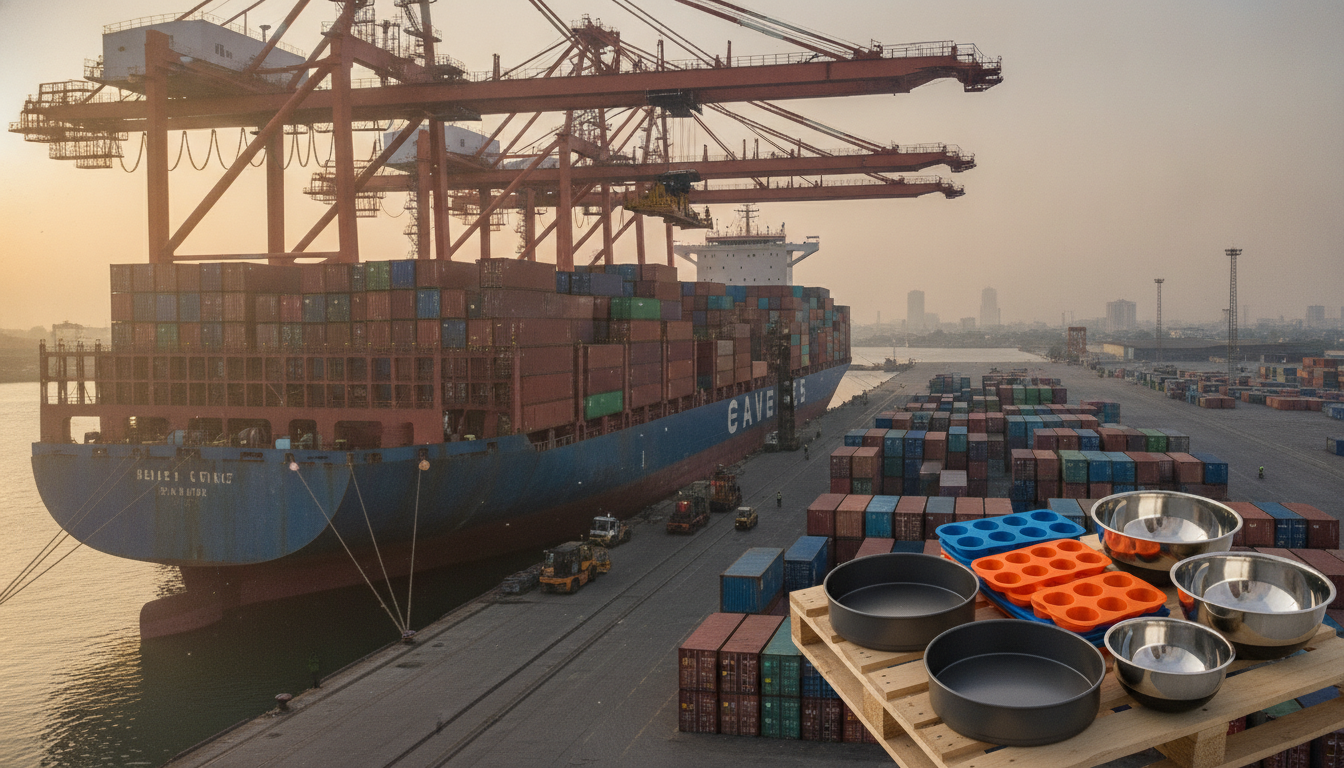
Rising inflation and dollar liquidity pressures in Nigeria force every bakery equipment importer Nigeria to rethink sourcing. Locking $10,000 in a single SKU order is no longer viable when shelf-space is uncertain and consumer price sensitivity is high. You need a manufacturer that ships one piece as a sample, holds consistent food-grade standards, and consolidates mixed containers to Lagos Apapa port without wasting cubic meters.
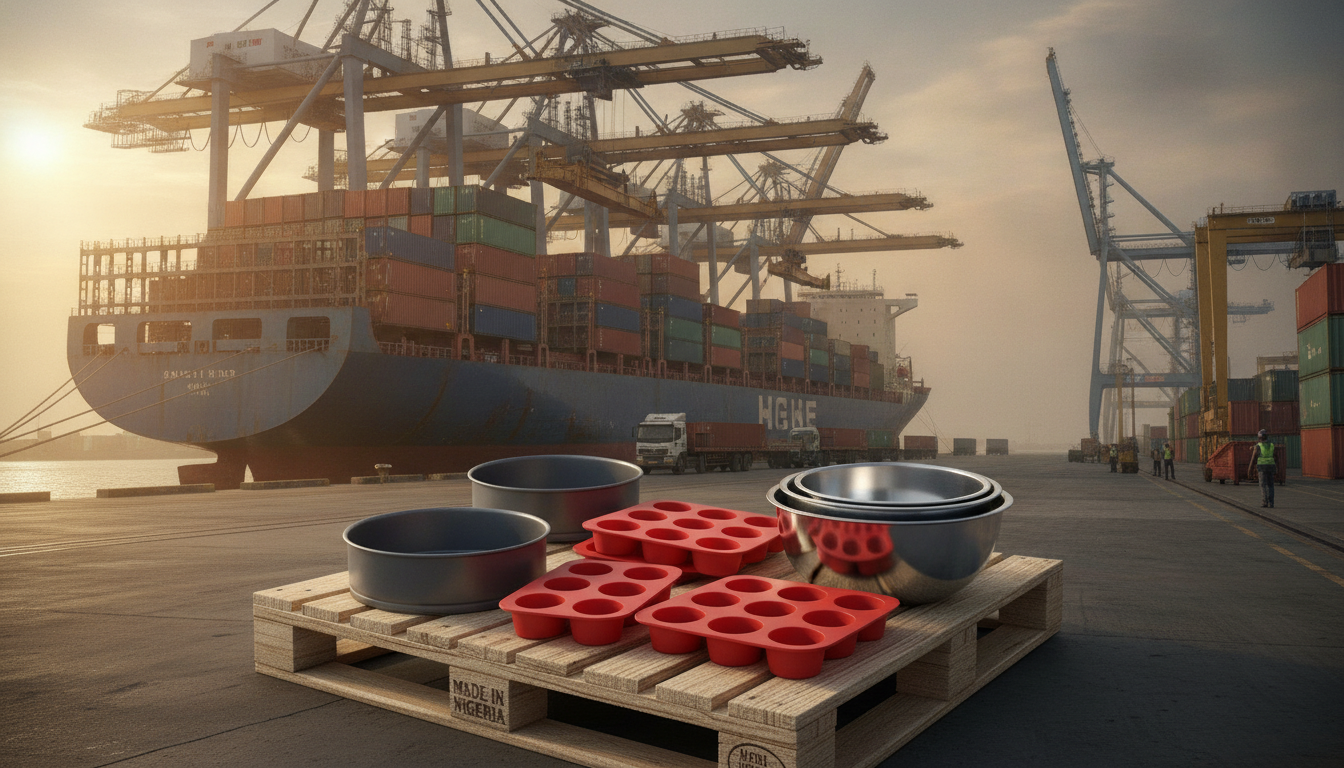
China’s bakeware manufacturing clusters offer a scale and material variety that no single African factory matches. A common complaint buyers raise is that carbon steel pans warp on induction hobs because the gauge is too thin. In our manufacturing lines in Yongkang, Zhejiang, we run seven material categories, silicone, carbon steel, stainless steel, aluminium, cake-decorating tools, strainers & sifters, and multi-piece bakeware sets, so you can match metal gauge, coating chemistry, and price point to each market segment. Statista reported that the global kitchenware market crossed $40 billion in 2024, and bakeware is a fast-growing slice of that pie.
Heavy-gauge carbon steel from our line resists warping even on induction cooktops that heat rapidly. We also apply a PFAS-free coating that survives above-normal oven cycles. A Reddit thread noted a carbon steel pan rusting within 45 days, typically because the pre-seasoning was skipped. We only ship bakeware with a factory-applied food-grade protective layer, so the rust issue is engineered out before the product reaches your warehouse.
When a distributor wins a supermarket chain listing, the demand spike can be brutal. Shansen’s Yongkang factory runs at 500,000 units per month, with in-house QC across all seven lines. This capacity means seasonal orders in Nigeria, Ramadan/Eid baking surges, Christmas cake-tool demand, don’t get stuck behind other clients’ production slots.
A bakery equipment importer Nigeria cannot afford a shipment held at Apapa because of lead or PFAS limits. Nigerian customs increasingly reference international food-contact standards. You need explicit SGS test reports and FDA food-grade compliance for silicone and metal bakeware. We supply PFAS-free and Pb-free certificates with each batch. A 2024 Prudent Reviews analysis flagged that non-stick coatings degrade sooner than advertised when cheaper PTFE formulations are used. Our silicone line eliminates coating concerns entirely for muffin trays and cake moulds, while our coated steel lines use lab-tested compounds that outlast standard market abrasion cycles.
FDA 21 CFR 177.2600 sets extractable limits for rubber and silicone articles in repeated food contact. Every Shansen silicone pan is batch-tested to stay within those limits. Distributors selling into South Africa’s regulated chains should request this certification on file.
California Proposition 65 and AB 1200 restrict PFAS and heavy metals in food-contact items. While those are US regulations, Nigerian consumers are becoming aware through social media. Stocking PFAS-free bakeware, backed by lab reports, gives your brand a defensible claim that resonates in Lagos and Abuja’s premium supermarkets.
The biggest cash-flow killer for any new bakery equipment importer Nigeria is high MOQ. Many factories demand 500 or 1,000 pieces per design. We cut that to 1 set or 1 piece per SKU for sample validation, and bulk orders from 30 pieces per SKU. This lets you test a 5-piece carbon-steel bakeware set in Ikeja and Marina markets without spending $8,000 upfront. For more on small-batch strategies, see our low-MOQ bakeware for startups page.
Sample cost traditionally runs $50-$200 plus express freight, and many importers skip this step, only to discover uneven coating or poor gauge after the container arrives. We ship 1-piece samples via consolidated courier within 7-10 days. One Lagos-based importer used this to validate three carbon steel SKUs before placing a first order of 120 units across the three designs, avoiding dead stock.
No hidden mould fees. Carbon steel and aluminium bakeware do not require expensive tooling because we use standardized heavy-gauge blanks and CNC trimming. Custom private labels need only a screen-printing screen or a packaging design file, not a costly mould investment.
Shipping from Ningbo port to Lagos Apapa or Mombasa isn’t just about freight rates. Container optimisation matters because bakeware is volumetric, a 40HQ can carry 20-30% fewer units of round cake tins than rectangular sheet pans if palletised poorly. We mix SKUs across silicone (compressible), carbon steel (nestable), and aluminium (stackable) to push the load factor close to 85-90% by cube, cutting your per-unit landed cost. For more on Nigeria-specific distribution, visit our baking tools wholesale Nigeria service page.
Every container shipment includes a packing list, commercial invoice, bill of lading, and SGS test reports. We also attach a Certificate of Origin (Form E) when requested, which can reduce duty under ECOWAS trade protocols.
If you don’t have a full 20-ft container, we consolidate your 8-10 SKU order with other West African-bound goods in our Yiwu warehouse. LCL consolidation reduces the cost barrier for first-time importers testing the market.
Choosing a bakeware supplier isn’t about the lowest FOB price. Evaluate on these four factors:
Also, cross-check our detailed food-grade and SGS certification hub if you are going into the retail channel where chain-store compliance audits require these documents upfront.
Start by requesting 1-piece samples from a verified Chinese factory that offers SGS food-grade certifications. Confirm MOQ and FOB pricing per SKU, then arrange ocean freight from Ningbo to Lagos Apapa. Ensure the supplier provides packing list, bill of lading, and Form E certificate for customs clearance. Working with a manufacturer that optimises container loading reduces per-unit landed cost.
Nigerian customs and health authorities increasingly require SGS test reports and FDA food-grade documentation for bakeware. Look for PFAS-free and Pb-free certificates. FDA 21 CFR 177.2600 compliance for silicone items and California Proposition 65 alignment for heavy metals give your brand a competitive edge in premium retail outlets.
Many factories require 500-1,000 pieces per design, but factory-direct suppliers like Shansen Bakeware offer sample orders from 1 piece and bulk orders from as low as 30 pieces per SKU. This low MOQ allows Nigerian importers to test market response without tying up large amounts of capital in inventory.
Ocean freight from Ningbo to Lagos Apapa for a 20ft container ranges between $2,500 and $4,000 depending on the carrier and season (as of mid-2024 market rates). LCL consolidation for smaller volumes costs $350-$600 per cubic metre. Container optimisation by mixing stackable and compressible bakeware SKUs reduces the effective freight cost per unit.
Yes. Manufacturers with OEM private-label services can screen-print your logo onto bakeware and supply custom retail packaging, hang-tags, and barcode stickers. No expensive moulds are required for standard shapes; just supply the artwork. This lets you build a recognisable Nigerian brand without heavy upfront tooling investment.
Ready to test a sample without locking up capital? Request 1-piece samples and a container loading plan tailored to Apapa or Mombasa.
Request Samples & MOQ Guide →
Written by the Shansen Bakeware Export Team.
MOQ 1 set on stock configurations. Tell us what you need and we reply on WhatsApp.
Click the button below to open WhatsApp. If you're not logged in to WhatsApp Web yet, scan the QR code first — then come back here and copy the message into the chat.