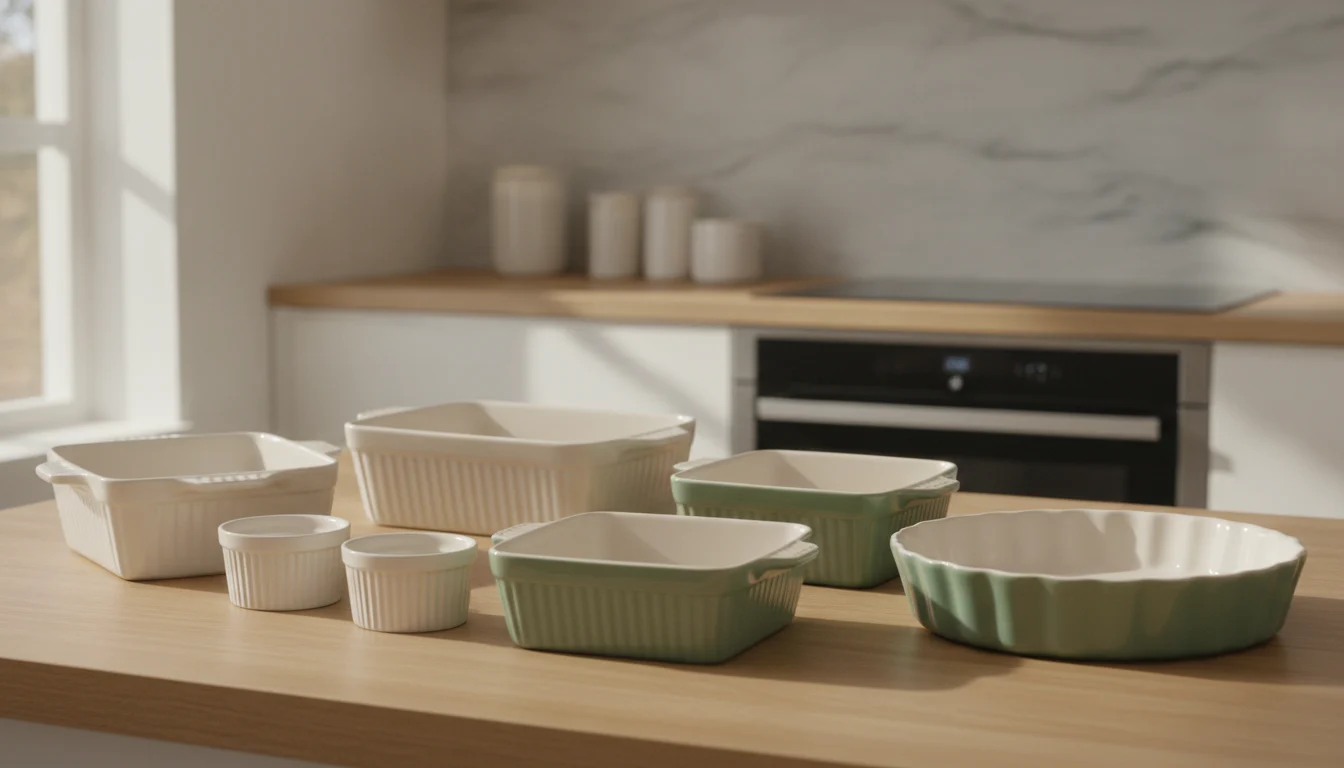
A ceramic bakeware set typically includes 3 to 11 pieces-baking dishes, casseroles, and ramekins-with glazed ceramic or ceramic-coated metal construction. Most sets are oven-safe to 450°F-500°F, marketed as nonstick, and priced between $40 and $180 retail. Buyers report attractive aesthetics but frequent chipping at rims and edges, uneven heating compared to metal pans, and nonstick performance that requires greasing despite marketing claims.
📋 Table of Contents
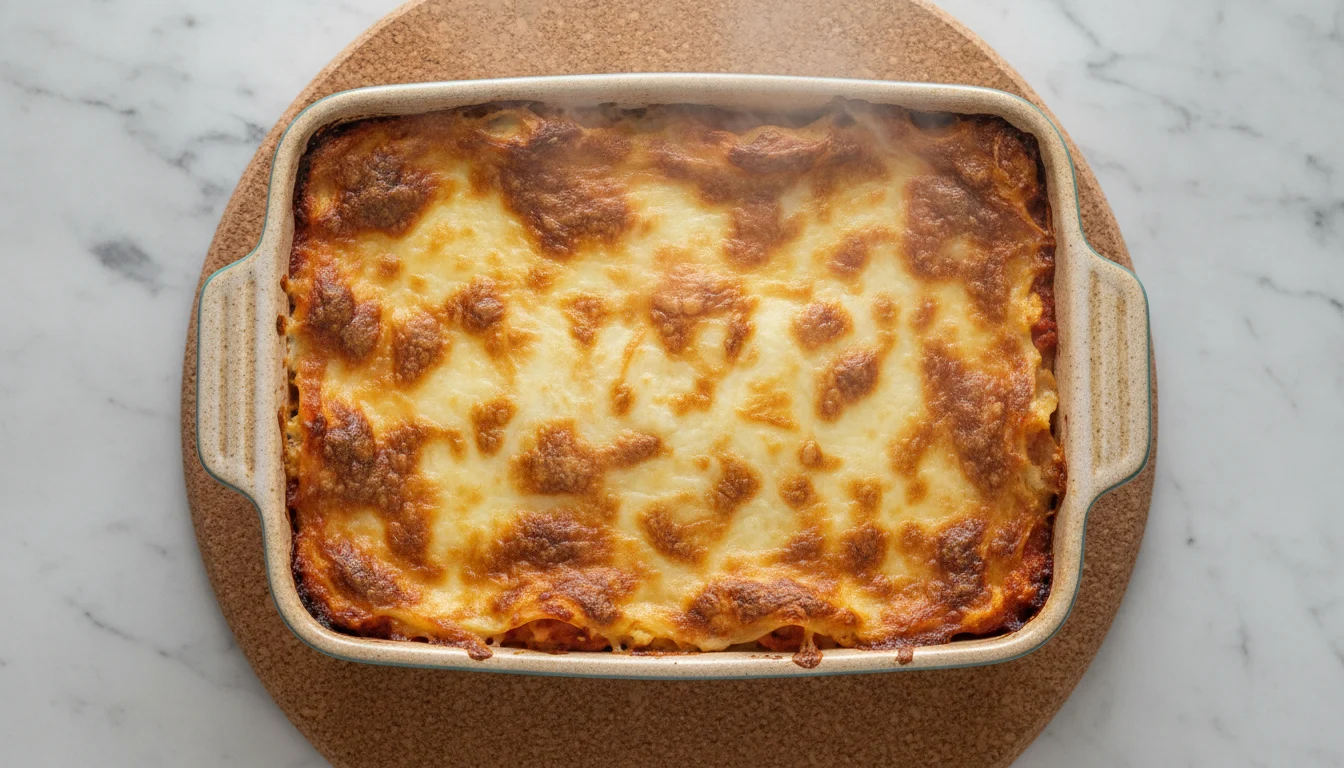
A ceramic bakeware set bundles multiple pieces designed for oven-to-table use. Piece counts range from 3-piece starter sets to 11-piece comprehensive collections. Understanding what each set includes helps buyers match inventory to customer cooking habits and price sensitivity.
Entry-level sets (3-5 pieces) usually include one rectangular baker, one square casserole, and two to three round ramekins. Mid-range sets (6-8 pieces) add a loaf pan, a pie dish, and sometimes silicone or glass lids. Premium sets (9-11 pieces) expand to multiple size tiers within each shape, plus trivets or silicone handle grips.
Some sets include lids (glass, silicone, or ceramic), which extend functionality for storage and reheating. Trivets, silicone handle covers, and recipe booklets are common premium-tier extras. Buyers should verify whether lids are oven-safe to the same temperature as the base pieces, as mismatched limits reduce versatility.
Ceramic bakeware sets fall into two categories: solid ceramic (glazed stoneware) and ceramic-coated metal (aluminum or carbon-steel core with a ceramic nonstick layer). Each material delivers different heat distribution, weight, durability, and nonstick performance. Distributors need to clarify which construction their target customers expect.
Solid ceramic pieces are heavy, retain heat well, and offer an attractive oven-to-table presentation. Heat distribution is slower and more even than metal, reducing hot spots but extending bake times by 5 to 10 minutes for dense batters. The glaze provides a smooth, easy-clean surface when intact. Chipping is the primary durability concern: rims and corners crack when knocked against countertops, dishwasher racks, or other cookware. Once the glaze chips, the exposed porous ceramic absorbs moisture and stains.
Ceramic-coated sets use an aluminum or carbon-steel core with a sol-gel ceramic nonstick layer applied at high temperature. These sets are lighter, heat faster, and cost less than solid ceramic. The coating is marketed as PFAS-free and PTFE-free, appealing to health-conscious buyers. Heat distribution matches the underlying metal: aluminum heats quickly but can overbrown edges, while carbon steel holds heat longer and browns more evenly. The ceramic coating is thinner than glaze and wears faster under metal utensils, high heat, and abrasive scrubbing.
Marketing claims position ceramic bakeware sets as naturally nonstick, but buyer reviews reveal that food still adheres unless dishes are greased or lined with parchment. Solid ceramic glaze is smoother than most ceramic coatings and releases baked goods more reliably when properly seasoned with oil. Ceramic-coated metal performs well when new but loses nonstick properties as the coating degrades, typically within 12 to 24 months of regular use.
Retail reviews and distributor feedback highlight four recurring pain points with ceramic bakeware sets. Understanding these complaints helps buyers source sets with construction and care instructions that minimize returns and negative reviews.
Buyers consistently report that ceramic bakeware chips easily, especially around rims and corners after only light use or washing. Solid ceramic is brittle; impact against hard surfaces or thermal shock (moving a hot dish to a cold countertop) causes cracks. Distributors should verify that packaging includes foam corner protectors and that care instructions explicitly warn against thermal shock and dishwasher contact with metal racks.
Some users report uneven heating or longer bake times versus metal pans, which can lead to underbaked centers or overbrowned edges. Solid ceramic’s slower heat absorption extends bake times by 5 to 10 minutes, which confuses buyers accustomed to metal pans. Ceramic-coated aluminum heats faster but concentrates heat at edges, causing overbrowning. Clear labeling that explains expected bake-time adjustments reduces complaint rates.
Many complaints focus on misleading nonstick claims: food still sticks unless the dish is heavily greased or lined. Ceramic is not inherently nonstick; it requires a light oil coating before each use, especially for sticky batters like brownies and casseroles. Sets that include this instruction on the packaging or a quick-start card see fewer nonstick complaints. Buyers should request sample packaging to verify that care instructions are clear and prominent.
Several buyers dislike how heavy ceramic sets are, saying storage, lifting, and dishwashing are harder than expected. A 9×13-inch solid ceramic baker can weigh 4 to 6 pounds empty, and 8 to 10 pounds when filled. Elderly users and those with limited hand strength struggle with this weight. Distributors targeting home cooks over 60 or apartment dwellers with limited cabinet space should consider lighter ceramic-coated metal sets or smaller piece counts.
Oven-safe temperature is a critical spec for ceramic bakeware sets, as it determines which recipes the set can handle. Most sets are rated between 450°F and 500°F, but limits vary by material and construction. Buyers need to verify both the maximum temperature and whether lids, handles, and decorative elements share the same rating.
Solid ceramic (stoneware) is typically oven-safe to 500°F or higher, as the clay body and glaze are fired at much higher temperatures during manufacturing. The limiting factor is often decorative elements: metallic-glaze accents, gold or silver trim, and painted patterns may degrade above 450°F. Sets with plain glaze finishes handle higher temperatures more reliably.
Ceramic-coated aluminum and carbon-steel sets are usually rated to 450°F-500°F, limited by the sol-gel coating rather than the metal core. Exceeding the rated temperature causes the coating to discolor, blister, or lose nonstick properties. Silicone handles and glass lids often have lower limits (350°F-400°F), so buyers must check each component separately.
Thermal shock occurs when a hot ceramic dish is placed on a cold surface or exposed to cold water, causing rapid contraction that cracks the material. Solid ceramic is more vulnerable than ceramic-coated metal. Care instructions should warn against moving dishes directly from oven to countertop, refrigerator, or sink. Trivets or cooling racks included in the set reduce thermal-shock risk and add perceived value.
US distributors sourcing ceramic bakeware sets face three key decisions: material construction (solid ceramic vs. ceramic-coated metal), piece count and configuration, and whether to pursue OEM branding or stock generic inventory. Factory-direct sourcing from manufacturers with in-house production lines offers lower MOQ, faster sampling, and tighter quality control than trading-company intermediaries.
Solid ceramic appeals to buyers prioritizing aesthetics, oven-to-table presentation, and even heat retention. These sets command higher retail prices ($80 to $180 for 5-8 pieces) but carry higher breakage risk during shipping and handling. Ceramic-coated metal targets price-conscious buyers and those seeking lighter, faster-heating options. Retail prices range from $40 to $100 for comparable piece counts. Distributors should match material to customer demographics: solid ceramic for gift buyers and home entertainers, ceramic-coated metal for everyday cooks and apartment dwellers.
Our Yongkang factory runs 7 in-house bakeware lines at 500,000 units/month capacity, including carbon-steel and aluminum lines suitable for ceramic coating. Low-MOQ bakeware for startups allows buyers to request 1 set for sampling and 500 pieces per SKU for an OEM production run. This structure lets distributors validate coating quality, nonstick performance, and packaging fit before committing to container-load volumes. Solid ceramic typically requires higher MOQ (1,000-3,000 pieces per design) due to mold costs and kiln-firing economics.
US buyers require food-contact certification for ceramic bakeware. Food-grade SGS and FDA certified bakeware ensures compliance with FDA 21 CFR 175.300 for nonstick coatings and California Proposition 65 limits on lead and cadmium in ceramic glaze. Our carbon-steel line carries SGS test reports dated 2020, 2021, and 2023, with the 2020 report covering 21 CFR 175.300 non-stick coating. Reports are issued per order and confirm PFAS-free and lead-free status. Solid ceramic requires separate glaze testing for heavy metals, especially for pieces intended for acidic foods like tomato-based casseroles.
Ceramic bakeware is fragile and heavy, making container loading and packaging critical to landed cost. Sets should be individually boxed with foam corner protectors, then master-carton packed with corrugated dividers. A 20-foot container typically holds 1,200 to 1,800 sets depending on piece count and packaging thickness. Our factory ships from Ningbo port, with optimized loading for US West Coast (Los Angeles, Long Beach) and East Coast (Savannah, Newark) destinations. Transit time is 18 to 25 days to the West Coast, 28 to 35 days to the East Coast. Freight and duty are confirmed at quotation based on current carrier rates and HS code classification.
Custom OEM and private-label bakeware allows distributors to build brand equity without investing in tooling or molds. Customization options include exterior color (solid glaze or ceramic coating in custom Pantone match), packaging design (full-color retail boxes with brand logo and care instructions), and accessory bundling (silicone trivets, recipe cards, or utensil sets). Minimum order for custom exterior color is typically 1,000 pieces per SKU; packaging customization starts at 500 sets. Lead time for OEM orders is 35 to 50 days from deposit to container-ready, depending on coating cure schedules and packaging print runs.
In practice: Sampling each SKU at 1 set before a full order lets a distributor check coating adhesion, nonstick performance, and packaging durability against local shipping conditions without tying up cash in untested inventory
No. Moving a cold ceramic dish directly into a hot oven causes thermal shock, which cracks the material. Let refrigerated dishes sit at room temperature for 15 to 20 minutes before baking. This applies to both solid ceramic and ceramic-coated metal, though solid ceramic is more vulnerable. Gradual temperature changes prevent stress fractures and extend the lifespan of the bakeware.
Lightly grease the dish with oil or butter before each use, even if the set is marketed as nonstick. For sticky batters like brownies or casseroles, line the bottom with parchment paper cut to size. Solid ceramic benefits from a one-time seasoning: rub a thin layer of vegetable oil over the interior, bake empty at 350°F for 30 minutes, then let cool. This fills microscopic pores in the glaze and improves release.
Most ceramic bakeware is labeled dishwasher safe, but hand washing extends its lifespan. Dishwasher detergents are abrasive and can dull glaze or wear ceramic coatings faster. Metal dishwasher racks also chip rims when dishes shift during the wash cycle. If you use a dishwasher, place pieces on the top rack away from metal tines, and avoid high-heat dry cycles that can cause thermal stress.
Stoneware is a type of ceramic made from dense clay fired at high temperature, resulting in a non-porous, durable body. All stoneware is ceramic, but not all ceramic bakeware is stoneware. Some ceramic sets use earthenware (lower-fired, more porous clay) or porcelain (higher-fired, translucent). Stoneware is the most common material for solid ceramic bakeware sets because it balances durability, heat retention, and cost.
Ceramic-coated bakeware typically lasts 12 to 24 months with regular use before the nonstick coating degrades. Lifespan depends on care: avoiding metal utensils, hand washing instead of dishwasher use, and staying within the oven-safe temperature limit all extend coating life. Once the coating wears, the underlying metal is exposed, which can rust (carbon steel) or discolor (aluminum). Solid ceramic bakeware lasts much longer, often decades, if the glaze remains intact and the piece avoids thermal shock.
Ready to source a ceramic bakeware set that balances aesthetics, durability, and nonstick performance for your US market?
Request samples and MOQ details →
Written by the Shansen Bakeware Export Team.
MOQ 1 set on stock configurations. Tell us what you need and we reply on WhatsApp.
Click the button below to open WhatsApp. If you're not logged in to WhatsApp Web yet, scan the QR code first — then come back here and copy the message into the chat.