
If you’re importing bakeware into Nigeria through Apapa Port, the apapa port bakeware clearance timeline nigeria averages 3 to 14 days from vessel berthing to container gate-out, depending on document readiness, inspection backlog, and agency holds. Delays beyond two weeks often stem from incomplete paperwork, HS code misclassification, or Standards Organisation of Nigeria (SON) holds on kitchenware shipments. This guide breaks down every stage of the clearance process, the specific documents bakeware importers need, how to classify silicone, carbon steel, and aluminum bakeware under the correct HS codes, and practical steps to minimize demurrage and storage costs at Africa’s busiest container terminal.
📋 Table of Contents
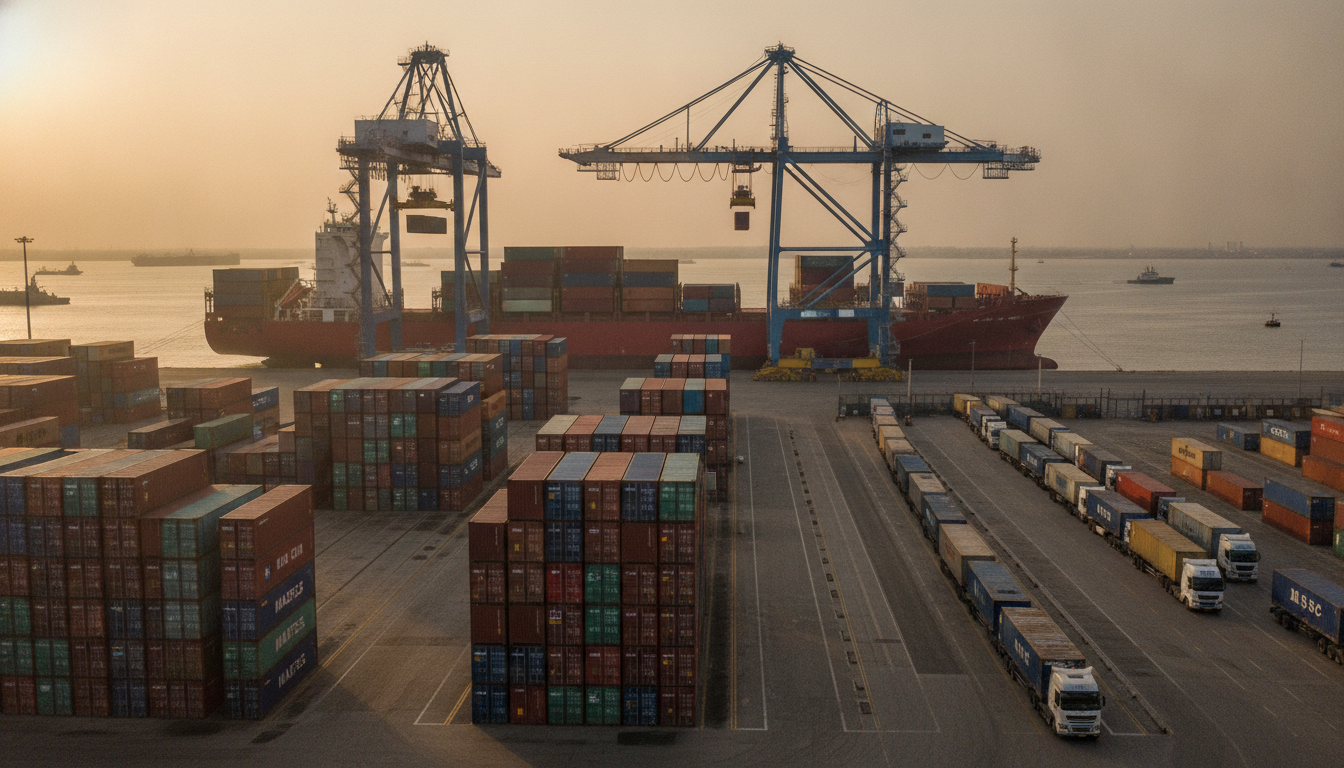
Understanding the apapa port bakeware clearance timeline nigeria requires breaking the process into distinct phases. The timeline starts when your vessel berths at Apapa and ends when your container exits the port gate. Each phase has specific dependencies and potential delay triggers.
Once the vessel berths, your shipping line or freight forwarder receives the cargo manifest and issues a release order. You or your customs broker must lodge the Single Goods Declaration (SGD) electronically through the Nigeria Customs Service (NCS) portal. If your documents are ready before the vessel arrives, this phase takes 1 day. If you wait until after berthing to compile paperwork, expect 2 to 3 days.
Nigeria Customs assesses your SGD and issues a demand notice for duty, VAT, and any applicable levies. Bakeware imports face a standard duty rate of 20% under the ECOWAS Common External Tariff, plus 7.5% VAT. Payment is made electronically, and confirmation typically posts within 4 to 6 hours. Misclassification of HS codes or discrepancies between your invoice and the PAAR certificate can trigger a query, adding 1 to 2 days for resolution.
After payment, Customs schedules a physical examination if your consignment is selected for inspection. Bakeware shipments are often examined because kitchenware falls under SON’s regulated product list. Examination takes 1 day if the container is accessible and the examiner is available. Truck gridlock at Apapa frequently delays container positioning by 1 to 3 days, even after clearance is granted.
Once Customs issues the release note, your haulage company retrieves the container. Apapa’s truck-call-up system, introduced to manage congestion, requires pre-booking a slot. Importers report that securing a slot and physically exiting the port can take 2 to 5 days during peak periods. Total elapsed time from berthing to delivery: 7 to 14 days for straightforward shipments, or 14 to 21 days if SON holds or document corrections are needed.
Incomplete or incorrect documentation is the single largest cause of clearance delays at Apapa Port. Bakeware importers must prepare the following documents before the vessel arrives to avoid holds and demurrage charges.
Shansen Bakeware ships all wholesale bakeware sets with SGS food-grade test reports and can assist with SON Product Certificate applications before your container leaves Ningbo Port, reducing the apapa port bakeware clearance timeline nigeria by 3 to 5 days.
Correct HS code classification determines your duty rate and whether your shipment requires additional agency clearance. Misclassification is a common cause of Customs queries that extend clearance time by 2 to 4 days.
Most carbon steel baking pans, cake tins, muffin trays, and roasting pans are classified under HS 7323.93.00 (table, kitchen or other household articles of stainless steel) or HS 7615.10.00 (table, kitchen or other household articles of aluminum). Both codes carry a 20% import duty and 7.5% VAT. If your bakeware has a non-stick coating, ensure your invoice describes the coating material (PTFE, ceramic, or silicone-based) to avoid reclassification queries.
Silicone baking mats, muffin cups, cake molds, and spatulas fall under HS 3924.10.00 (tableware and kitchenware of plastics). This code also attracts 20% duty and 7.5% VAT. SON requires silicone kitchenware to meet food-contact safety standards, so importers should provide test reports showing compliance with FDA 21 CFR 177.2600 or equivalent.
Sets containing multiple materials (for example, a set with carbon steel pans, silicone mats, and stainless steel cooling racks) are classified by the material that gives the set its essential character. If the set is marketed as a baking pan set with silicone accessories, classify under the metal pan’s HS code (7323.93.00 or 7615.10.00). If the set is primarily silicone molds with metal accessories, use 3924.10.00. Customs may request a breakdown of individual item values to verify classification.
HS Code Quick Reference: Carbon steel / aluminum bakeware → 7323.93.00 or 7615.10.00. Silicone bakeware → 3924.10.00. Duty: 20% + 7.5% VAT on all codes.
Standards Organisation of Nigeria (SON) regulates kitchenware imports to ensure products meet Nigerian Industrial Standards (NIS). Bakeware falls under SON’s Mandatory Conformity Assessment Programme (MANCAP), which requires either a Product Certificate (PC) or a SONCAP certificate before clearance.
The fastest route is to obtain a SON Product Certificate before your container leaves China. Your supplier applies through a SON-authorized inspection body (Intertek, SGS, or Bureau Veritas) by submitting product samples, test reports, and factory documentation. The inspection body conducts a factory audit and product testing, then issues a PC valid for one year. Processing time is 4 to 6 weeks. Once you have the PC number, include it on your Form M and PAAR certificate to avoid SON holds at Apapa.
If your shipment arrives without a PC, SON will detain your container for testing. The inspection process involves drawing samples, laboratory testing for food-contact safety (heavy metals, migration limits, and material composition), and a compliance review. This adds 5 to 10 days to the apapa port bakeware clearance timeline nigeria and incurs testing fees of ₦50,000 to ₦150,000 depending on the number of SKUs in your shipment.
Bakeware does not require NAFDAC (National Agency for Food and Drug Administration and Control) clearance unless the product is marketed with health claims or as a medical device. Customs may refer your shipment to the Nigeria Police or DSS (Department of State Services) for security screening if the cargo description is vague or if the consignee is flagged in the risk-management system. Clear, specific product descriptions on your invoice and packing list reduce the likelihood of secondary agency referrals.
In practice: A Lagos bakery-supply distributor imported 500 carbon steel baking pans without a SON PC, resulting in a 9-day hold and ₦120,000 in testing fees; their second shipment included a pre-approved PC and cleared in 5 days.
Every day your container sits at Apapa Port beyond the free storage period adds direct costs and opportunity costs. Importers must budget for demurrage, storage, and the revenue impact of delayed inventory.
Apapa Port grants 3 days of free storage from the date your vessel discharges cargo. After that, storage fees escalate daily. Typical rates for a 20-foot container are ₦5,000 per day for days 4-7, ₦10,000 per day for days 8-14, and ₦15,000 per day thereafter. A 10-day clearance delay (7 days beyond free time) costs ₦55,000 in storage alone. Shipping lines also charge demurrage on containers held beyond the free period, adding another $50 to $100 per day.
If your warehouse is waiting for inventory to fulfill orders, delayed clearance means lost sales or stockouts. Distributors who pre-sell bakeware to retail chains face penalties for late delivery, often 5% to 10% of the order value. Haulage companies charge waiting fees if they cannot retrieve your container on the scheduled day due to port congestion, adding ₦10,000 to ₦20,000 per day.
Extended clearance ties up working capital. If you paid your supplier 30 days before shipment and clearance takes 14 days instead of 7, your cash conversion cycle extends by a week. For importers operating on tight margins, this delay can force short-term borrowing or delay payment to the next supplier, compounding cash flow pressure.
Shansen Bakeware operates a factory in Yongkang, Zhejiang, and a sourcing showroom at Yiwu International Trade Market, with container loading optimized for Lagos Apapa and other West African ports. Our experience shipping to Nigeria has taught us how to structure documentation and packaging to minimize the apapa port bakeware clearance timeline nigeria.
We provide commercial invoices, packing lists, and SGS food-grade test reports formatted to match SON and Nigeria Customs requirements. Our export team coordinates with SON-authorized inspection agents to secure Product Certificates before your container leaves Ningbo Port, eliminating the risk of post-arrival testing delays. For low-MOQ bakeware for startups, we prepare individual SKU documentation so your customs broker can classify each item correctly and avoid HS code queries.
Our Ningbo warehouse consolidates multiple SKUs into a single container, with packing optimized for Nigeria’s 20-foot and 40-foot container standards. We label cartons with HS codes, item descriptions, and piece counts to speed up physical examination at Apapa. For distributors ordering custom OEM private-label bakeware, we include brand-specific labeling and user manuals in English, reducing the chance of Customs querying product descriptions.
Importers testing the Nigerian market can order from 1 piece per SKU, allowing you to validate demand before committing to a full container. Small test shipments clear faster because they attract less scrutiny and can often be processed as LCL (less-than-container-load) cargo, which bypasses some of the truck gridlock issues that delay full-container retrievals at Apapa.
Shansen’s 500,000 units per month production capacity means we can fulfill reorders within 15 to 20 days once you’ve validated your product mix, keeping your inventory pipeline short and reducing the working capital tied up in long lead times. Our food-grade SGS FDA certified bakeware meets SON’s material safety requirements, so you receive test reports and certificates ready for Customs submission with every shipment.
Customs clearance at Apapa Port typically takes 3 to 7 days for shipments with complete documentation and no agency holds. If your bakeware shipment requires SON Product Certificate verification or if there are HS code queries, clearance can extend to 10 to 14 days. Importers who submit Form M, PAAR certificate, and SON PC before the vessel arrives usually clear within 5 days.
You need Form M (Import Permit), PAAR Certificate (Pre-Arrival Assessment Report), original Bill of Lading, commercial invoice, packing list, and for bakeware specifically, a SON Product Certificate. Additional documents include Certificate of Origin and SGS or third-party test reports showing food-contact compliance. Missing any of these documents will delay clearance by 2 to 5 days while you obtain corrections or approvals.
Cargo clearance delays at Apapa Port are caused by incomplete documentation, SON holds pending product testing, HS code misclassification queries, physical examination backlogs, and truck gridlock that prevents timely container retrieval. Importers also experience delays when their customs broker submits the Single Goods Declaration late or when payment confirmation from the bank takes longer than expected. Port congestion and the truck call-up system add 2 to 5 days to the gate-out phase.
Bakeware is subject to SON (Standards Organisation of Nigeria) clearance under the Mandatory Conformity Assessment Programme. You need a SON Product Certificate showing that your bakeware meets Nigerian Industrial Standards for food-contact materials. NAFDAC clearance is not required for bakeware unless the product is marketed with health claims or as a medical device. SON testing covers material safety, heavy metal limits, and migration compliance.
Clearing a 20-foot container of bakeware at Apapa Port costs approximately ₦150,000 to ₦300,000 in Customs duty (20% of CIF value), VAT (7.5%), PAAR fees, customs broker charges, and terminal handling charges. If clearance extends beyond 3 days, add ₦5,000 to ₦15,000 per day in storage fees. SON testing fees for shipments without a pre-approved Product Certificate add ₦50,000 to ₦150,000. Total landed cost including clearance fees typically adds 35% to 45% on top of your FOB supplier price.
Ready to streamline your Nigeria bakeware imports with pre-approved SON documentation and optimized container loading?
Request a Nigeria Import Quote →
Written by the Shansen Bakeware Export Team.
MOQ 1 set on stock configurations. Tell us what you need and we reply on WhatsApp.
Click the button below to open WhatsApp. If you're not logged in to WhatsApp Web yet, scan the QR code first — then come back here and copy the message into the chat.