📋 Table of Contents
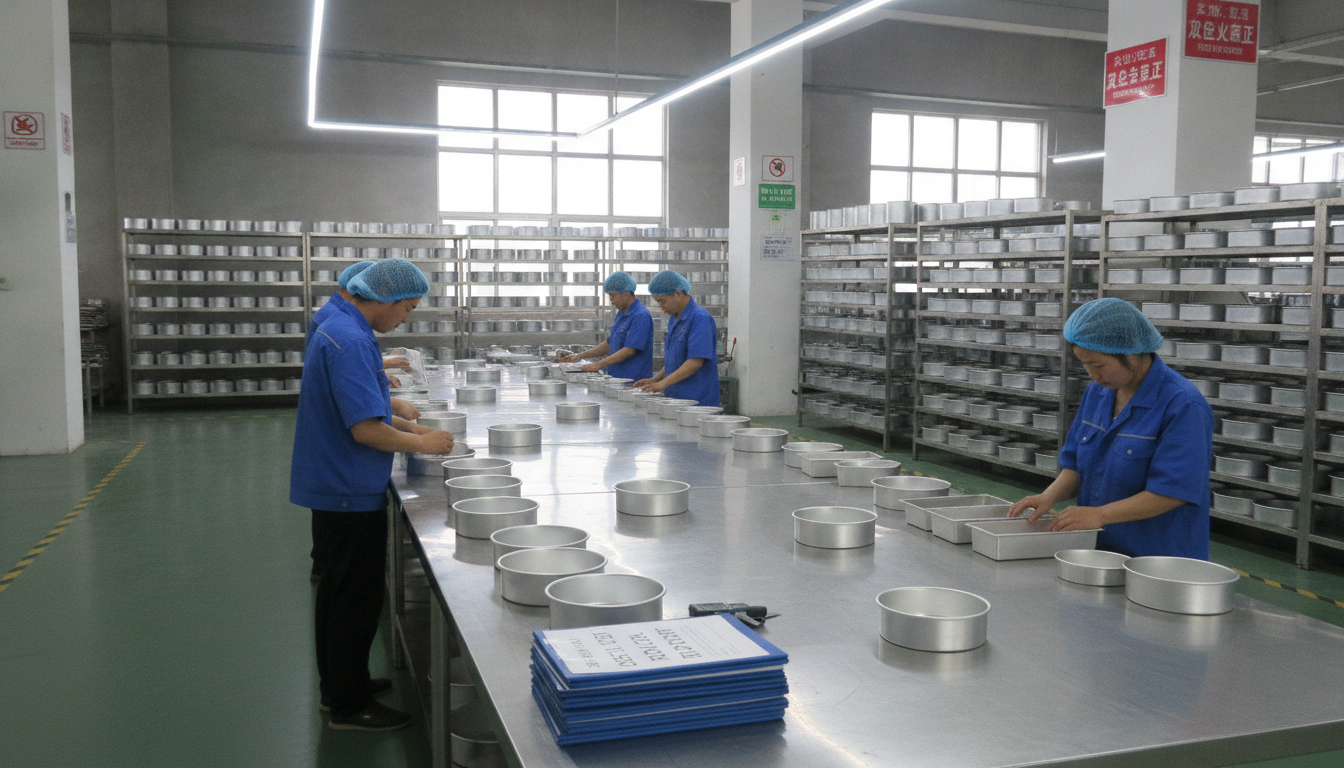
East African importers choosing between food grade tinplate vs aluminized steel durability for wholesale bakeware sets face a material decision that directly impacts product lifespan, compliance risk, and buyer trust. Tinplate is steel coated with a thin layer of tin, while aluminized steel carries an aluminum-silicon alloy coating. Both require food-grade lacquer for direct food contact, but their corrosion resistance, heat tolerance, and structural behavior differ in ways that matter for baking pans, cake molds, and roasting trays shipped to Nairobi, Kampala, and Dar es Salaam.
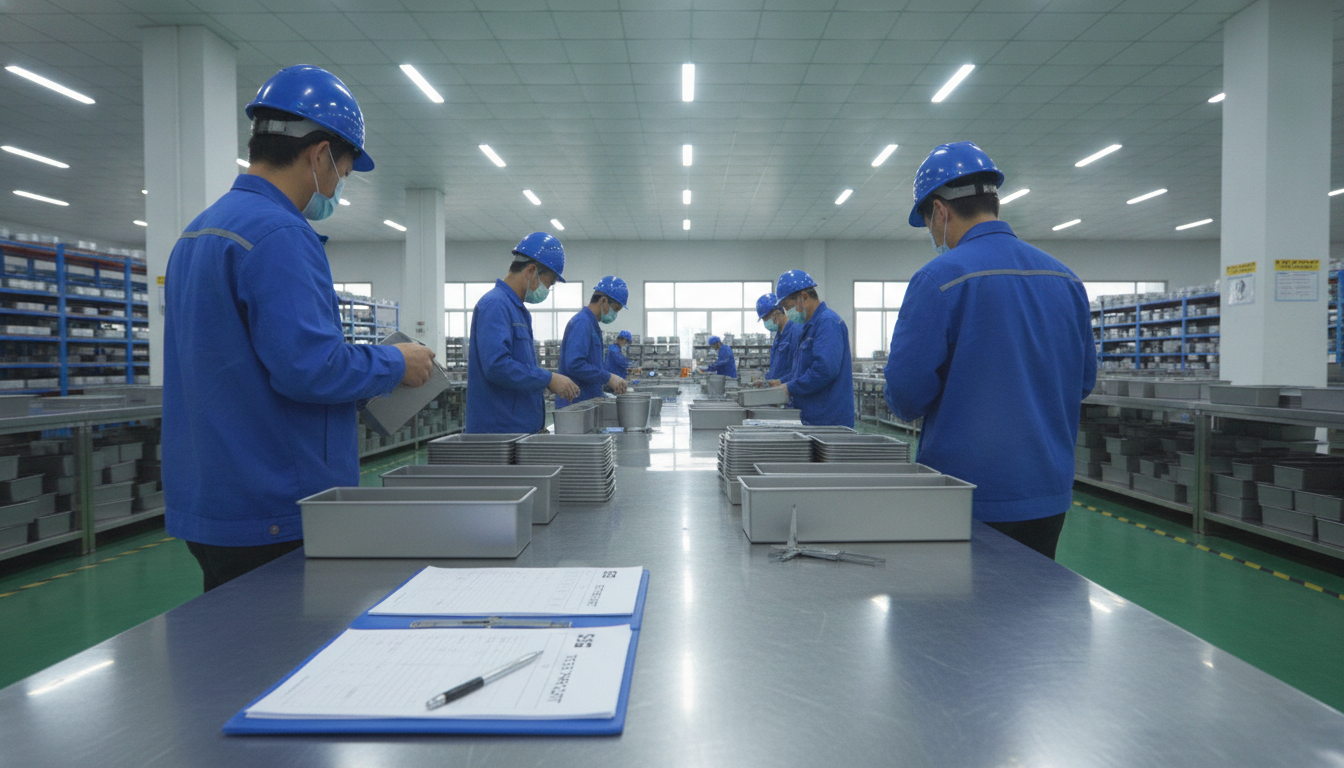
Tinplate is cold-rolled low-carbon steel with an electrolytic tin coating, typically 2.8-11.2 grams of tin per square meter. The tin layer provides sacrificial protection: it corrodes preferentially to the underlying steel, but only when the coating remains intact. Cut edges, scratches, or lacquer holidays expose the steel substrate to moisture and oxygen. Importers sourcing tinplate bakeware for Nairobi’s high-altitude dry climate see slower edge-rust than those shipping to Mombasa’s coastal humidity, where exposed steel can show orange staining within 60 days of warehouse storage.
Aluminized steel carries a hot-dip aluminum-silicon alloy coating, usually Type 1 (5% silicon) or Type 2 (9-11% silicon). The aluminum forms a passive oxide layer that self-heals minor scratches and resists atmospheric corrosion more aggressively than tin. The silicon component improves weldability and coating adhesion. Bakeware manufacturers prefer Type 1 for its balance of formability and corrosion resistance, while Type 2 is reserved for exhaust systems and high-heat industrial applications.
When tinplate and aluminized steel are sheared or stamped, the cut edge exposes the steel core. Tinplate’s tin coating acts as a cathode relative to steel, accelerating rust at the cut if moisture penetrates. Aluminized steel’s aluminum coating is anodic to steel, so the aluminum corrodes first and protects the edge longer. East African buyers report that aluminized-steel baking pans stored in non-climate-controlled warehouses in Kampala show significantly less edge discoloration than tinplate equivalents after six months.
Bakeware endures repeated heating to 180-220°C and cooling to room temperature. This thermal cycling stresses the bond between the metal substrate and the food-grade lacquer. Tinplate’s tin layer can reflow or oxidize at sustained temperatures above 230°C, creating micro-blisters under the lacquer. Buyers in Nairobi who source custom OEM bakeware for commercial bakeries report lacquer peeling on tinplate cake pans after 200-300 bake cycles, especially where oven hot-spots exceed rated temperature. Aluminized steel’s aluminum oxide layer remains stable to 315°C, extending lacquer adhesion lifespan to 500-700 cycles in the same ovens.
Tinplate for food cans typically ranges 0.18-0.25 mm thick, optimized for lightweight packaging. Bakeware requires 0.35-0.50 mm gauge to resist denting during handling, stacking, and container transit. Aluminized steel is almost always specified at 0.35 mm or thicker for bakeware, providing better dent resistance than thin-gauge tinplate. Importers shipping 40-foot containers from Ningbo to Mombasa report 3-5% dent-damage rates on 0.20 mm tinplate loaf pans versus under 1% on 0.40 mm aluminized-steel equivalents, even with identical carton packing.
Bakeware with welded or crimped seams (springform pans, multi-piece molds) exposes bare steel at the joint. Tinplate seams require post-weld tin-plating or heavy lacquer application to prevent rust, adding cost and quality-control complexity. Aluminized steel seams benefit from the self-passivating aluminum oxide, reducing rust risk even if the lacquer is thin or scratched during assembly. Distributors in Dar es Salaam who stock springform pans report fewer customer complaints about seam rust on aluminized-steel units compared to tinplate versions sourced from the same factory.
Neither bare tinplate nor bare aluminized steel meets FDA 21 CFR 175.300 standards for direct food contact without a food-grade lacquer. The lacquer, typically epoxy-phenolic, polyester, or acrylic, acts as the primary barrier between the metal and batter, dough, or acidic fillings. Shansen Bakeware applies SGS-tested lacquers that comply with FDA extraction limits for lead (< 0.5 ppm) and cadmium (< 0.1 ppm), ensuring food-grade certified bakeware for export to Kenya, Uganda, and Tanzania. The metal substrate’s role is structural; food safety depends on lacquer integrity.
Lemon bars, tomato-based savory bakes, and vinegar-marinated recipes accelerate lacquer degradation. Tinplate’s tin layer can migrate into acidic foods if the lacquer fails, contributing a metallic taste but posing low toxicity risk. Aluminized steel’s aluminum can also migrate, though the passive oxide layer slows this process. Both materials require high-quality, thick-film lacquers (12-15 grams per square meter dry film weight) for acidic-food applications. Importers in Nairobi who supply hotel bakeries prefer aluminized steel for savory baking pans because the aluminum oxide provides a secondary barrier if the lacquer thins over time.
East African buyers increasingly demand PFAS-free and lead-free certifications. Shansen sources lacquers free of per- and polyfluoroalkyl substances (PFAS) and tests finished bakeware for lead and cadmium leachability per FDA guidelines. Tinplate and aluminized steel themselves contain no PFAS; the risk lies in legacy non-stick coatings or low-quality lacquers. SGS test reports confirm compliance before shipment, reducing import-rejection risk at Mombasa or Dar es Salaam customs.
Pizza ovens and convection roasters often exceed 250°C. Aluminized steel’s 315°C continuous-use rating makes it the preferred choice for pizza pans, roasting trays, and commercial-bakery sheet pans. Tinplate’s tin coating begins to oxidize and discolor above 230°C, and repeated high-heat exposure shortens lacquer lifespan. Distributors in Kampala who supply restaurant-equipment chains report that aluminized-steel pizza pans last 18-24 months in daily commercial use, versus 9-12 months for tinplate equivalents.
Home baking rarely exceeds 200°C, and bake frequency is lower. Tinplate cake pans and loaf tins perform adequately in this use case, offering a cost advantage over aluminized steel. The thinner gauge (0.25-0.30 mm) is acceptable because home users handle pans more gently than commercial kitchens. East African importers targeting retail consumers in Nairobi and Dar es Salaam often choose tinplate for budget-friendly bakeware sets, reserving aluminized steel for premium or commercial lines.
Springform pans, tart rings, and multi-piece molds have crimped or welded seams that are vulnerable to rust. Aluminized steel’s edge-corrosion resistance and self-passivating oxide make it the safer choice for these designs. Importers who source low-MOQ bakeware for startups in Kenya report that aluminized-steel springform pans generate fewer warranty claims and customer complaints than tinplate versions, even at a 15-20% higher wholesale price.
East African startups and small importers cannot afford 3,000-5,000 piece MOQs common among Chinese bakeware factories. Shansen Bakeware’s 1-piece sampling and 30-piece-per-SKU production minimum allow Nairobi-based distributors to test tinplate versus aluminized steel pans in their own market before committing to bulk orders.
Kenya Bureau of Standards (KEBS), Tanzania Bureau of Standards (TBS), and Uganda National Bureau of Standards (UNBS) require SGS or equivalent test reports for food-contact materials. Shansen provides SGS certificates for lead, cadmium, and PFAS testing with every shipment, pre-clearing import risk. Buyers in Mombasa report that having test reports ready at customs reduces clearance time by 3-5 days and avoids the cost of third-party re-testing.
Ningbo port offers direct sailings to Mombasa (18-22 days), Dar es Salaam (20-24 days), and transshipment via Djibouti to Kampala. Shansen optimizes 40-foot container loading to maximize carton count while keeping per-unit landed cost low. A mixed container of tinplate and aluminized-steel bakeware (3,000-4,000 units depending on SKU mix) ships at $8,500-9,200 FOB Ningbo, with freight to Mombasa adding $1,800-2,100. Importers can blend materials within one container to test both options in parallel.
In practice: A Nairobi kitchenware importer ordered 1-piece samples of tinplate and aluminized steel loaf pans, tested them in a local bakery for 90 days, then placed a 30-unit-per-SKU order mixing both materials to serve budget-retail and premium-commercial segments without tying up $12,000 in untested inventory.
Tinplate trades at $950-1,050 per metric ton FOB China for 0.20-0.25 mm gauge, while aluminized steel (Type 1, 0.35-0.40 mm) costs $1,100-1,250 per metric ton. Buyers in Kampala who source baking tools wholesale for East African distribution calculate that the higher upfront cost is offset by 40-60% longer product lifespan and lower warranty-return rates.
Kenya applies 25% import duty on bakeware (HS code 7323.93), Uganda 25%, and Tanzania 25% under the East African Community Common External Tariff. Freight from Ningbo to Mombasa averages $1,800-2,100 per 40-foot container, adding $0.45-0.55 per unit for a 4,000-piece shipment.
Distributors in Nairobi who supply hotel chains and bakery-equipment stores track warranty returns and replacement costs. When total cost of ownership is calculated over two years, aluminized steel often costs less per unit-year than tinplate, even with the higher purchase price.
Aluminized steel is more durable than tinplate in bakeware applications. The aluminum-silicon coating resists edge rust, maintains lacquer adhesion at higher temperatures (up to 315°C versus 230°C for tinplate), and provides better dent resistance at typical bakeware gauges (0.35-0.40 mm). Tinplate is adequate for low-temperature home baking but degrades faster in commercial kitchens and humid storage.
Aluminized steel is better for commercial baking pans, pizza pans, and high-use applications because it tolerates higher temperatures, resists seam rust, and lasts 18-24 months in daily commercial use versus 9-12 months for tinplate. Tinplate is sufficient for budget home-baking cake pans and loaf tins where bake frequency is low and temperature stays below 200°C.
Yes, tinplate rusts faster at cut edges and scratched areas. Tin is cathodic to steel, so exposed steel corrodes rapidly when moisture penetrates. Aluminized steel’s aluminum coating is anodic to steel and forms a self-passivating oxide layer that protects cut edges longer. East African buyers report visible edge rust on tinplate within 60-90 days in humid storage, versus minimal rust on aluminized steel after 180 days.
Aluminized steel is food safe for bakeware when coated with FDA-compliant food-grade lacquer. The lacquer, not the metal substrate, provides the primary food-contact barrier. Shansen applies SGS-tested epoxy-phenolic or polyester lacquers that meet FDA 21 CFR 175.300 limits for lead and cadmium, ensuring compliance for export to Kenya, Uganda, and Tanzania.
Tinplate is steel coated with electrolytic tin (2.8-11.2 g/m²), while aluminized steel carries a hot-dip aluminum-silicon alloy coating. Tinplate is lighter (0.18-0.25 mm typical) and lower cost, used for food cans and budget bakeware. Aluminized steel is thicker (0.35-0.50 mm for bakeware), more heat-resistant (315°C versus 230°C), and offers better edge-corrosion protection.
Ready to source food-grade tinplate or aluminized steel bakeware with 1-piece sampling and 30-unit MOQs?
Request Material Samples & SGS Reports →
Written by the Shansen Bakeware Export Team.
MOQ 1 set on stock configurations. Tell us what you need and we reply on WhatsApp.
Click the button below to open WhatsApp. If you're not logged in to WhatsApp Web yet, scan the QR code first — then come back here and copy the message into the chat.