📋 Table of Contents
Launching a bakeware brand in Lagos, Nairobi, or Johannesburg without locking capital into 5,000-unit minimums separates viable startups from those that never ship a first container. Finding a low MOQ bakeware manufacturer Africa startups can trust means validating product-market fit with sample orders before committing to bulk inventory.
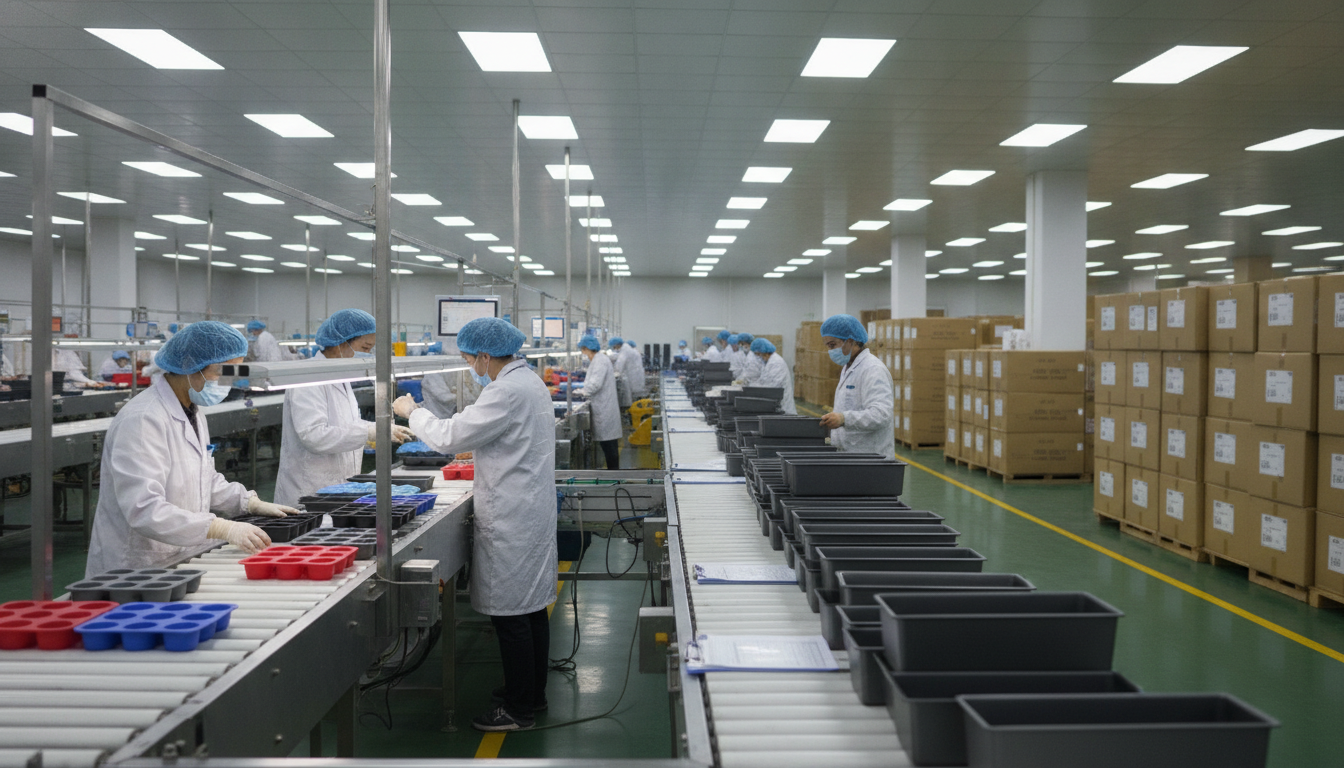
Traditional bakeware factories quote 3,000 to 10,000 pieces per SKU because their production lines optimize for long runs.
Most African bakeware startups operate on founder capital or angel rounds under $50,000. Allocating half that budget to inventory before validating demand leaves no margin for marketing, logistics hiccups, or a second product line. A low MOQ bakeware manufacturer Africa startups partner allows founders to split initial capital across 5 to 8 SKUs at 30 to 50 pieces each, test sell-through rates over 60 days, then reorder winners at higher volumes.
A Nairobi kitchenware importer tested silicone loaf pans, round cake pans, and muffin trays with 1-piece samples from our Yiwu showroom. After 3 weeks of baker feedback, she placed a 40-piece order on the loaf pans and 30-piece orders on the other two styles. Six months later, loaf pans reordered at 500 units while the muffin trays stayed at 30-piece replenishment, proving the low-MOQ model saved her from over-investing in slow movers.
In practice: A Lagos bakeware startup founder sampled 5 carbon-steel and silicone SKUs at 1 piece each, then placed a 30-unit first order on the 3 best-sellers without tying up cash in untested inventory
When a South African home-baking brand can introduce 6 new seasonal designs every quarter without minimum-order pressure, they out-maneuver competitors locked into annual 10,000-piece commitments. Low MOQ turns product development into a continuous test-and-learn cycle rather than a once-a-year bet.
Choosing the wrong material for your target customer’s baking habits kills repeat purchases. A common complaint buyers raise is that carbon-steel pans warp on high-heat stovetops, especially induction cooktops that heat extremely fast. Matching material to use-case prevents returns and builds brand trust.
Best for: home bakers prioritizing easy release and dishwasher safety. SGS food-grade silicone withstands temperatures from -40°C to 230°C. Muffin cups, loaf pans, and baking mats dominate this category. Silicone’s flexibility means zero sticking without greasing, a key selling point in African markets where butter costs run high.
Best for: professional bakeries needing even heat distribution and durability under daily use. Carbon steel conducts heat faster than stainless, producing uniform browning on bread and pastry. The rust risk is real: one Reddit user reported a carbon-steel pan rusted within 45 days even after seasoning prep. Our factory applies a food-grade anti-rust coating and recommends a post-wash oil wipe in humid climates like Lagos or Mombasa.
Best for: brands targeting health-conscious buyers who avoid non-stick coatings. Stainless steel is non-reactive, dishwasher-safe, and lasts decades. It requires more oil or parchment to prevent sticking, so position it as a premium, long-term-investment product rather than a convenience play.
Best for: budget-conscious retail where lightweight shipping and lower landed cost matter. Aluminum heats quickly and evenly but dents more easily than steel. Anodized aluminum adds a harder surface and eliminates the metallic-taste concern some bakers report with raw aluminum.
Spatulas, piping-bag sets, turntables, and fondant smoothers round out a wholesale bakeware set for bakeries and culinary schools. Bundling decorating tools with bakeware increases average order value and reduces the need for customers to source from multiple suppliers.
Fine-mesh strainers and flour sifters are high-turnover SKUs in African markets where home bakers sift imported cake flour to remove lumps. Stainless-steel mesh resists rust better than carbon-steel alternatives in coastal humidity.
Bundling 3 to 6 complementary pieces (loaf pan, round pan, muffin tin, cooling rack, silicone brush, spatula) at a 15 to 20 percent discount over individual pricing drives higher cart values and simplifies inventory for new retailers. Sets also photograph better for e-commerce listings, a critical advantage on Jumia, Takealot, or Instagram storefronts.
Understanding how minimums shift from sampling to production to bulk helps startups plan cash flow and inventory turns across the first 12 months.
Shansen accepts 1-piece sample orders so founders can physically test bakeware before committing to production. Sample lead time runs 7 to 10 days from payment to Yiwu showroom pickup or courier dispatch.
Once a startup validates 3 to 5 SKUs through samples, the first production order starts at 30 pieces per SKU. A typical first container for an African startup might include 30 units each of 8 SKUs (240 total pieces), mixed across silicone loaf pans, carbon-steel muffin tins, and stainless cake rings. Lead time for first production is 25 to 35 days, depending on material and whether custom packaging is required.
After 90 days of sell-through data, successful SKUs reorder at 100 to 500 pieces. At this volume, per-unit cost drops 12 to 18 percent compared to the 30-piece tier, and the factory can accommodate custom OEM private-label bakeware requests like logo embossing on silicone handles or branded packaging inserts.
Established distributors ordering 1,000 or more pieces per SKU unlock the lowest per-unit pricing and priority production slots. Lead time compresses to 20 to 25 days because the factory schedules dedicated line time rather than batching the order with other clients.
Sample MOQ: 1 piece. First production MOQ: 30 pieces per SKU. Sampling lead time: 7-10 days. Production lead time: 25-35 days.
Importers clearing customs in Lagos, Mombasa, or Durban face increasing scrutiny on food-contact materials. A common complaint buyers raise is that non-stick coatings degrade sooner than advertised, leaching particles into baked goods. Certifications provide the documentation customs and retail buyers demand.
SGS is a globally recognized third-party testing body. Our food-grade SGS FDA certified bakeware reports confirm that silicone, carbon-steel coatings, and stainless-steel materials meet migration limits for heavy metals (lead, cadmium) and do not leach harmful plasticizers under baking temperatures up to 230°C. SGS reports are accepted by NAFDAC in Nigeria, KEBS in Kenya, and SABS in South Africa.
While FDA jurisdiction applies to U.S. imports, African customs authorities and multinational retail chains (Shoprite, Carrefour, Nakumatt) often require FDA-aligned material declarations. FDA 21 CFR 177.2600 defines the food-contact safety limits for silicone bakeware, and FDA 21 CFR 175.300 covers resinous and polymeric coatings on metal bakeware. Shansen material suppliers provide FDA-aligned declarations that satisfy these retail-chain audits.
Per- and polyfluoroalkyl substances (PFAS) and lead are banned or restricted in food-contact articles across many jurisdictions. Our silicone and coated carbon-steel lines are tested PFAS-free and lead-free, documented in SGS reports. This matters for e-commerce brands selling on Amazon, Jumia, or Takealot, where product-safety claims must be substantiated or listings get pulled.
Every shipment includes a commercial invoice, packing list, SGS test report, and material-safety data sheet (MSDS). For baking tools wholesale Nigeria orders, we also provide a NAFDAC-ready product description and HS code classification (7323 for steel bakeware, 3924 for silicone) to expedite Apapa port clearance.
Shipping from Ningbo port to Lagos, Mombasa, or Luanda requires container optimization that balances cube utilization with weight limits and customs-valuation strategy.
A 20-foot container holds approximately 10 to 12 cubic meters of bakeware, suitable for startups ordering 1,000 to 2,000 mixed pieces. A 40-foot high-cube container accommodates 25 to 28 cubic meters and becomes cost-efficient at 4,000+ pieces. For first orders under 1,500 pieces, consider LCL (less-than-container-load) consolidation, though per-unit freight cost runs 20 to 30 percent higher than FCL.
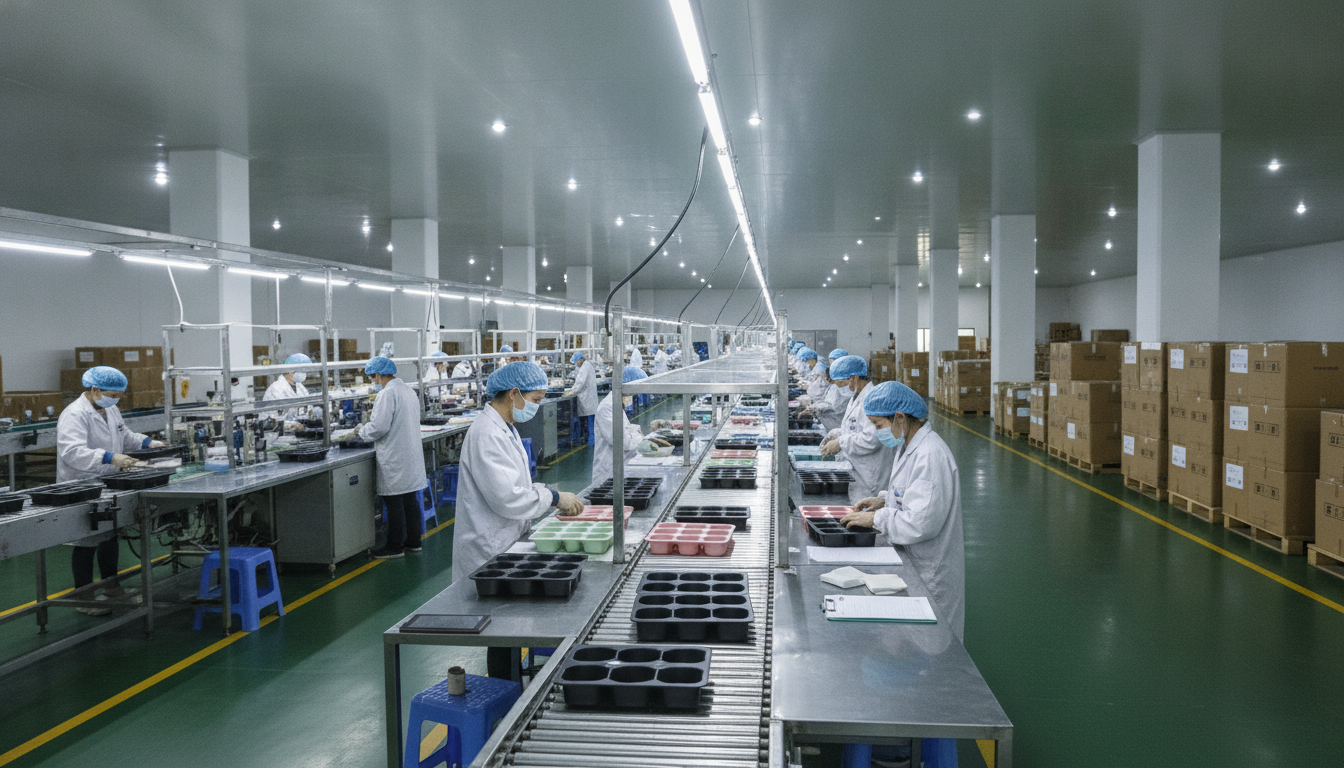
Bakeware nests and stacks efficiently. Silicone muffin cups nest 12 to 15 deep per carton. Carbon-steel loaf pans stack 20 to 25 per carton with corrugated dividers. Our Yongkang factory pre-calculates carton dimensions to maximize container cube, often fitting 15 to 18 percent more units than generic packing.
Nigeria applies a 20 percent import duty on bakeware (HS 7323) plus 7.5 percent VAT. Kenya charges 25 percent duty under HS 7323.93 for steel bakeware and 25 percent under HS 3924.10 for silicone. South Africa ranges from 20 to 30 percent depending on material and SACU origin rules. Accurate HS classification and SGS-backed valuation prevent customs delays and penalty assessments.
Startups ordering bakeware for the first time often stumble on material-spec mismatches, packaging assumptions, and payment-term misunderstandings.
Non-stick longevity is routinely over-claimed by suppliers. A coating rated for 500 wash cycles in a Chinese lab may degrade in 200 cycles under African tap-water mineral content and high-temperature hand washing. Specify PFOA-free, PTFE-based coatings with a minimum 3-layer application (primer, mid-coat, top-coat) and request an SGS abrasion-test report before production.
A startup selling direct-to-consumer on Instagram needs color-printed boxes with product photos and care instructions. A wholesaler supplying bakeries needs bulk cartons with minimal branding.
Embossing a logo on silicone handles or printing a brand name on carbon-steel pan bases requires mold modification or screen setup, adding 7 to 10 days to standard lead time. Place custom-branding orders at least 45 days before your target in-stock date.
Standard terms for first orders are 30 percent deposit, 70 percent balance before shipment. Some startups assume they can inspect goods before final payment; factories ship only after full payment clears. Request pre-shipment photos and a third-party QC inspection (SGS, Bureau Veritas) if you cannot visit the factory before final payment.
FOB Ningbo means the buyer pays ocean freight and insurance. CIF Lagos means the seller pays freight and insurance to Lagos port, but the buyer still handles customs clearance and inland transport. For first-time importers, CIF terms simplify budgeting; for experienced buyers, FOB terms offer more carrier-selection control and lower markup.
Shansen Bakeware accepts first production orders from 30 pieces per SKU, allowing African startups to test multiple designs without committing to 3,000 or 5,000-unit minimums that tie up working capital. Sample orders start at 1 piece per SKU with 7 to 10 day lead time, enabling founders to validate quality and fit before production. This low-MOQ structure lets new brands allocate initial capital across 5 to 8 SKUs and reorder winners at higher volumes after 60 to 90 days of sell-through data.
Silicone and stainless steel resist rust better than carbon steel in high-humidity coastal climates. Carbon-steel bakeware requires a food-grade anti-rust coating and post-wash oil wipe to prevent the rust complaints buyers commonly report within 45 to 60 days of use. Stainless steel costs 20 to 30 percent more but eliminates rust risk entirely, making it the preferred choice for premium retail brands targeting health-conscious buyers who avoid coated surfaces.
Ocean transit from Ningbo port to Lagos Apapa runs 35 to 42 days, with an additional 7 to 14 days for customs clearance during peak congestion. Mombasa transit takes 28 to 35 days with faster clearance due to digitized KRA systems. Durban (South Africa) runs 32 to 38 days. Plan total lead time of 60 to 75 days from production start to in-stock availability, accounting for production (25 to 35 days), ocean transit, and customs clearance.
SGS test reports confirming food-grade material compliance and FDA-aligned declarations satisfy NAFDAC (Nigeria), KEBS (Kenya), and SABS (South Africa) requirements for food-contact bakeware. Reports must document migration limits for heavy metals (lead, cadmium) and confirm PFAS-free, PFOA-free status for non-stick coatings. Every shipment should include commercial invoice, packing list, SGS report, material-safety data sheet, and correct HS code classification (7323 for steel, 3924 for silicone) to expedite customs clearance.
For first orders under 100 pieces, consider generic packaging with removable branded stickers to test market response before investing in custom tooling.
Written by the Shansen Bakeware Export Team.
Ready to validate your bakeware line without locking capital into 5,000-unit minimums?
Request 1-Piece Samples Today →
MOQ 1 set on stock configurations. Tell us what you need and we reply on WhatsApp.
Click the button below to open WhatsApp. If you're not logged in to WhatsApp Web yet, scan the QR code first — then come back here and copy the message into the chat.