📋 Table of Contents
Finding a reliable industrial bread loaf tin manufacturer Nigeria can source from means navigating MOQ barriers, food-safety uncertainty, and container-loading complexity. Nigerian bakery-supply distributors and catering-equipment importers face a common pain: suppliers quote 500-piece minimums per SKU, locking up capital before market validation. Many also ship mixed containers that arrive with warped carbon steel or coatings that fail SGS testing at Lagos port.
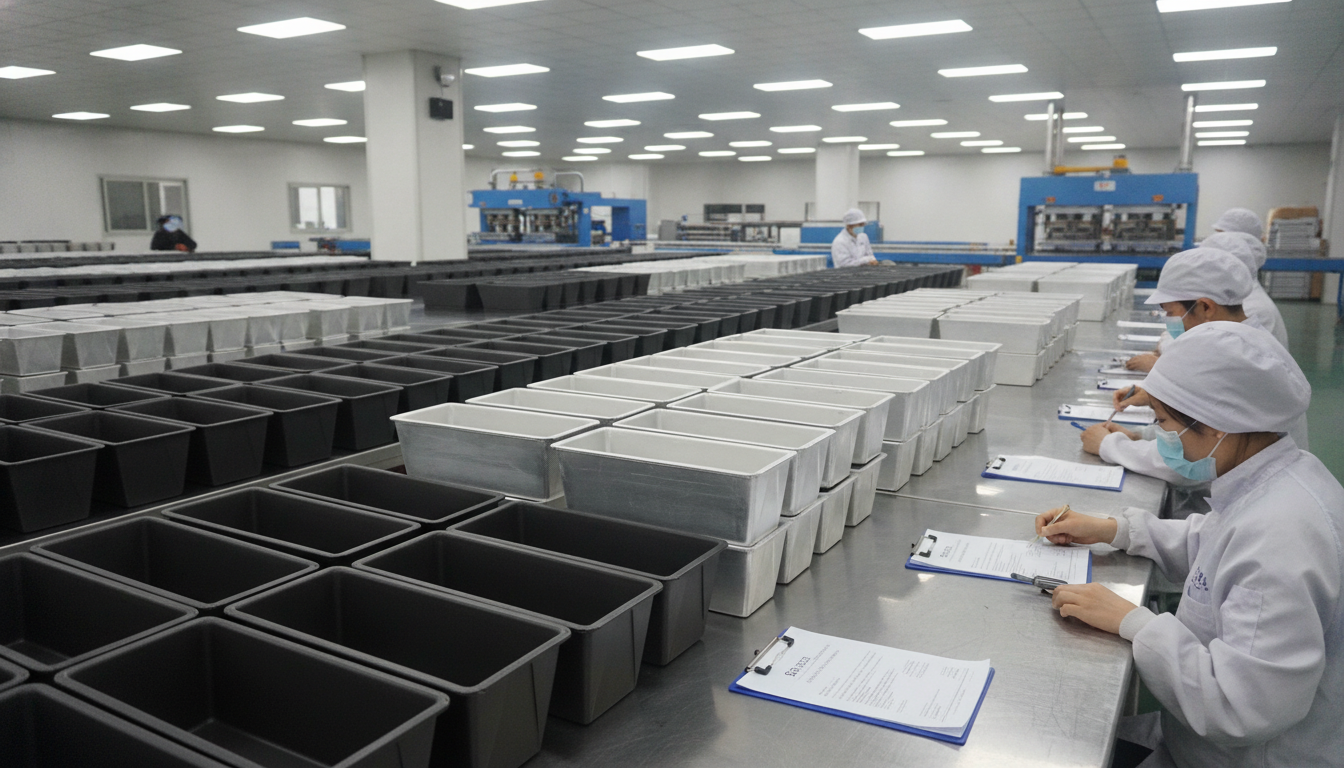
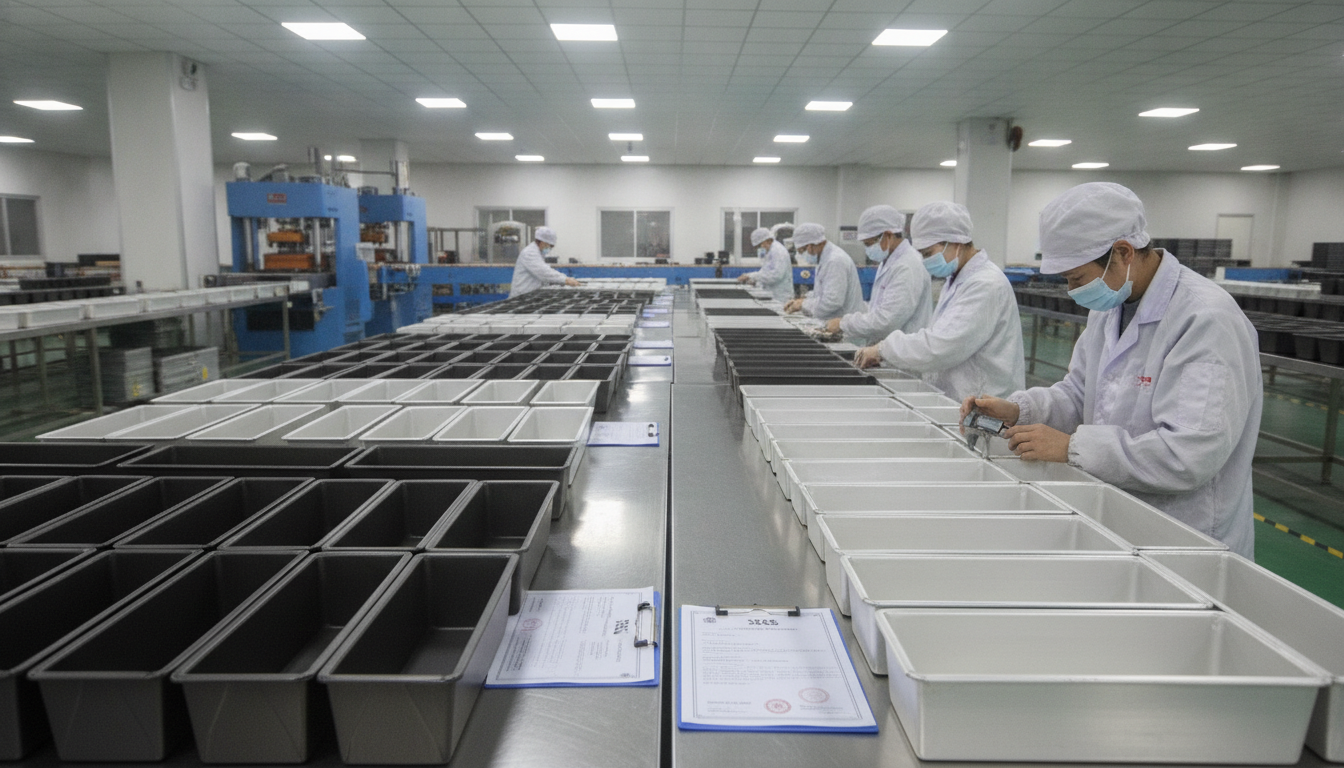
Shansen Bakeware operates a Yongkang, Zhejiang factory with 7 in-house bakeware lines and a Yiwu International Trade Market sourcing showroom. We manufacture silicone, carbon steel, stainless steel, and aluminum bread loaf tins at 500,000 units per month capacity, with MOQ starting at 1 piece per SKU for sampling and 30 pieces for first production orders. Every tin ships SGS-tested and FDA food-grade compliant from Ningbo port, with container loading optimized for wholesale bakeware sets destined for Lagos Apapa, Mombasa, and Francophone West African ports.
Nigerian bakery-supply chains historically relied on European re-exporters, paying 40-60% markup over factory cost. Direct sourcing from a Yongkang or Yiwu industrial bread loaf tin manufacturer Nigeria buyers trust cuts that margin while maintaining food-grade standards.
Factory-direct pricing eliminates middleman layers. A 1 lb carbon steel loaf tin that costs $2.80 FOB Ningbo becomes $4.50-$5.20 landed Lagos Apapa after freight and duties. The same tin sourced through a Dubai or European distributor often lands at $6.80-$7.50, eroding retail margin before the first sale.
Yongkang manufacturers understand 20-foot and 40-foot high-cube container geometry. A well-planned load mixes 1 lb, 2 lb, and pullman loaf tins with complementary SKUs like baking tools wholesale Nigeria distributors need, maximizing cubic utilization and reducing per-unit freight cost. Poor loading wastes 15-20% of container volume, directly increasing your landed cost per tin.
Traditional suppliers demand 500-1,000 piece minimums before allowing a single sample. Shansen’s 1-piece sampling MOQ lets a Lagos distributor validate tin release, warping resistance, and coating durability with actual Nigerian customers before committing production capital.
In practice: A Lagos bakery-supply importer requested 1-piece samples of 450g, 900g, and pullman loaf tins in carbon steel and aluminum. After 3 weeks of market testing with 2 commercial bakeries, they placed a 30-unit-per-SKU first order across 6 SKUs, totaling 180 tins, without tying up cash in untested inventory.
Choosing between carbon steel, aluminum, stainless steel, and silicone depends on bakery production volume, oven type, and release-agent cost tolerance. Each material addresses different operational pain points Nigerian bakeries face.
Carbon steel loaf tins dominate Nigerian commercial bakeries because they deliver even heat at the lowest per-unit cost. A common complaint buyers raise is warping, especially when thin-gauge pans heat rapidly on gas deck ovens.
Coating longevity is another frequent pain point. Non-stick coatings degrade faster than advertised when bakeries use metal spatulas or abrasive scouring. Our carbon steel tins ship with FDA food-grade non-stick coating tested to 500 bake cycles under SGS protocol, but we also offer uncoated tins for bakeries that prefer traditional greasing and flouring.
Aluminum conducts heat 2.5 times faster than carbon steel, reducing bake time by 8-12% in convection ovens. Nigerian bakeries running 3-shift operations value this cycle-time reduction. Aluminum’s natural oxide layer resists rust without coating, eliminating the prep-and-maintenance routine carbon steel demands.
For high-volume operations baking 500+ loaves daily, the faster turnover and zero-rust maintenance justify the premium.
Stainless steel 304-grade loaf tins cost 2.5-3× carbon steel but last 10+ years in commercial use. Institutional kitchens, hotel bakeries, and catering operations with multi-year equipment budgets choose stainless for its zero-maintenance durability. Stainless does not warp, rust, or lose coating, but it requires longer preheat and bakes 10-15% slower than carbon steel or aluminum.
Food-grade silicone loaf tins offer effortless release without greasing, ideal for gluten-free or high-sugar batters that stick aggressively. Nigerian artisan bakeries and specialty cake shops use silicone for premium loaves. Silicone’s low heat conductivity means 5-8 minutes longer bake time and softer crust, limiting its appeal in high-volume commercial settings.
Minimum order quantities and container economics determine whether a new distributor can enter the market or remains locked out by capital requirements. Shansen’s MOQ structure and Ningbo-Lagos shipping experience address both barriers.
Sample MOQ: 1 piece per SKU. First production MOQ: 30 pieces per SKU. Repeat-order MOQ: 50 pieces per SKU. Sampling lead time: 7-10 days ex-factory.
A typical first container for a Lagos distributor mixes 8-12 loaf tin SKUs (1 lb, 2 lb, pullman, mini loaf in 2-3 materials) at 30-50 pieces each, totaling 300-500 tins. Adding complementary items like low MOQ bakeware for startups such as cake pans, muffin tins, and cooling racks fills a 20-foot container without over-investing in a single SKU.
This approach contrasts sharply with suppliers demanding 500-piece minimums per SKU. A 500-piece commitment across 8 SKUs means 4,000 units, often exceeding a new distributor’s working capital and warehouse capacity.
Ningbo to Lagos Apapa transit averages 35-42 days. Shansen’s logistics team plans container loads accounting for Lagos port handling: tins nest inside each other to save cubic space, cartons stack on reinforced pallets rated for tropical humidity, and corner bracing prevents shifting during the Gulf of Guinea leg.
A 40-foot high-cube container holds approximately 8,000-10,000 standard loaf tins depending on size mix. Poor nesting and carton design waste 15-20% of volume.
New buyers typically pay 30% deposit, 70% against copy of Bill of Lading. Production lead time runs 18-25 days for first orders (including pre-production sample approval) and 15-18 days for repeat orders. Sampling ships via DHL/FedEx in 7-10 days, allowing a Lagos buyer to validate product quality before committing production payment.
Nigerian customs and health authorities increasingly scrutinize food-contact bakeware. Containers arriving without proper certification face delays, fines, or rejection at Lagos Apapa. An industrial bread loaf tin manufacturer Nigeria distributors rely on must provide verifiable food-safety documentation.
SGS testing validates that metal and coating materials meet migration limits for food contact. Shansen submits every production batch to SGS Guangzhou for heavy-metal migration testing (lead, cadmium, chromium) and coating adhesion testing. The SGS certificate accompanies every shipment and clears Nigerian customs without dispute.
Buyers should request the SGS test report number and verify it directly with SGS before placing large orders. A common complaint in the industry is suppliers claiming SGS compliance without providing verifiable report numbers.
While Nigeria does not mandate FDA certification, aligning with FDA food-contact standards ensures global-grade safety. Our carbon steel, stainless steel, and aluminum tins meet FDA food-grade material requirements, and our silicone tins comply with FDA 21 CFR 177.2600 for rubber and silicone food-contact articles.
This alignment matters for distributors who also export to ECOWAS markets or supply multinational hotel chains operating in Nigeria. A single food-grade standard simplifies inventory and documentation.
PFAS (per- and polyfluoroalkyl substances) in non-stick coatings and lead in metal alloys are banned in food-contact applications across most markets. Shansen’s non-stick coatings are PFAS-free, and our metal alloys test at less than 10 ppm lead, well below international safety thresholds. The SGS report confirms both.
Distributors should verify PFAS-free and lead-free claims with third-party lab reports, not supplier declarations alone. We provide SGS or Intertek reports upon request for every production batch.
Sampling de-risks the first order by validating material performance, dimensional accuracy, and market acceptance before production commitment. Shansen’s 1-piece MOQ sampling process runs in 4 stages.
The buyer specifies loaf tin dimensions (e.g., 1 lb = 210mm × 110mm × 60mm, 2 lb = 250mm × 130mm × 75mm), material (carbon steel 0.6mm or 0.8mm, aluminum 1.0mm, stainless 304 grade 0.8mm), and coating preference (non-stick, uncoated, or silicone).
Samples ship from our Yongkang factory within 7-10 days. Each sample undergoes the same QC process as production batches: dimensional tolerance check (±2mm), coating adhesion test, and visual inspection. The sample arrives with an SGS food-contact test report and material specification sheet.
The buyer tests samples with actual bakery customers. Key validation points include bread release (greased vs. ungreased), warping after 10-20 bake cycles, cleaning ease, and crust browning consistency. This real-world testing reveals issues no factory inspection catches, such as how the tin performs with a specific dough hydration level or oven type common in Nigerian bakeries.
Once the buyer confirms sample performance, Shansen produces a pre-production sample from the actual production batch. This final approval step ensures the production run matches the validated sample. The buyer approves or requests adjustments before mass production begins.
In practice: A Kano bakery-supply wholesaler sampled 1 lb carbon steel loaf tins in 0.6mm and 0.8mm gauge. Market testing revealed the 0.6mm version warped after 15 cycles in their customers’ gas deck ovens. They approved the 0.8mm gauge for production, placed a 50-unit first order, and avoided the warping complaint that would have damaged their reputation with bakery clients.
Sampling also validates container-mix strategy. A distributor can sample 6-8 SKUs, test market demand for each, then allocate the first production order based on actual sell-through rather than guesswork. This approach reduces dead inventory and improves cash-flow return.
Shansen Bakeware offers 1 piece per SKU for sampling, 30 pieces per SKU for first production orders, and 50 pieces per SKU for repeat orders. This MOQ structure allows Nigerian distributors to validate market demand with small batches before scaling, avoiding the capital-lock risk of 500-piece minimums common with other suppliers.
Carbon steel at 0.8mm gauge offers the best balance of cost, heat conductivity, and warp resistance for high-volume Nigerian bakeries using gas or electric deck ovens. Stainless steel lasts 10+ years but bakes 10-15% slower and costs 2.5-3× carbon steel.
Every Shansen production batch ships with an SGS food-contact test report covering heavy-metal migration (lead, cadmium, chromium) and coating adhesion, plus material specification sheets confirming FDA food-grade alignment. The SGS report includes a verifiable report number buyers can check directly with SGS Guangzhou, ensuring smooth customs clearance at Lagos Apapa without documentation disputes.
Samples ship from Shansen’s Yongkang factory within 7-10 days of request and arrive in Lagos via DHL or FedEx. Each sample includes the SGS food-contact test report and material specification sheet. Buyers can validate tin performance with actual bakery customers and approve or adjust specifications before committing to production orders, reducing the risk of ordering untested SKUs.
Shansen uses custom carton dimensions that nest loaf tins efficiently, packing 1 lb tins 24 per carton and 2 lb tins 18 per carton. Containers load on reinforced pallets rated for tropical humidity, with corner bracing to prevent shifting during the 35-42 day Ningbo-Lagos transit. This approach maximizes cubic utilization, reducing wasted space by 15-20% and lowering per-unit freight cost by $0.08-$0.12 compared to standard packaging.
Ready to validate industrial bread loaf tins with your Nigerian bakery customers before committing production capital?
Request 1-Piece Samples →
Written by the Shansen Bakeware Export Team.
MOQ 1 set on stock configurations. Tell us what you need and we reply on WhatsApp.
Click the button below to open WhatsApp. If you're not logged in to WhatsApp Web yet, scan the QR code first — then come back here and copy the message into the chat.