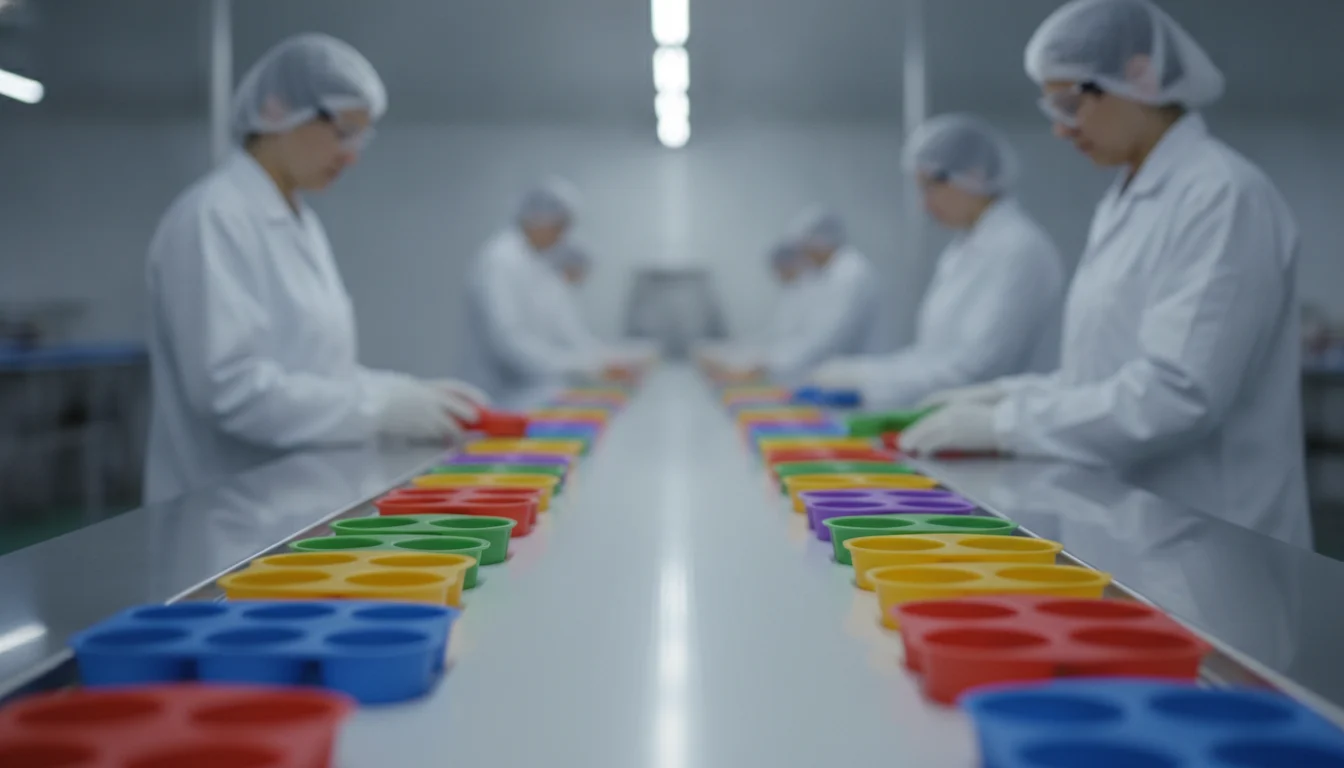
Silicone pans for baking are food-grade flexible molds engineered from platinum-cured or peroxide-cured silicone, typically rated to 230°C (446°F), with inherent non-stick release that eliminates greasing in most applications. For wholesale buyers, the critical sourcing variables are material certification (SGS or FDA 21 CFR 177.2600 compliance), wall thickness (1.2-2.0 mm for stability under batter weight), and MOQ flexibility-Shansen’s silicone line ships from 1 set for sampling, scaling to full container loads optimized for Ningbo-to-Lagos, Mombasa, and Francophone African port routes.
📋 Table of Contents
Silicone pans for baking deliver inherent non-stick release without greasing, which cuts prep labor and ingredient cost in high-volume bakery operations. The material’s flexibility allows inverted demolding-cakes, muffins, and breads pop out cleanly when the pan is turned inside-out-eliminating the knife-edge scraping that damages metal coatings over time.
Platinum-cured silicone exhibits a naturally low surface energy, preventing batter adhesion even after hundreds of cycles. Distributors report that commercial bakeries in Lagos and Nairobi eliminate butter or spray costs entirely when switching from carbon-steel muffin tins to silicone, though the trade-off is a softer crust and lighter color on finished goods.
Food-grade silicone withstands repeated commercial dishwasher cycles at 80°C without degrading, whereas non-stick PTFE coatings on metal pans begin to flake after 200-300 washes under the same conditions. Buyers sourcing for hotel kitchens or catering chains prioritize this longevity when calculating total cost of ownership.
Most food-grade silicone is rated from -40°C to 230°C, covering freezer-to-oven workflows. A distributor can stock a single SKU that handles frozen dough proofing, baking, and blast-chiller cooling, simplifying inventory compared to maintaining separate metal and plastic mold sets.
Food-contact certification verifies that silicone pans for baking do not leach volatile organic compounds, heavy metals, or peroxide residues into baked goods. For African importers, SGS or FDA 21 CFR 177.2600 test reports serve as customs documentation and retailer compliance proof, particularly in South Africa and Kenya where food-safety enforcement is tightening.
This U.S. FDA regulation sets migration limits for silicone rubber articles intended for repeated food contact. A compliant silicone pan must release no more than 0.5% by weight of extractables when subjected to reflux testing in n-heptane, simulating fatty-food exposure at elevated temperature. Shansen’s SGS and FDA test reports, dated 2020, 2021, and 2023, are issued per production batch on request and cover the silicone line specifically.
Platinum-cured silicone polymerizes via a platinum catalyst, leaving zero peroxide residue and producing a neutral odor. Peroxide-cured silicone is lower-cost but can emit a rubber smell during the first few bake cycles, a common buyer complaint flagged in distributor feedback. Importers targeting premium bakery chains specify platinum-cured material to avoid customer returns tied to odor.
SGS food-contact protocols test for lead, cadmium, and per- and polyfluoroalkyl substances (PFAS). While PFAS are not inherent to silicone chemistry, contamination can occur if production equipment previously handled fluoropolymer coatings. Shansen’s test reports confirm PFAS-free and Pb-free status for the silicone line, addressing both EU and California Proposition 65 market requirements.
A recurring buyer frustration is that thin silicone pans feel too flexible, leading to batter spills when transferring a filled mold from countertop to oven. Wall thickness between 1.2 mm and 2.0 mm provides enough rigidity to support heavy batters-muffin or loaf dough-without requiring a supporting metal tray underneath, though many commercial bakeries still use trays as standard practice to speed oven loading.
Wall thickness is measured at the pan’s vertical sidewall, not the base, using a digital micrometer. Pans below 1.0 mm collapse under the weight of dense batters like banana bread or pound cake, while pans above 2.5 mm become stiff enough that demolding requires excessive force, negating silicone’s flexibility advantage. The 1.2-2.0 mm range balances both needs.
Some silicone muffin pans embed a steel or fiberglass wire loop into the top rim, adding structural rigidity without increasing overall wall thickness. This design is common in European-market pans but adds cost; African distributors typically specify unreinforced pans to hit lower retail price points, accepting the need for a supporting tray during transport.
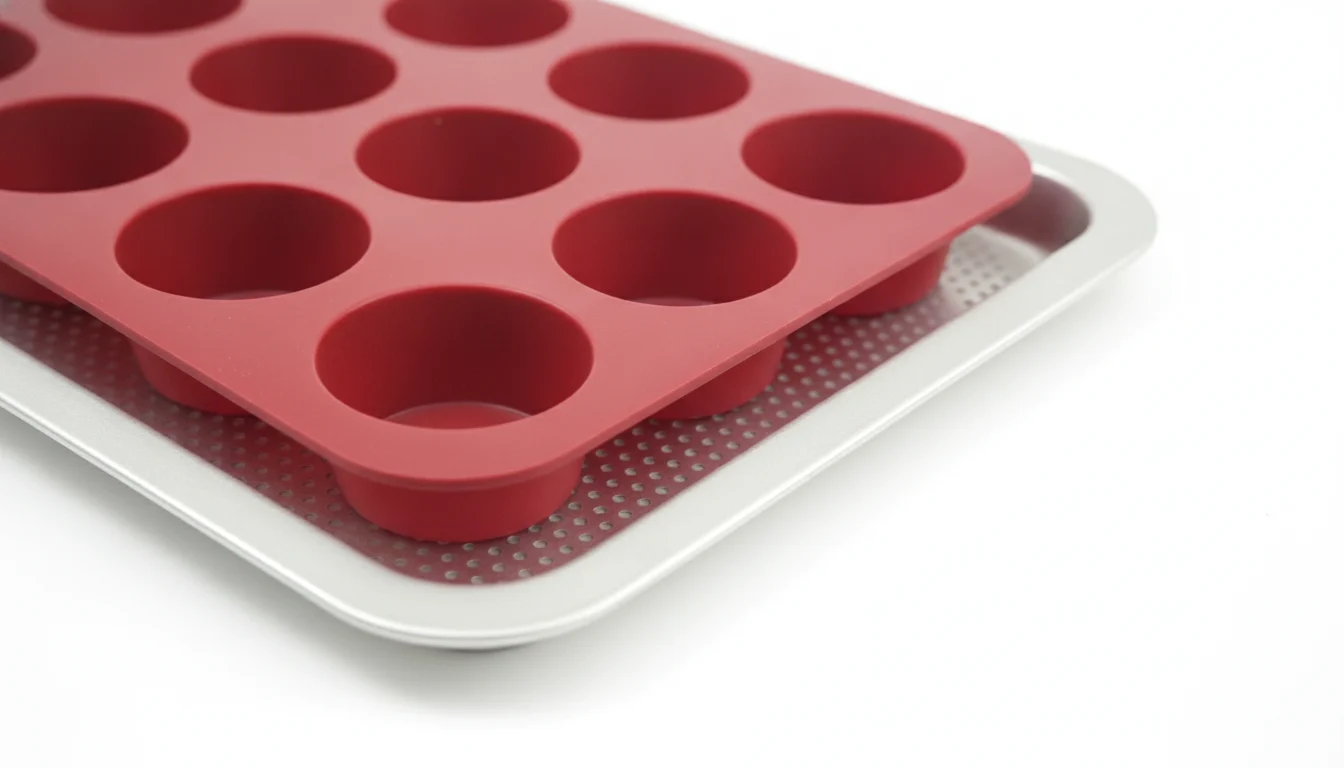
Even with 2.0 mm walls, a perforated aluminum or carbon-steel tray underneath a silicone pan improves airflow and prevents the base from sagging when filled with batter. Buyers sourcing for commercial bakeries often purchase silicone molds and metal trays as a matched set, simplifying SKU management and ensuring consistent bake results across shifts.
Silicone’s thermal conductivity is roughly one-tenth that of aluminum, meaning heat penetrates the batter more slowly. Bakers report extending oven time by 10-15% when switching from metal pans to silicone pans for baking, and finished goods often emerge with paler crusts and softer textures-a trade-off buyers must communicate to end customers to avoid returns.
Metal pans absorb and radiate infrared heat, creating Maillard-reaction browning on crust surfaces. Silicone reflects more infrared energy, so cakes and breads baked in silicone molds develop less color even when internal temperature reaches the target doneness point. Distributors targeting artisan bakeries or premium retail often steer buyers toward carbon-steel or aluminum pans when visual crust appeal is a priority, reserving silicone for applications where clean release matters more than appearance.
Placing silicone pans on the oven’s lower rack, closer to the heating element, partially compensates for slower heat transfer by increasing radiant exposure. Some commercial bakeries rotate silicone molds halfway through baking to even out color, a step unnecessary with metal pans but accepted as part of the silicone workflow.
Because visual cues (golden-brown crust) are unreliable with silicone, bakers rely on probe thermometers to confirm doneness. Bread is typically done at 95-98°C internal temperature, cakes at 93-96°C. Buyers sourcing wholesale bakeware sets that include both silicone molds and probe thermometers reduce training friction when onboarding new bakery staff.
Minimum-order-quantity policies determine whether a distributor can test a silicone pan SKU in a single retail outlet before committing to container-load inventory. Shansen’s silicone line ships from 1 set for sampling, allowing a Lagos-based importer to validate mold size, release performance, and customer acceptance before scaling to a 500-piece or 1,000-piece production run.
A typical sample set includes one each of the core shapes-round cake pan, loaf pan, muffin tray, and specialty mold (bundt or heart), packed in a retail-ready carton. The importer pays sample cost plus Ningbo-to-destination freight, confirmed at quotation. Sampling time from order to shipment is confirmed at quotation, depending on whether the requested shape is in stock or requires a production batch.
After sample approval, the silicone line’s production MOQ is 500 pieces per SKU for custom OEM or private-label orders requiring specific pantone colors, embossed logos, or packaging inserts. Stock-color orders (typically gray, red, or blue) ship from existing inventory with no MOQ floor beyond the 1-set sample threshold, making them accessible to small importers testing new markets.
A 20-foot container holds approximately 8,000-10,000 silicone muffin trays (12-cavity, standard size) or 12,000-15,000 individual cake pans, depending on nesting efficiency. Shansen’s Ningbo export team configures mixed-SKU loads to maximize cube utilization for African distributors, often combining silicone molds with carbon-steel or aluminum pans from the same production facility to fill container volume and spread freight cost across product lines.
Sample: 1 set (silicone line). Production run: 500 pcs per SKU for OEM/private-label orders; stock colors ship from inventory with no MOQ floor. Capacity: 500,000 units/month across 7 in-house bakeware lines.
Sampling each mold shape at 1 set before a full order allows verification of wall thickness, release performance, and color match against local preferences without tying up working capital in untested inventory.
Production lead time for stock-color silicone pans is confirmed at quotation; custom-color or logo orders require tooling and color-matching steps that extend the timeline. Transit schedules from Ningbo to Lagos Apapa, Mombasa, and Francophone West African ports (Abidjan, Dakar) are confirmed at quotation and subject to carrier schedules. Buyers targeting seasonal peaks-Ramadan baking surges in Francophone markets, December holiday demand in Anglophone Africa-should discuss order timing at quotation to accommodate production and ocean-freight windows.
Sample orders are prepaid via wire transfer or PayPal. Production runs follow a 30% deposit at order confirmation, 70% balance before shipment structure, with letter-of-credit terms available for container loads exceeding a threshold confirmed at quotation. Shansen does not publish a standard price list; unit cost, freight, and payment milestones are quoted per inquiry based on SKU mix, order volume, and destination port.
Food-grade silicone pans exhibit natural non-stick properties due to low surface energy, so greasing is unnecessary for most batters-muffins, cakes, and quick breads release cleanly when the pan is inverted. High-sugar batters (caramel-based or sticky glazes) may benefit from a light oil spray to prevent residue buildup, but standard recipes perform well with no preparation. Commercial bakeries eliminate butter or spray costs entirely by switching to silicone, though the trade-off is softer crusts and paler color compared to greased metal pans.
Silicone’s thermal conductivity is roughly one-tenth that of aluminum or carbon steel, meaning heat penetrates batter more slowly. Bakers typically extend oven time by 10-15% when using silicone pans for baking, and many rely on probe thermometers to confirm internal doneness (93-98°C for cakes) rather than visual cues, since silicone molds produce paler crusts. Placing silicone pans on a lower oven rack, closer to the heating element, partially compensates by increasing radiant heat exposure, though this adjustment is less precise than switching to a metal pan when time or browning is critical.
Silicone pans with wall thickness below 1.2 mm often sag or spill when filled with heavy batters, a common frustration among buyers. The solution is to place the silicone mold on a rigid perforated tray-aluminum or carbon steel-before filling, then transfer both tray and mold to the oven as a unit. This supporting-tray method is standard in commercial bakeries and eliminates batter spills during oven loading. Buyers sourcing for high-volume operations often purchase silicone molds and metal trays as matched sets to simplify staff training and ensure consistent handling across shifts.
Written by the Shansen Bakeware Export Team.
Ready to sample silicone pans for your bakery or distribution channel?
Request a 1-Set Sample and MOQ Quote →
MOQ 1 set on stock configurations. Tell us what you need and we reply on WhatsApp.
Click the button below to open WhatsApp. If you're not logged in to WhatsApp Web yet, scan the QR code first — then come back here and copy the message into the chat.