
Cake mold sizes span 10 cm (4 in) to 35 cm (14 in) diameter for rounds, 15×10 cm (6×4 in) to 45×33 cm (18×13 in) for rectangles, and 20 cm (8 in) to 28 cm (11 in) for Bundt and springform pans, with depth ranging 5 cm to 10 cm depending on pan type and intended batter volume. African distributors ordering for supermarket bakery, hotel catering, and celebration-cake retailers prioritize metric-first sizing (centimeters, liters) over inch-only charts, and need inner-dimension specs rather than outer rim measurements to match recipe yield and oven-rack fit.
📋 Table of Contents
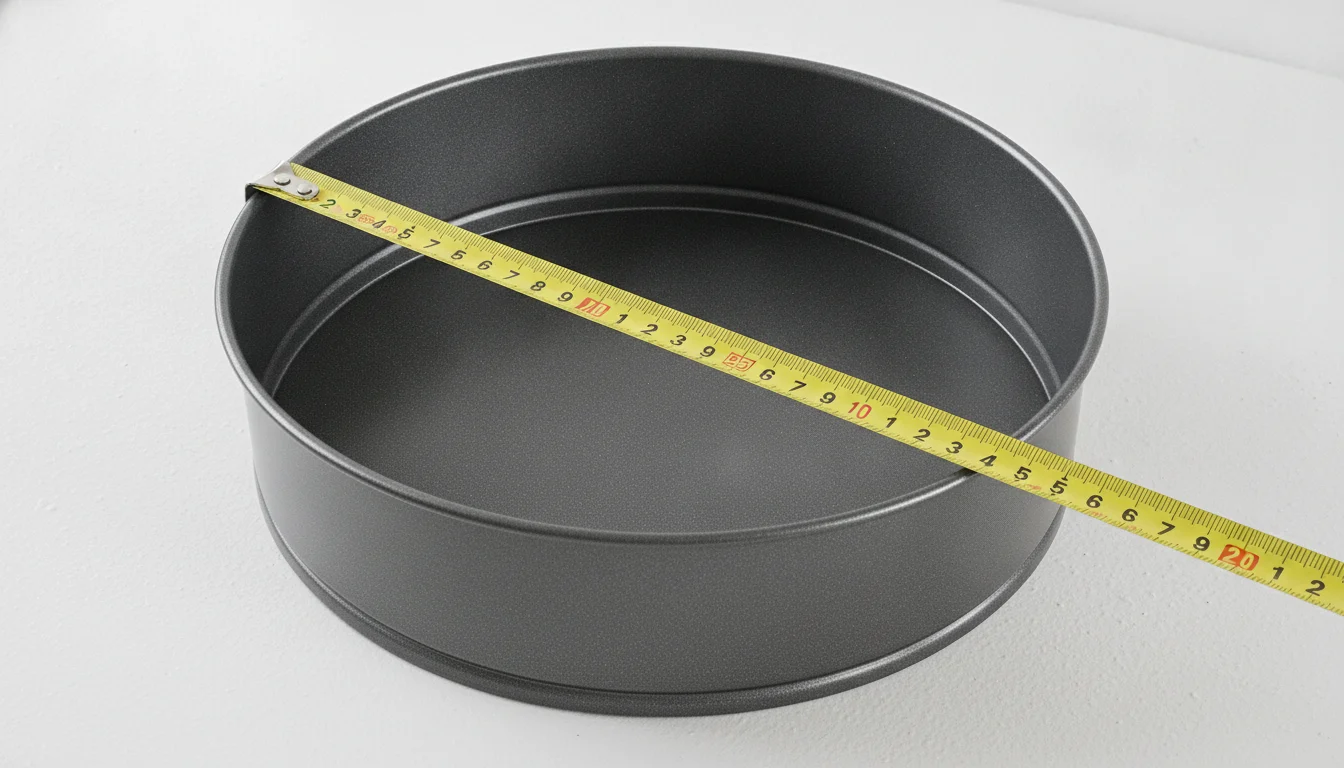
Round cake mold sizes follow a progression from 10 cm (4 in) mini-cake diameter up to 35 cm (14 in) for large celebration tiers, with the most commercially stocked SKUs clustering at 15 cm, 20 cm, 23 cm, 25 cm, and 28 cm. Depth typically ranges 5 cm to 7.5 cm for layer cakes and 7.5 cm to 10 cm for deep sponge or cheesecake bases. African distributors ordering wholesale bakeware sets prioritize the 20 cm and 23 cm rounds because they match the portion count (8-12 slices) expected for birthday and wedding celebration cakes sold through supermarket bakery counters and independent cake shops.
Small round pans serve individual portion cakes, cupcake-alternative mini-layer cakes, and test-batch sampling. The 10 cm (4 in) and 15 cm (6 in) diameters hold 0.3 to 0.6 liters of batter, bake in 18-22 minutes at 180°C, and are popular in hotel breakfast buffet setups where single-serve cakes reduce portion-control labor. Silicone molds dominate this size bracket because unmolding a small cake from a rigid pan risks breakage, while a flexible silicone mold releases cleanly without inverting force.
The 20 cm (8 in), 23 cm (9 in), and 25 cm (10 in) rounds are the workhorses of commercial cake baking. A 23 cm round with 7 cm depth holds approximately 2.5 liters of batter and yields 10-12 celebration-cake slices, the standard serving count for Nigerian and Kenyan family gatherings. Carbon steel pans in these sizes offer even heat distribution and withstand the 200+ bake cycles per year typical in a busy supermarket bakery, while anodized aluminum versions reduce weight for easier handling during high-volume production shifts.
Large rounds (28 cm / 11 in and above) serve tiered wedding cakes, hotel banquet desserts, and bulk-order celebration cakes for corporate events. A 28 cm pan with 7.5 cm depth holds 4 liters of batter and produces 16-20 slices. Stainless steel construction becomes preferable at this size because the pan’s own rigidity prevents warping under the weight of dense fruit-cake or cheesecake batter, a common complaint when distributors stock thin-gauge aluminum pans above 25 cm diameter.
Rectangular sheet pans range from 23×33 cm (9×13 in, quarter-sheet equivalent) to 45×66 cm (18×26 in, full-sheet), with the 33×45 cm (13×18 in, half-sheet) size accounting for the majority of hotel catering and supermarket bakery orders. Depth runs 5 cm for thin sponge layers and brownies, 7.5 cm for standard sheet cakes, and 10 cm for deep lasagna-style dessert pans. Buyers in Lagos, Nairobi, and Johannesburg request these cake mold sizes in metric dimensions because commercial oven racks are documented in centimeters, and a mismatch of even 2 cm can block pan insertion or force single-pan-per-rack loading that halves throughput.
The 23×33 cm pan (approximately 9×13 in) holds 3 liters of batter at 7 cm depth, serves 12-15 portions, and fits inside countertop convection ovens common in small bakery startups and hotel breakfast kitchens. Carbon steel construction at 0.6 mm gauge provides rigidity without excessive weight, while a PFAS-free nonstick coating rated to FDA 21 CFR 175.300 prevents sticking during high-sugar cake batters. Distributors ordering low-MOQ bakeware for startups often sample this size first because it validates coating performance and corner-radius design at lower upfront cost than committing to full-sheet inventory.
Half-sheet pans dominate commercial bakery production because two pans fit side-by-side on a standard 60 cm oven rack, and the 33×45 cm footprint matches the tray slots in roll-in rack ovens used by hotel chains and supermarket in-store bakeries. At 7.5 cm depth, a half-sheet holds 9 liters of batter and yields 24-30 servings. Aluminum pans at 1.0 mm thickness offer faster heat transfer than carbon steel, reducing bake time by 3-5 minutes per batch, which compounds into significant energy savings and higher daily throughput when a bakery runs 8-12 batches per shift.
Full-sheet pans (45×66 cm, approximately 18×26 in) serve high-volume catering operations, industrial bakeries supplying retail chains, and event venues baking 50+ portion cakes. A 45×66 cm pan at 7.5 cm depth holds 18 liters of batter. Stainless steel becomes the preferred material at this size because the pan must support its own weight plus batter load without flexing, and a warped pan creates uneven bake and difficult stacking during cooling. Buyers ordering custom sizes above 66 cm length should specify inner dimensions and confirm oven-rack clearance before production, because a 2 cm measurement error discovered post-shipment often requires re-tooling and delays market launch by 4-6 weeks.
Springform pans range 18 cm to 28 cm diameter with 7-10 cm sidewall height, Bundt molds span 20 cm to 28 cm outer diameter with 8-10 cm depth, and square pans follow 15 cm, 20 cm, 23 cm, and 25 cm side lengths. Each specialty shape addresses a specific baking need: springforms enable cheesecake removal without inverting, Bundt molds create decorative ring cakes for celebration display, and square pans maximize portion yield per oven-rack footprint in high-volume commercial settings.
Springform pans use a removable base and clip-release sidewall, making them essential for cheesecakes, mousse cakes, and any dessert that cannot be inverted for unmolding. The 23 cm (9 in) springform is the commercial standard, holding 3.5 liters at 9 cm depth and serving 12 portions. Stainless steel sidewalls resist warping during water-bath baking (a common cheesecake method), while silicone gaskets between base and sidewall prevent batter leakage. Distributors serving hotel pastry kitchens and upscale bakeries stock 20 cm, 23 cm, and 26 cm springforms because these three sizes cover individual, family, and banquet cheesecake demand without requiring a separate SKU for each diameter increment.
Bundt molds range 20 cm to 28 cm outer diameter, with the 25 cm (10 in) size most common in retail and catering. The fluted tube design holds 2.5 to 4 liters depending on depth and pattern complexity, and the center tube conducts heat into the batter core, reducing bake time by 10-15 percent compared to a solid round pan of equal volume. Nonstick coating is critical for Bundt molds because the decorative ridges create dozens of release points where batter can stick; a PFAS-free coating tested to SGS food-contact standards ensures clean release and eliminates the metallic taste complaint occasionally reported with low-grade nonstick formulations.
Square pans in 20 cm and 23 cm side lengths yield 25 percent more portions per oven-rack area than equivalent-volume round pans, making them popular in institutional catering and school-lunch bakeries. A 23 cm square at 7 cm depth holds 3.2 liters of batter and cuts into 16 uniform squares, compared to 12 irregular wedges from a 23 cm round. Carbon steel square pans at 0.8 mm gauge resist corner warping better than thinner aluminum, and sharp 90-degree corners (rather than rounded) maximize usable batter volume and simplify portion cutting with a grid cutter.
Material choice interacts with cake mold sizes through heat conductivity, structural rigidity, and unmolding ease, creating practical size ranges where each material performs best. Silicone molds flex for easy release in small to medium sizes (10-23 cm) but require external support frames above 25 cm diameter to prevent batter spill during oven transfer. Carbon steel offers even heating and durability across all sizes but adds weight that becomes a handling concern in pans larger than 33×45 cm. Aluminum conducts heat faster than steel, reducing bake time in large sheet pans, while stainless steel’s rigidity prevents warping in deep or oversized molds where batter weight exceeds 5 kg.
Silicone bakeware performs best in 10-23 cm rounds, small Bundt molds, and individual-portion shapes because the material’s flexibility allows bakers to pop out cakes by pushing the base, eliminating the need for greasing or parchment lining. Food-grade silicone rated to 230°C withstands standard baking temperatures, and PFAS-free formulations tested to FDA 21 CFR 177.2600 ensure no siloxane migration into batter. Larger silicone pans (28 cm rounds, full-sheet rectangles) require metal reinforcement frames to maintain shape during filling and oven transfer, which negates the weight and storage advantages that make silicone attractive in smaller sizes.
Carbon steel pans dominate the 20-28 cm round and 33×45 cm half-sheet categories because the material combines even heat distribution, durability through 500+ bake cycles, and compatibility with high-temperature (up to 250°C) baking without coating degradation. A 0.6-0.8 mm gauge carbon steel pan resists denting during stacking and dishwasher handling, while the nonstick coating (when applied to SGS food-contact standards) releases cleanly without the metallic aftertaste occasionally reported with uncoated aluminum. Buyers ordering custom OEM private-label bakeware specify carbon steel for mid-range SKUs because the material balances cost, performance, and brand perception better than either budget aluminum or premium stainless steel.
Aluminum’s high thermal conductivity makes it the material of choice for 45×66 cm full-sheet pans and other large formats where reducing bake time directly improves production throughput. A 1.0 mm anodized aluminum sheet pan heats 20 percent faster than an equivalent carbon steel pan, cutting a 25-minute bake to 20 minutes and enabling a commercial bakery to complete an additional batch per shift. The trade-off is lower scratch resistance: aluminum pans show wear after 200-300 cycles of metal spatula contact, compared to 500+ for carbon steel, so distributors positioning aluminum pans emphasize the speed advantage to high-volume buyers and recommend carbon steel to operators prioritizing pan longevity.
Stainless steel’s rigidity and corrosion resistance make it essential for springform pans, deep Bundt molds (10 cm+ depth), and any pan subjected to water-bath baking or acidic batters (lemon, passion-fruit). A 26 cm stainless springform maintains a tight base-to-sidewall seal under the pressure of 4 kg of cheesecake batter, while a thinner aluminum sidewall may flex and leak. Stainless steel adds 30-40 percent to manufacturing cost compared to carbon steel, so distributors typically stock stainless in specialty shapes (springforms, deep rounds) and use carbon steel for standard rounds and rectangles to keep retail price competitive.
African distributors ordering for Nigeria, Kenya, South Africa, and Francophone markets should prioritize 20 cm, 23 cm, and 25 cm rounds, 23×33 cm and 33×45 cm rectangles, and 23 cm springforms, because these sizes align with celebration-cake portion expectations (8-16 slices), fit standard 60 cm commercial oven racks, and match the recipe volumes published in local baking training materials and culinary schools. Metric-first sizing (centimeters, liters) is non-negotiable: buyers in Lagos, Mombasa, and Johannesburg report that inch-only catalogs require manual conversion, slow procurement decisions, and increase order-error rates when kitchen staff misread imperial measurements.
Nigerian supermarket bakeries and independent cake shops prioritize 23 cm rounds and 23×33 cm rectangles because these sizes produce 10-12 portion cakes that match the typical family gathering or small office celebration order. Carbon steel pans with PFAS-free nonstick coating perform well in Lagos’ humid coastal climate (80+ percent relative humidity year-round) because the coating prevents rust better than bare aluminum, and the 0.6 mm gauge withstands the handling intensity of a bakery running 15-20 batches per day. Distributors serving the Nigerian market stock both 5 cm and 7 cm depth options in the same diameter, because shallow pans suit sponge cakes and brownies while deep pans handle dense fruit cakes and layered celebration cakes.
Kenyan hotel catering and event-venue bakeries favor 25 cm rounds and 33×45 cm half-sheets because these sizes serve 12-20 portions, the sweet spot for wedding receptions, corporate functions, and buffet dessert stations. Nairobi’s altitude (1,795 meters above sea level) reduces atmospheric pressure and extends bake times by 10-15 percent compared to sea-level baking, so buyers request pans with even heat distribution and minimal hot spots to compensate for the longer exposure. Anodized aluminum pans at 0.8-1.0 mm thickness deliver the fast, even heating needed to prevent over-drying during extended bake cycles, while the hard-anodized surface resists scratching from the metal spatulas and wire whisks common in high-volume hotel kitchens.
South African distributors serving Johannesburg, Cape Town, and Durban retail chains prioritize 20 cm and 25 cm rounds, 23×33 cm rectangles, and 23 cm springforms, because these sizes match the portion counts and presentation styles expected in upscale bakery counters and specialty cake shops. The South African market shows higher demand for springform pans than other African regions, driven by the popularity of cheesecakes and mousse-based celebration cakes in urban retail. Stainless steel springforms at 23 cm and 26 cm diameters command premium shelf positioning and higher margins, while carbon steel rounds and rectangles serve the value and mid-tier SKU slots.
Distributors in Côte d’Ivoire, Senegal, Cameroon, Angola, and Mozambique request metric-only sizing with no inch conversions, because local culinary training and recipe publications use centimeters and liters exclusively. The 23 cm round and 23×33 cm rectangle remain the volume leaders, but buyers in these markets also stock 15 cm rounds for individual-portion cakes sold in bakery display cases, a format less common in Anglophone markets. Carbon steel pans with SGS-tested food-grade coating meet import requirements across Francophone Africa, while buyers in Lusophone markets (Angola, Mozambique) additionally request Portuguese-language spec sheets listing inner dimensions, liter capacity, and oven-temperature limits to satisfy port-authority documentation checks and retail-chain procurement standards.
In practice: Stocking three round sizes (20 cm, 23 cm, 25 cm) and two rectangle sizes (23×33 cm, 33×45 cm) in both 5 cm and 7 cm depths covers 90 percent of celebration-cake and sheet-cake demand without tying up capital in slow-moving specialty SKUs
Metric-first spec format: List inner diameter, inner depth, and liter capacity in centimeters and liters as primary units, with inch and cup conversions in parentheses. MOQ flexibility: Sample 1 set of mixed sizes; production run 500 pcs per SKU for carbon steel, 1 set ongoing for silicone. Shipping: Container loading optimized for Lagos Apapa, Mombasa, and West/Lusophone African ports from Ningbo.
Buyers ordering from Yongkang and Yiwu factories should request inner-dimension specs (usable baking area) rather than outer-rim measurements, because a pan listed as 23 cm that measures 23 cm at the outer rim but only 21.5 cm at the inner base will under-perform recipe yield expectations and generate customer complaints. Our export team provides dual-measurement spec sheets (metric primary, imperial secondary) for every SKU in the 7 in-house bakeware lines, and we validate inner dimensions on pre-production samples to prevent the size-mismatch disputes that delay container release at African ports.
Distributors building a food-grade SGS FDA certified bakeware catalog for African retail should prioritize the five core sizes (20 cm round, 23 cm round, 25 cm round, 23×33 cm rectangle, 33×45 cm rectangle) in carbon steel with PFAS-free nonstick coating, then add 23 cm springforms and 25 cm Bundt molds as premium SKUs once the core range achieves consistent sell-through. This sequencing minimizes inventory risk while covering the portion counts and baking formats that drive 85+ percent of commercial bakery and celebration-cake demand across Nigerian, Kenyan, South African, and Francophone markets.
Multiply the inch measurement by 2.54 to get centimeters: a 9-inch pan equals 22.86 cm, typically rounded to 23 cm in manufacturing specs. For depth, the same conversion applies, so a 3-inch depth becomes 7.6 cm, usually produced as 7.5 cm. Capacity conversion requires calculating volume: multiply diameter squared by depth, then multiply by 0.7854 for round pans, and divide by 1000 to convert cubic centimeters to liters. A 23 cm diameter × 7 cm depth round pan holds approximately 2.5 liters. Request dual-measurement spec sheets from your supplier to avoid manual conversion errors during procurement.
The 23 cm (9 in) round pan at 7 cm depth is the most versatile single size for a bakery startup because it produces 10-12 portions, matches the majority of celebration-cake orders (birthdays, small weddings, office events), and accommodates most standard cake recipes without scaling adjustments. Pair it with a 23×33 cm rectangle for sheet cakes and brownies, and you cover 70+ percent of initial customer demand with just two SKU investments. Carbon steel construction with PFAS-free nonstick coating ensures durability through the 200+ bake cycles a startup typically completes in the first six months, and the size fits standard home and small commercial ovens without rack-spacing issues.
Suppliers list outer dimensions when measuring the pan’s overall footprint for shipping and storage calculations, but bakers need inner dimensions because that is the usable baking area that determines batter volume and portion yield. A pan with a 23 cm outer diameter may have a 21.5 cm inner diameter due to sidewall thickness and rim design, reducing actual capacity by 15 percent compared to a true 23 cm inner measurement. Always request inner diameter, inner depth, and liter capacity in your spec sheet, and verify these measurements on pre-production samples before approving a bulk order, because a 1.5 cm inner-dimension shortfall discovered after container shipment cannot be corrected without re-tooling and a 4-6 week production delay.
Written by the Shansen Bakeware Export Team.
Ready to stock the right cake mold sizes for your market?
Request metric spec sheets and samples →
See the range: every size we make, with specs and MOQ, is on our cake pans and tins page.
MOQ 1 set on stock configurations. Tell us what you need and we reply on WhatsApp.
Click the button below to open WhatsApp. If you're not logged in to WhatsApp Web yet, scan the QR code first — then come back here and copy the message into the chat.