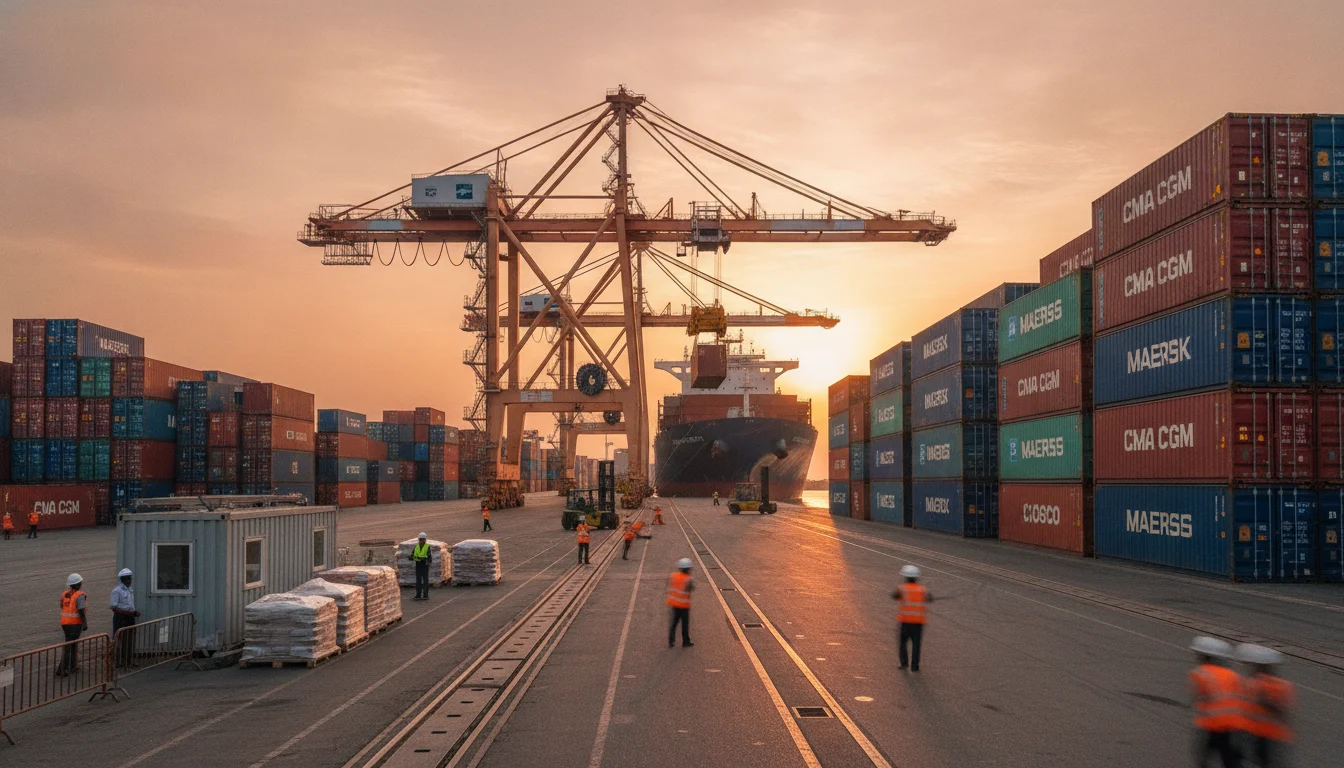
A DDP shipping cost breakdown bakeware Lagos port combines ocean freight, Nigerian import duty (0-35% depending on HS code), VAT (7.5%), CISS levy, ETLS charge, terminal handling, customs brokerage, and final trucking into one landed price. For example, a 20-foot container of carbon-steel cake pans may incur $2,800 ocean freight from Ningbo, $1,200 duty (20% rate), $450 VAT, $180 CISS, $120 ETLS, $350 terminal handling, $250 brokerage, and $200 Lagos-area delivery, totaling approximately $5,550 in destination charges before product value.
📋 Table of Contents
DDP (Incoterms 2020) places maximum responsibility on the seller. The supplier arranges export clearance in China, books ocean freight, handles Nigerian customs clearance, pays all import duties and taxes, and delivers the goods to the buyer’s warehouse in Lagos. The buyer receives a single all-in price and takes possession only after the shipment clears Nigerian Customs and arrives at the agreed address.
DDP stops at the buyer’s warehouse threshold. Unloading, warehousing, and onward distribution to retail or wholesale customers remain the buyer’s responsibility. If the shipment requires special storage or cold-chain handling, those costs are separate. Demurrage for late container return and any post-clearance inspection fees triggered by the buyer’s own compliance gaps also fall outside the DDP scope.
Ocean freight forms the largest single line in a DDP shipping cost breakdown bakeware Lagos port. Rates fluctuate with fuel surcharges, peak-season demand (September-November for African markets), and carrier capacity. A 20-foot container typically costs $2,500-$3,200, while a 40-foot high-cube container runs $3,800-$5,000.
Full Container Load (FCL) is priced per container, regardless of how many cartons fill it. Less than Container Load (LCL) is priced per cubic metre or per kilogram, whichever yields a higher charge. For bakeware, which is relatively dense but not extremely heavy, LCL rates average $80-$120 per cubic metre. A single pallet (1.2 m³) of stainless-steel mixing bowls would cost $96-$144 in LCL freight, but if the buyer needs three pallets, booking a shared 20-foot container at $2,800 and filling it with 12-15 pallets brings the per-pallet cost down to $186-$233.
Ningbo to Lagos Apapa takes 28-35 days on direct sailings, or 35-45 days with a transhipment stop in Singapore or Tanger-Med. Shansen ships from Ningbo port, optimizing container loading for African distributors serving Lagos, Mombasa, and Francophone/Lusophone African ports. Schedule reliability matters because delays trigger demurrage (container detention fees) at Lagos Apapa, which start at $50 per day after the free period expires.
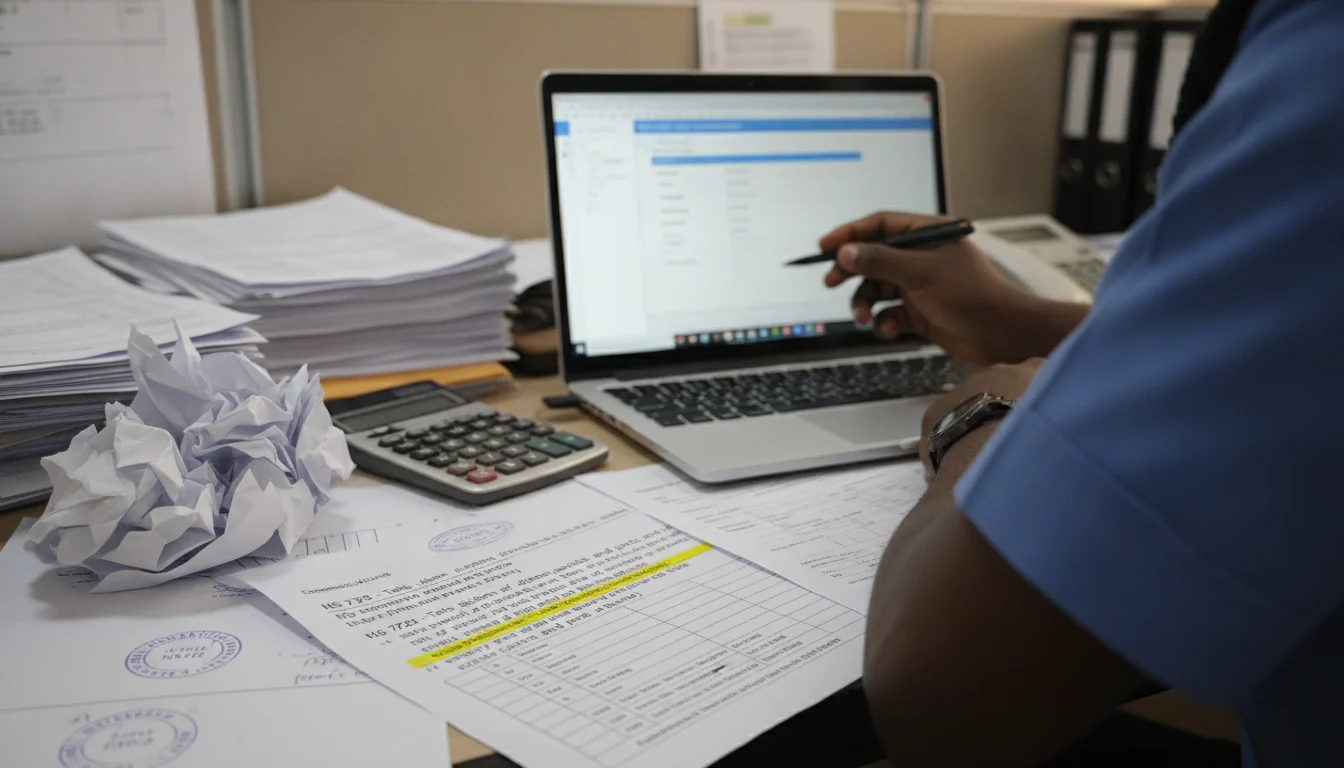
Nigeria’s import duty structure depends on the bakeware material and HS classification. Metal bakeware (aluminum, carbon steel, stainless steel) usually falls under HS 7323 (table/kitchen articles of iron, steel, or aluminum), attracting 20-35% duty. Silicone bakeware is classified under HS 3924 (plastic tableware and kitchenware), with 0-10% duty. The exact rate is confirmed when the customs broker files the Single Goods Declaration (SGD) and the Nigeria Customs Service assesses the shipment.
Duty is levied on the CIF value, which equals the product FOB price plus ocean freight plus marine insurance (typically 0.5% of FOB). For example, if a container of carbon-steel cake pans has a $12,000 FOB value, $2,800 freight, and $60 insurance, the CIF is $14,860. At a 20% duty rate, the duty owed is $2,972. VAT is then applied to the duty-paid value ($14,860 + $2,972 = $17,832), yielding $1,337 in VAT at 7.5%.
The Comprehensive Import Supervision Scheme (CISS) levy is a flat 1% of the CIF value, collected by the inspection agent. ETLS (Electronic Trade Licence System) is a per-declaration charge, typically $100-$150. Some categories attract an additional 5-10% duty surcharge, though most bakeware escapes this. The customs broker consolidates these into a single invoice line, but buyers should request an itemized breakdown to verify each component.
Once the container arrives at Lagos Apapa, a series of destination charges apply before the goods reach the buyer’s warehouse. These charges are often bundled into a single “destination handling” line in a DDP quote, but understanding each component helps buyers spot inflated fees or hidden charges.
The terminal operator charges for unloading the container from the vessel, stacking it in the yard, and releasing it to the customs broker. THC at Apapa averages $250-$350 per 20-foot container and $400-$550 per 40-foot container. This fee is non-negotiable and appears on the terminal’s official tariff, but some brokers inflate it by 10-15% when quoting to buyers.
A licensed customs broker files the Single Goods Declaration (SGD), presents the Bill of Lading and commercial invoice, pays the duty and VAT on behalf of the importer, and obtains the Customs Release Order. Brokerage fees range from $200-$400 depending on the shipment’s complexity and whether SONCAP (Standards Organisation of Nigeria Conformity Assessment Programme) inspection is required. SONCAP adds $150-$250 if the bakeware falls under a regulated category and the supplier has not pre-cleared the shipment with a Product Certificate.
Trucking from Apapa to a Lagos-area warehouse (Ikeja, Ilupeju, Oshodi) costs $150-$250 per container, depending on distance and traffic. Deliveries to Ogun State (Ifo, Ota, Sango) add another $50-$100. If the buyer’s warehouse has restricted access hours or requires appointment scheduling, the trucker may charge a waiting fee of $30-$50 per hour beyond the first free hour.
A Lagos-based kitchenware importer orders a 20-foot container of carbon-steel cake pans and muffin trays from Shansen’s Yongkang factory. The shipment contains 500 cartons, each holding 10 pieces, for a total of 5,000 units. The FOB Ningbo price is $12,000. Ocean freight is quoted at $2,800. Marine insurance is $60 (0.5% of FOB). The CIF value is therefore $14,860.
Carbon-steel bakeware is classified under HS 7323.93, attracting 20% duty. Duty owed: $14,860 × 20% = $2,972. The duty-paid value is $14,860 + $2,972 = $17,832. VAT at 7.5% is $17,832 × 7.5% = $1,337. CISS levy at 1% of CIF is $14,860 × 1% = $149. ETLS charge is $120. Total import charges: $2,972 (duty) + $1,337 (VAT) + $149 (CISS) + $120 (ETLS) = $4,578.
Terminal handling at Apapa: $300. Customs brokerage and documentation: $280. Final trucking to Ikeja warehouse: $200. Total destination charges: $780. The all-in DDP cost is $14,860 (CIF) + $4,578 (import charges) + $780 (destination) = $20,218. Divided by 5,000 units, the landed cost per piece is $4.04. If the importer plans a retail price of ₦8,500 per unit (approximately $5.50 at ₦1,550/$1), the gross margin is $1.46 per unit, or 27%.
Sample landed cost: $20,218 ÷ 5,000 units = $4.04 per piece. Margin at ₦8,500 retail: approximately 27% gross.
Breaking the DDP shipping cost breakdown bakeware Lagos port into per-unit and per-carton figures helps importers set retail pricing and compare suppliers. In the worked example above, the $20,218 total spreads across 500 cartons, yielding $40.44 per carton. If each carton holds 10 pieces, the per-piece cost is $4.04. Larger containers and higher-value shipments dilute the fixed destination charges, improving unit economics.
A 20-foot container can physically hold 28 cubic metres. If each carton of bakeware measures 0.05 m³, the container fits 560 cartons. Underloading to 500 cartons wastes 60 cartons of capacity, spreading the $2,800 ocean freight over fewer units. Shansen optimizes container loading for African distributors, often mixing wholesale bakeware sets of different sizes to maximize cube utilization without exceeding the 20-ton weight limit.
A 40-foot high-cube container costs $4,500 in ocean freight (60% more than a 20-foot), but holds 68 m³ (140% more volume). If the buyer can fill it with 1,360 cartons (10,000 pieces), the landed cost per piece drops to $3.20, a 21% saving versus the 20-foot scenario. The trade-off is higher upfront cash outlay and longer inventory turnover. Startups often begin with 20-foot shipments and graduate to 40-foot as sales volume justifies the investment.
Buyers frequently discover that the quoted DDP price does not cover every Lagos-side expense. Understanding these hidden charges prevents budget overruns and allows for accurate margin planning.
Lagos Apapa grants 5-7 free days for the buyer to clear customs and collect the container. After that, demurrage accrues at $50 per day. If the buyer’s customs broker is slow to file the SGD, or if the shipment is selected for physical inspection, clearance can stretch to 10-14 days, adding $150-$350 in demurrage. Detention (holding the empty container beyond the return deadline) costs another $30-$50 per day. Buyers should confirm that the DDP quote includes a realistic clearance buffer and ask who bears demurrage risk if delays occur.
DDP quotes are typically denominated in US dollars, but Nigerian buyers operate in naira. Between the quote date and the payment date, the naira may depreciate, increasing the effective landed cost in local currency. Some suppliers offer a 7-14 day rate lock, but longer windows require a currency hedge or a clause that adjusts the dollar price if the naira moves beyond a specified band.
If the bakeware category requires SONCAP certification and the supplier has not obtained a Product Certificate before shipping, the shipment will be held at the port for inspection. The buyer must engage a SONCAP-approved inspection body, pay $200-$400 for the inspection, and wait 3-5 business days for the report. This delay triggers demurrage and extends the cash-conversion cycle. Shansen’s food-grade SGS/FDA-certified bakeware lines carry test reports dated 2020, 2021, and 2023, which streamline SONCAP processing when the buyer provides them to the inspection agent.
Under Nigerian law, the importer of record must be a registered Nigerian entity with a valid Tax Identification Number (TIN) and an active import permit. Some Chinese suppliers offer to act as importer of record to simplify the process, but this arrangement is legally grey and exposes the buyer to fines if Customs discovers that the declared importer does not match the actual consignee. Buyers should insist on being named as importer and provide their own TIN and company registration documents to the customs broker.
In practice: Ordering a 1-piece sample of each carbon-steel SKU and a 1-set sample of each silicone bakeware set before committing to a 500-piece OEM production run lets the importer verify coating quality, dimensional accuracy, and packaging fit against local bakery and retail requirements without tying up working capital in untested inventory.
DDP is legal under Incoterms 2020 and Nigerian Customs regulations, provided the buyer is named as the importer of record and supplies a valid Tax Identification Number (TIN) and company registration. The supplier arranges clearance through a licensed customs broker acting on the buyer’s behalf. Some suppliers incorrectly claim to act as importer of record themselves, which violates Nigerian law requiring the consignee to be a registered Nigerian entity. Buyers should verify that the customs declaration lists their own company name and TIN, not the supplier’s, to avoid fines and shipment holds.
FOB (Free On Board) transfers risk and cost to the buyer once goods are loaded on the vessel in China; the buyer arranges ocean freight, insurance, and all Nigerian import procedures. CIF (Cost, Insurance, Freight) adds ocean freight and marine insurance to the FOB price, but the buyer still handles customs clearance and destination charges in Lagos. DDP includes everything through to the buyer’s warehouse, offering a single landed price with no surprise fees. FOB is cheapest upfront but requires the buyer to manage logistics and bear exchange-rate risk on multiple invoices. DDP is more expensive but simplifies budgeting and transfers delay risk to the supplier. Buyers with established freight forwarders often prefer CIF or FOB for cost control; first-time importers typically choose DDP to reduce complexity.
Under true DDP terms, the supplier bears demurrage and detention charges if the delay results from incomplete documentation, incorrect HS classification, or missing SONCAP certificates. If the delay stems from the buyer’s failure to provide import permits or TIN, or from a Customs physical-inspection hold unrelated to the supplier’s paperwork, the buyer may be liable for demurrage. The DDP contract should specify a clearance-time assumption (typically 7-10 days) and allocate demurrage responsibility beyond that window. Buyers should request daily clearance updates from the customs broker and confirm that the supplier has pre-filed all SONCAP and product-safety documentation to minimize hold risk.
Written by the Shansen Bakeware Export Team.
Need a detailed DDP quotation for your Lagos warehouse, including HS-code classification, duty calculation, and container-loading plan?
Request Your Itemized DDP Breakdown →
MOQ 1 set on stock configurations. Tell us what you need and we reply on WhatsApp.
Click the button below to open WhatsApp. If you're not logged in to WhatsApp Web yet, scan the QR code first — then come back here and copy the message into the chat.