📋 Table of Contents
Stocking your own line of baking pans starts with a decision that locks up cash for months: do you trust a factory 12,000 kilometers away to deliver food-grade quality on time? For Nigerian kitchenware importers, a custom baking pan private label project lives or dies on three things-MOQ that doesn’t suffocate cash flow, consistent non-stick performance after 500 bake cycles, and sampling that validates the product before you pay for a container. A wholesale bakeware sets supplier that can ship 1-piece samples from Ningbo to Lagos inside 14 days changes the risk equation entirely. For wholesale orders, see wholesale springform cake pans. For wholesale orders, see OEM-branded springform pans.
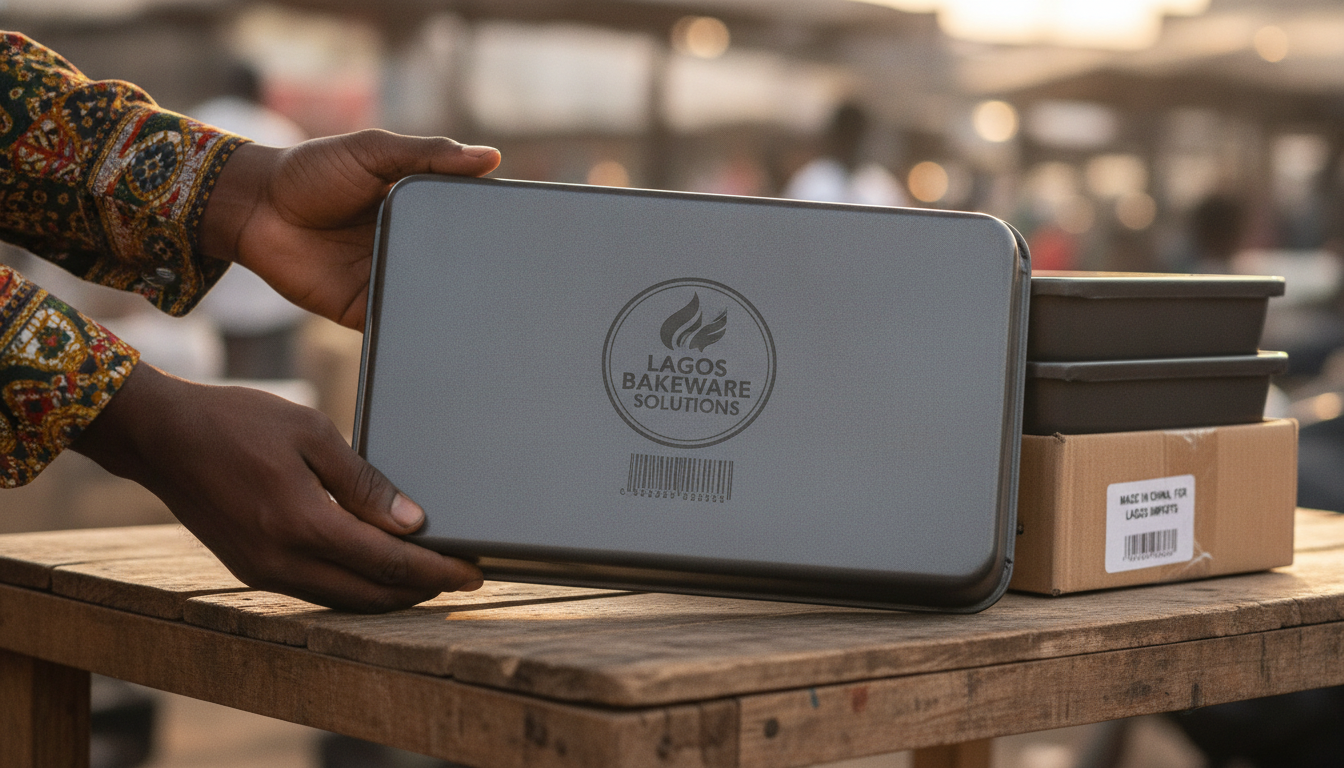
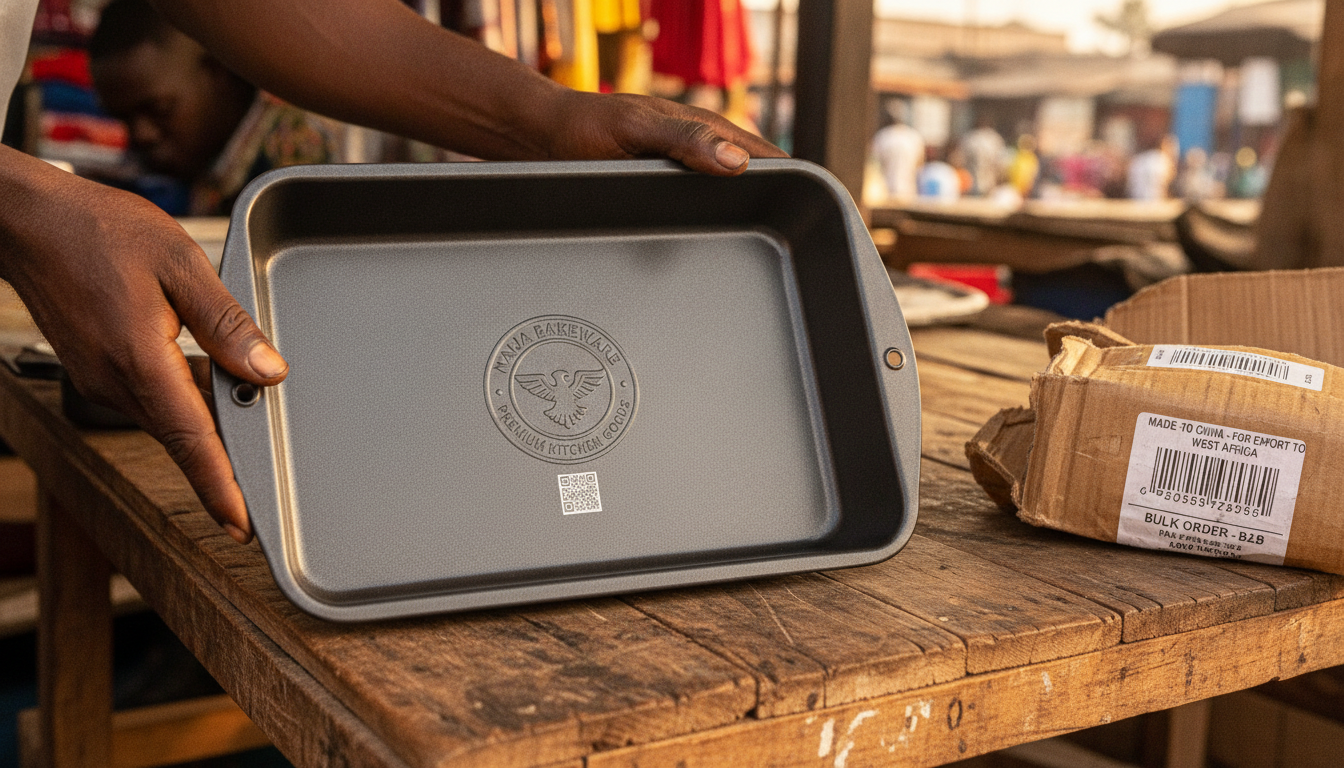
Private label means a manufacturer produces baking pans to your specification-shape, size, coating, color-and applies your brand’s logo, packaging, and barcode. The factory does not sell the same design under its own name. For Nigerian importers, this creates a branded product that can command a 30-50% price premium over generic pans in open markets like Idumota or Trade Fair Complex.
OEM (original equipment manufacturing) uses the factory’s existing mold library with your logo added. Private label often involves custom mold development, which adds tooling cost but yields a unique product. A custom OEM private label bakeware program lets you start with OEM shapes and graduate to fully custom molds as your brand grows.
The material and coating determine durability, heat distribution, and food-release performance. Choosing the wrong combination for Nigeria’s climate-high humidity and variable oven types-invites rust and peeling complaints within months.
Coating longevity fact: A manufacturer with full automatic production lines, as noted in a 2026 Instagram factory post, can apply coatings with 0.02mm uniformity, doubling pan life compared to hand-sprayed coatings.
Nigeria’s NAFDAC registration and SON conformity assessment require proof that bakeware is food-grade. Without third-party test reports, your shipment can be held at the port for months.
A PDF certificate is easy to forge. A food-grade SGS FDA certified bakeware supplier should provide the original lab report with batch number that matches your pre-production sample. In our Yongkang factory, we run in-house QC on every production batch before third-party testing is scheduled.
High MOQ is the number-one reason Nigerian brands abandon private label plans. A factory demanding 1,000 pieces per SKU forces you to tie up $3,000-$5,000 before you know if the pan sells.
A low MOQ bakeware for startups program lets you test 3 pan styles with 1-piece each, getting customer feedback before committing to a 30-piece-per-SKU order.
According to Yiwu HENGMING BAKINGTRAYS (2026), production experience matters-some factories claim over 43 years in commercial baking trays. But age alone is not a guarantee. Nigerian buyers need a structured evaluation.
Request a 15-minute live video walkthrough of the production floor. You should see the coating line, QC testing station, and packaging area. This weeds out shell companies that resell from other factories.
Ask for the last 3 container-loading photos showing goods destined for Lagos Apapa or Mombasa. A manufacturer that has shipped to Kenya or Nigeria understands the fumigation and SONCAP documentation requirements.
Request a video of a cross-hatch adhesion test on the exact pan you are ordering. The coating should not peel off when tape is applied and removed, per ASTM D3359 standards.
Container loading that is optimized for African distributors can reduce the per-unit landed cost by 12-18% compared to standard LCL shipments. The Ningbo port to Lagos Apapa route is well-established, with weekly sailings on Maersk and MSC lines.
Landed cost example: 1,000 carbon steel loaf pans at $1.20 FOB each, plus freight and charges, land in Lagos at approximately $1.70, $1.90 per unit, still well below the $3.50 retail price of comparable imported pans.
Nigerian retailers expect a product that looks premium on the shelf. Generic neutral packaging cuts your reorder rate by 40%, according to a 2025 survey of Lagos supermarket buyers.
A NAFDAC registration number printed on the packaging is mandatory for retail sale in Nigeria. The factory should be able to reserve a blank area on the packaging design for this number, even if you don’t have it yet at the time of printing.
For a complete distribution-ready solution, including baking tools and accessories, baking tools wholesale Nigeria programs often bundle pans with spatulas, sifters, and decorating tools to increase retailer basket size.
Private label bakeware is manufactured by a third-party factory and sold under your brand name. The factory produces pans, molds, or trays to your specifications-shape, material, coating, and logo-and packages them with your branding. You control the brand identity while the factory handles production, quality control, and often shipping logistics.
Carbon steel with a multi-layer non-stick coating is the most popular for commercial durability. Aluminum offers even heating at a lower cost. Silicone provides flexibility and dishwasher safety. Stainless steel resists rust but is heavier and more expensive. The best material depends on the target market’s cooking habits and humidity conditions.
MOQ varies dramatically by supplier. Trading companies often require 500-1,000 pieces per SKU. Large factories may accept 300-500 pieces. Flexible manufacturers like Shansen Bakeware allow MOQ as low as 1 piece for sampling and 30 pieces per SKU for a first bulk order, enabling market validation without large upfront investment.
Request a live video factory tour, ask for the last three container-loading photos to African ports, verify third-party certifications (SGS, FDA), and order 1-3 samples before committing to bulk. A manufacturer that has shipped to Lagos or Mombasa will understand the fumigation, SONCAP, and documentation requirements for Nigerian customs clearance.
At minimum, SGS-tested reports for heavy metals and overall migration, FDA food-grade compliance (21 CFR 177.2600 for silicone, 21 CFR 175.300 for coatings), PFAS-free and Pb-free declarations. These documents are essential for NAFDAC registration and SONCAP certification when importing baking pans into Nigeria.
Start your private label with 1-piece samples to Lagos, no minimum order risk.
Request Samples & Catalog →
Browse OEM-ready bakeware from Shansen (SGS / FDA / PFAS-free / Pb-free, MOQ 1-50):
MOQ 1 set on stock configurations. Tell us what you need and we reply on WhatsApp.
Click the button below to open WhatsApp. If you're not logged in to WhatsApp Web yet, scan the QR code first — then come back here and copy the message into the chat.