
To verify a non-stick coating is truly PFOA-free before importing bakeware, request the actual test report from the supplier, confirm the lab name and test method, and check that the certificate covers the specific coating lot and product model you are ordering. Marketing claims like “PFOA-free” without supporting documentation carry zero weight at customs or in the event of a compliance audit.
📋 Table of Contents
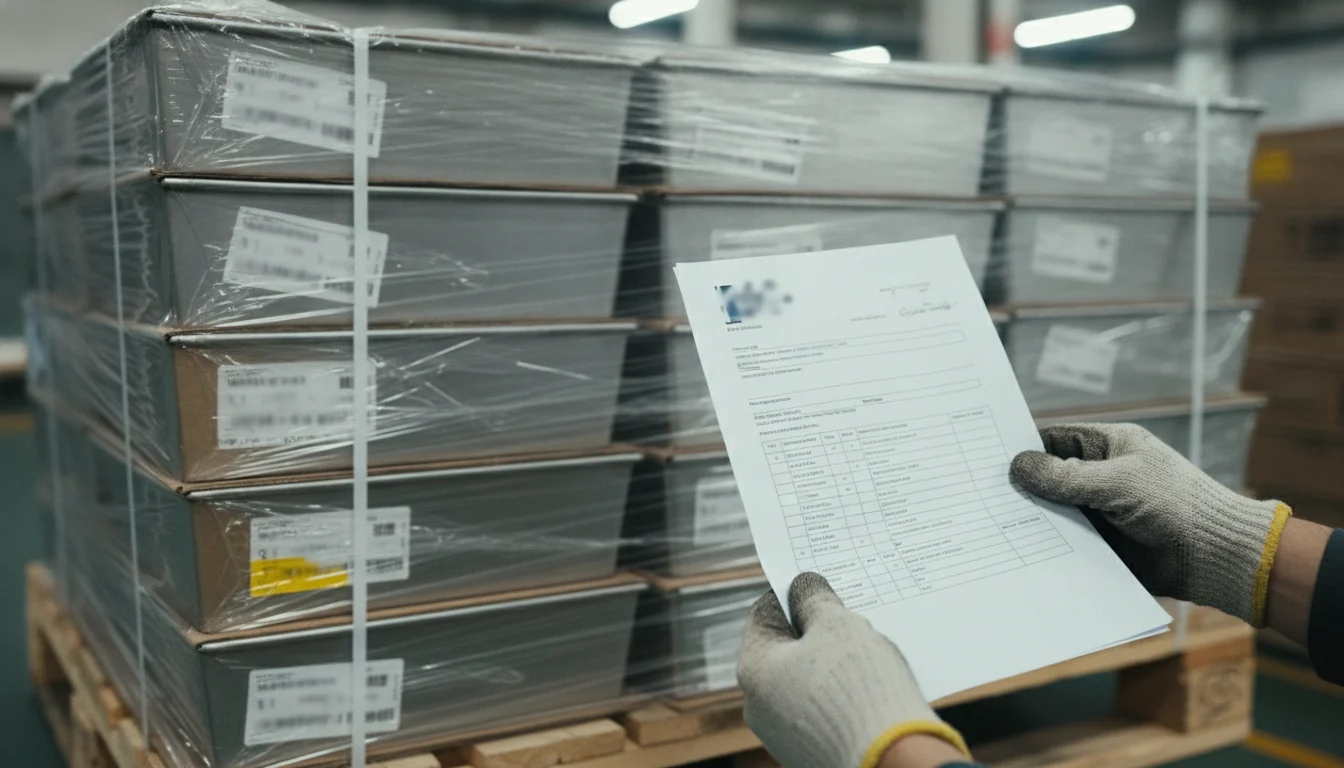
Importers often discover that “PFOA-free” is a comfort phrase used even when the coating contains PTFE or other PFAS. PFOA (perfluorooctanoic acid) is just one member of the PFAS family, and eliminating it does not prove the coating is free from all fluoropolymers or persistent chemicals. Shoppers want the exact chemistry and lab proof, not vague claims, yet many product listings never explain what the coating actually is.
PFOA was historically used as a processing aid in PTFE production. Most manufacturers phased it out by 2015, so a “PFOA-free” label today often reflects industry-standard practice rather than a safety upgrade. The coating may still be PTFE-based, which is a PFAS compound, and the certificate only confirms that PFOA residue is below the detection limit in the finished product.
Importers targeting markets with strict PFAS regulations, such as California Proposition 65 or European REACH, need to know whether the coating is PTFE-based or uses a ceramic, silicone, or anodized alternative. A PFOA-free certificate does not answer that question. Request a material declaration or a broader PFAS-screen test report that covers PFOS, GenX, and other fluorinated compounds if your market demands it.
Suppliers often badge products as “non-toxic” or “safe” without specifying which substances were tested or excluded. A claim without a test report is unverifiable, and customs or a buyer audit will reject it. Importers who rely on marketing language instead of documentation face product holds, re-testing costs, and reputational damage if the coating fails a post-import inspection.
To verify non-stick coating PFOA free certificate before import, ask the supplier for a complete test report, not just a summary or a badge on the website. The report should include the lab name, test method, reporting limit, test date, and the exact product or coating lot tested. A certificate without these elements cannot be validated and offers no legal protection.
Request the original test report issued by an accredited laboratory. The document should name the lab, show its accreditation scope (ISO/IEC 17025 for food-contact testing is common), and list the test method used (such as EPA 537.1 for PFAS in water extracts or a food-simulant extraction method for solid coatings). Generic “Certificate of Compliance” letters without lab letterhead or test data are not verifiable.
Ask for a material declaration that lists the coating chemistry (PTFE, ceramic, silicone, anodized aluminum) and any intentionally added substances. This document helps you understand whether the coating is PFAS-based before you review the PFOA test result. Factories that produce wholesale bakeware sets across multiple coating lines should provide a declaration for each line, because a single certificate may not cover all SKUs.
The test report should reference a specific coating batch or production lot. Ask the supplier to confirm in writing that the lot tested matches the lot used in your order. Multi-SKU factories sometimes reuse a single certificate across different coating lines or production runs, which creates a compliance gap if your shipment comes from an untested batch.
Request a signed letter on company letterhead that links the test report to your purchase order by SKU and quantity. This document creates a traceable record for customs declarations and post-import audits. It also signals that the supplier understands the compliance requirement and is willing to stand behind the claim.
Once you receive the test report, check the lab name, verify its accreditation, and confirm the test method aligns with your target market regulations. Importers say “we are certified” is useless unless the seller provides the certificate number, the lab, and the exact coated lot covered by the report. A fabricated or altered document will fail these checks.
Search the lab name online and confirm it holds ISO/IEC 17025 accreditation for food-contact materials or chemical testing. Accreditation bodies such as CNAS (China), A2LA (USA), or UKAS (UK) publish directories of accredited labs. If the lab does not appear in these directories or lacks food-contact scope, the report may not meet regulatory standards in your destination market.
The report should name the test method (for example, LC-MS/MS for PFAS quantification) and state the reporting limit (often 1-10 parts per billion for PFOA). If the method is not listed or the reporting limit is higher than your market’s threshold, the test may not detect PFOA at regulated levels. Compare the method to standards like FDA 21 CFR 177.2600 for resinous and polymeric coatings or European Framework Regulation (EC) No 1935/2004 for food-contact materials.
Check the test date on the report. Coatings and formulations can change, so a certificate older than 12 months may not reflect the current production batch. Ask the supplier whether the coating formulation or supplier has changed since the test date. Factories that source coatings from multiple suppliers should provide a fresh report for each supplier or batch.
Most accredited labs assign a unique certificate or report number and provide contact details for verification. Email or call the lab with the certificate number and ask them to confirm the report is authentic and matches the product description. This step catches altered PDFs or reports issued for a different product but reused by the supplier.
A valid test report only protects you if it covers the exact product model, coating lot, and food-contact part you are importing. Buyers complain that suppliers provide a generic certificate that applies to one SKU but is used to market an entire product line. Matching the certificate to your order prevents this gap.
The test report should describe the tested item by model number, SKU, or product name. Compare this description to your purchase order. If the report says “carbon steel baking pan, 9-inch round” but your order includes 10-inch square pans or a different coating finish, the certificate does not apply. Request a separate report for each distinct SKU or coating type.
Non-stick bakeware often has a coated interior and an uncoated or differently finished exterior. The test report should specify which surface was tested. If the report only covers the exterior paint or a non-food-contact part, it does not prove the interior coating is PFOA-free. Ask the supplier to confirm in writing that the food-contact surface was tested.
If the supplier sources coatings from multiple batches or vendors, ask for the batch number on the test report and confirm it matches the batch used in your production run. Factories that coat in-house should provide a batch or lot code that links the certificate to your shipment. Importers working with low-MOQ bakeware suppliers can request a sample from the same coated batch before placing the full order, then have that sample independently tested to verify the supplier’s claim.
Before the container ships, ask the supplier to send a photo of the production batch with the lot code visible, along with a signed statement that the batch matches the tested lot. This step is especially important for first-time orders or when the supplier has multiple coating lines. Shansen Bakeware, a factory-direct manufacturer in Yongkang, Zhejiang, provides SGS and FDA test reports on request for each production batch across our 7 in-house bakeware lines, with batch codes traceable to the coating supplier and production date.
For high-value or high-risk orders, arrange independent testing of a pre-production sample. Send the sample to an accredited lab in your destination market and request a PFOA test using the same method cited in the supplier’s report. If the results match, you have strong evidence the supplier’s certificate is accurate. If they differ, investigate before shipping the full order. Importers targeting food-grade certified bakeware markets can use third-party testing to verify compliance before customs clearance.
Compliance Tip: A test report is only valid if it covers the exact coating lot, product model, and food-contact surface you are importing. Always request batch traceability and a signed supplier confirmation before payment.
No. PFOA is one chemical in the PFAS family, which includes thousands of fluorinated compounds. A coating can be PFOA-free but still contain PTFE, PFOS, GenX, or other PFAS. If your market regulates PFAS broadly, request a test report that screens for multiple PFAS compounds or ask for a material declaration confirming the coating is not fluoropolymer-based.
Request the full test report from an accredited laboratory, not a generic Certificate of Compliance. The report should name the lab, show its accreditation (ISO/IEC 17025 for food-contact testing), state the test method (such as LC-MS/MS for PFAS), list the reporting limit, and reference the specific product or coating batch tested. A certificate without these details cannot be verified.
Check the lab name and confirm its accreditation in directories published by CNAS, A2LA, or UKAS. Verify the test method aligns with your market regulations. Cross-check the certificate number by contacting the lab directly. Compare the product description on the report to your purchase order SKU and coating lot. If the report is older than 12 months or the coating supplier has changed, request a fresh test for your production batch.
Not necessarily. PFOA-free confirms that one specific compound is below the detection limit, but it does not prove the coating meets all food-contact safety requirements. The coating may still contain other PFAS, heavy metals, or restricted substances. Check that the supplier also provides food-contact migration testing under FDA 21 CFR 177.2600, European Regulation (EC) No 1935/2004, or your destination market standard.
Request the full test report with lab name and accreditation, a material declaration listing coating chemistry, the batch or lot number linking the certificate to your order, and a signed supplier confirmation on company letterhead that ties the report to your purchase order by SKU. For high-value orders, also request a pre-production sample from the same coated batch for independent third-party testing before shipment.
Requesting a pre-production sample from the same coated batch and having it independently tested before the full order ships allows importers to verify PFOA-free claims without tying up capital in untested inventory.
Ready to source bakeware with verifiable PFOA-free and food-grade certifications?
Request Test Reports and Batch Traceability →
Written by the Shansen Bakeware Export Team.
MOQ 1 set on stock configurations. Tell us what you need and we reply on WhatsApp.
Click the button below to open WhatsApp. If you're not logged in to WhatsApp Web yet, scan the QR code first — then come back here and copy the message into the chat.