📋 Table of Contents
Launching a private-label bakeware brand in Nigeria starts with one decision: sourcing a complete baking set private label that sells without tying up capital. With Nigeria’s population reaching approximately 230 million in 2025 (World Bank), the demand for home-baking and semi-professional bakeware is growing faster than local supply. But high minimum order quantities and inconsistent food-grade quality keep many importers stuck. This guide breaks down how to source a full baking set under your own brand, from sample validation to container delivery at Lagos Apapa, using a factory-direct model that lets you start with as little as 1 piece per SKU. For wholesale orders, see the 3-shape springform pan set.
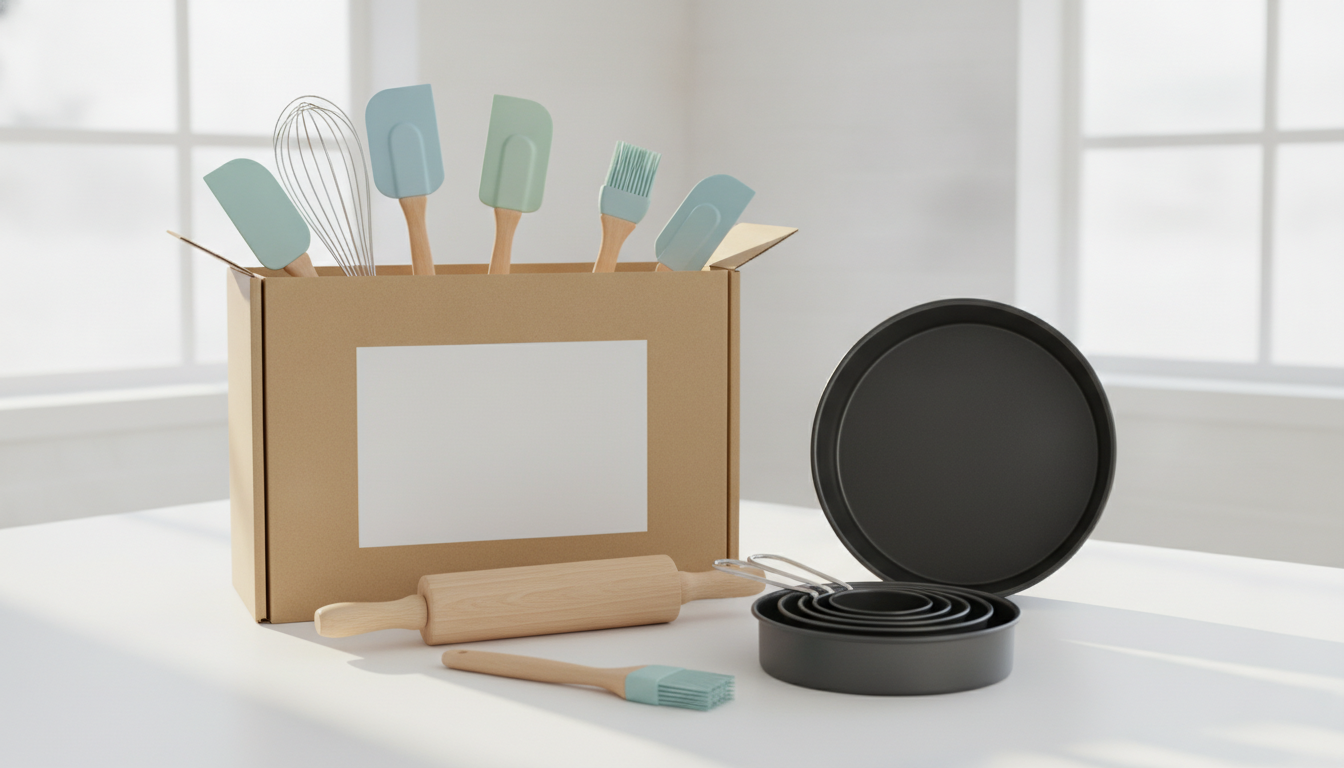
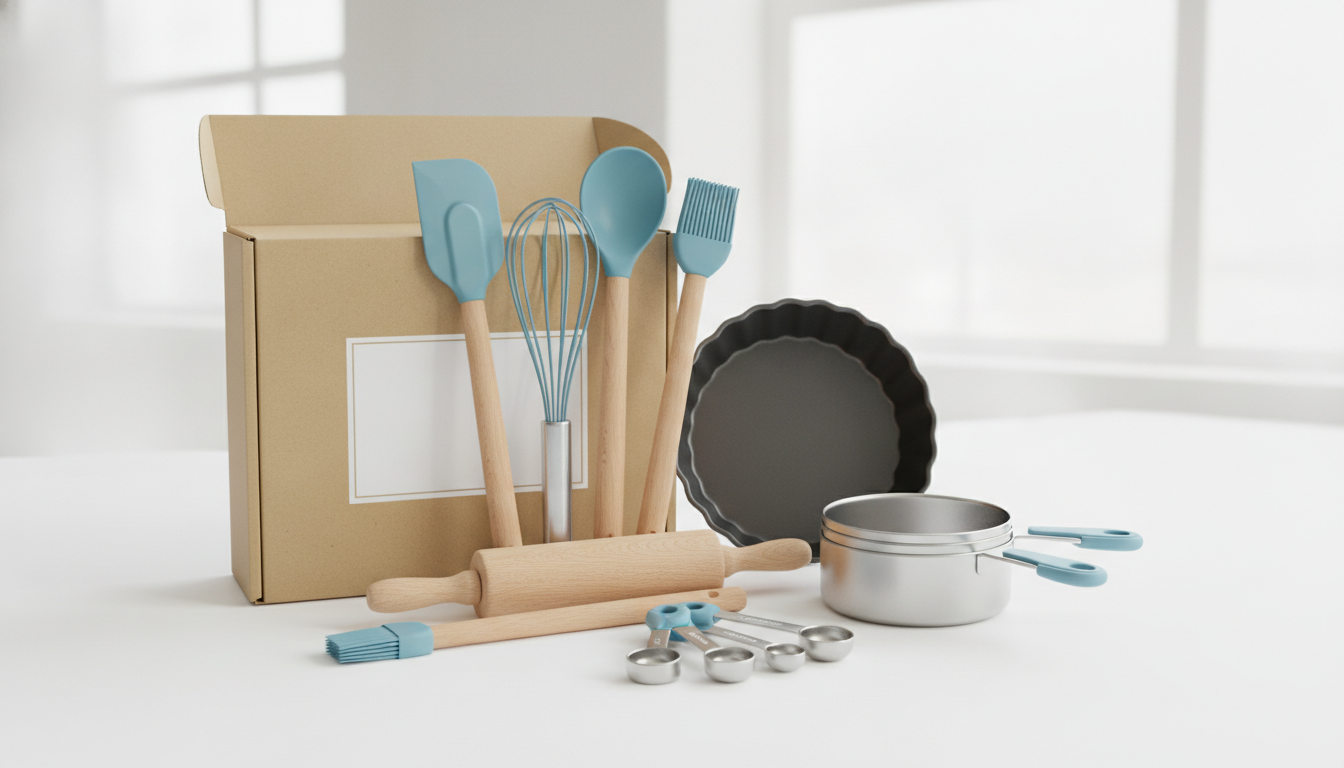
A complete baking set private label typically bundles 5 to 12 essential tools that cover cake, pastry, and bread preparation. For the Nigerian market, a starter set often includes silicone spatulas, a whisk, a rolling pin, a pastry brush, measuring cups and spoons, a round cake pan, and a muffin tray. More advanced sets add a non-stick loaf pan, a cooling rack, a flour sifter, and a silicone baking mat. The value for a private-label brand lies in the combination: retailers and supermarket buyers in Lagos, Abuja, and Port Harcourt prefer all-in-one sets because they simplify display and offer a higher perceived value than individual tools. For wholesale orders, see our non-stick muffin and cupcake tins. For wholesale orders, see wholesale stainless flour sifters.
China produces over 70% of the world’s metal and silicone bakeware, giving private-label importers a cost base that is 40-60% lower than European or South African alternatives. Shansen Bakeware’s Yongkang factory operates 7 in-house lines-silicone, carbon steel, stainless steel, aluminum, plus cake-decorating tools and sifters-at a monthly capacity of 500,000 units, enabling low MOQs without sacrificing consistency. A complete baking set private label sourced directly from the factory avoids intermediary markups that can reach 30% when buying through domestic agents.
You can add your logo, brand colors, and multilingual labeling directly on the set’s packaging and silicone tools. Mold-etching for silicone handles, heat-transfer branding on metal pans, and custom box designs are all available with no additional tooling cost at MOQ of 30 units per SKU.
Not all China-based suppliers own factories. Many trading companies claim “factory-direct” but only aggregate orders. For Nigeria-bound bakeware, the supplier must demonstrate in-house production, food-grade certifications, and logistics experience with West African ports.
Sample MOQ: 1 piece. Bulk MOQ: 30 pieces per SKU. Sampling time: 7-10 days.
A supplier that demands 500 units per SKU before you’ve tested the market is a cash-flow trap. Low-MOQ bakeware for startups lets you validate with 1-piece samples, then scale gradually.
Nigerian importers face strict scrutiny at customs for food-contact articles. While NAFDAC does not yet issue a specific bakeware certificate, it accepts internationally recognized test reports. The most critical documentation: SGS-tested FDA food-grade compliance, PFAS-free certification, and lead (Pb)-free statements.
Shansen Bakeware’s products are SGS-tested and FDA food-grade compliant, with PFAS-free and lead-free certifications available for every shipment. Always request a PDF of the latest test report dated within 12 months before paying the deposit.
Lagos Apapa port handles over 60% of Nigeria’s container traffic. Container clearance can take 2-4 weeks unless your documentation is perfect. Shipping from Ningbo to Lagos takes 28-32 days on average. Our Yongkang factory packs and loads containers specifically for African distributors, with reinforced palletization and moisture-absorbing desiccants to protect metal bakeware during the summer rainy season.
This sequence has been used by dozens of distributors shipping from Ningbo to Lagos. Each step anchors on a concrete verification, never on trust alone.
Pick 5-8 bakeware pieces that match your target retail price point in Naira. A set that retails for ₦15,000, ₦25,000 typically has a land cost of $3.00, $4.50. Include at least one silicone item (spatula) and one carbon steel pan to showcase material variety.
Order 1-piece samples of each SKU and ask the factory to include the most recent SGS test report. In Lagos, you can send a sample to a local testing lab for NAFDAC reference if needed. Check for coating bubbles, sharp edges on metal, and silicone odor-low-quality silicone smells strongly after unboxing.
Submit your logo in AI or vector format for custom box printing. For Nigeria, packaging must include product name, material, care instructions, and a “food-grade” icon in English. Shansen Bakeware provides a free design mockup within 3 days.
After deposit, production runs 18-22 days. Request a pre-shipment inspection video or a third-party SGS inspection at the factory. Confirm the carton label reads exactly your brand name and “Made in China.”
Your freight forwarder will handle documentation: bill of lading, commercial invoice, packing list, SGS certificate, and FDA compliance letter. Clearance at Apapa typically requires a Form M and a SONCAP certificate for certain categories; baking sets generally fall under household articles and may not need SONCAP, but verify with your clearing agent. Our team can recommend Lagos-based agents experienced with bakeware containers.
A complete baking set typically includes 5 to 12 essential tools: spatulas, whisks, rolling pin, pastry brush, measuring cups and spoons, cake pans, muffin trays, and a loaf pan. More comprehensive sets add cooling racks, silicone baking mats, and flour sifters. The exact mix depends on the target retail price and the baking habits of the end consumer.
Yes, baking sets can be fully customized with your brand logo, color scheme, and packaging design when sourced from a factory that offers OEM/private-label services. Shansen Bakeware provides mold etching, heat-transfer branding, and custom retail boxes without extra tooling charges at MOQ of 30 units per SKU.
Factory MOQ for private-label bakeware varies: many suppliers demand 500-1,000 pieces per SKU, but Shansen Bakeware allows sampling from 1 piece and bulk orders from 30 pieces per SKU. This low threshold helps Nigerian importers test the market without locking up large capital.
Verify that the supplier owns a factory (not just a trading office), holds SGS or equivalent food-grade certifications, offers low MOQ samples, has experience shipping to West African ports, and communicates clearly in English. Request a factory video tour and a recent SGS report before committing.
For Nigeria, customs generally accept FDA 21 CFR 177.2600 compliance for silicone, SGS chemical test reports, and PFAS-free/lead-free declarations. A SONCAP certificate may be required if NAFDAC classifies the item as a regulated product, but most bakeware falls under general household articles. Always consult a Lagos clearing agent for the latest requirements.
Ready to launch your own complete baking set private label brand for the Nigerian market?
Request 1-Piece Samples Now →
Browse OEM-ready bakeware from Shansen (SGS / FDA / PFAS-free / Pb-free, MOQ 1-50):
MOQ 1 set on stock configurations. Tell us what you need and we reply on WhatsApp.
Click the button below to open WhatsApp. If you're not logged in to WhatsApp Web yet, scan the QR code first — then come back here and copy the message into the chat.