📋 Table of Contents
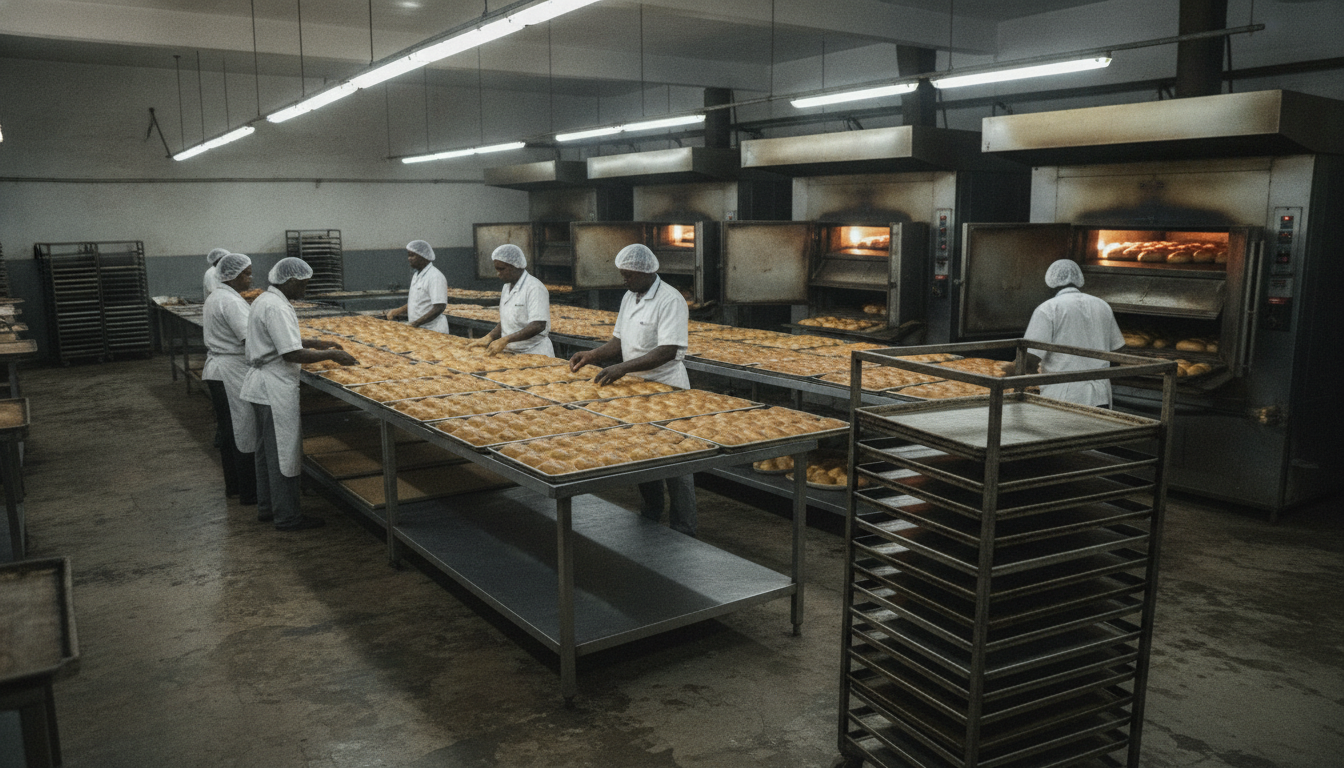
Finding a reliable heavy duty cookie sheet manufacturer africa supplier requires balancing gauge thickness, warp resistance, and container-load economics. Distributors across Nigeria, Kenya, and Francophone markets face a recurring challenge: standard 18-gauge cookie sheets warp under high-temperature commercial ovens, forcing replacement cycles every 8-12 months. Heavy-duty specifications (14-16 gauge carbon steel or 1.2 mm aluminum) extend lifespan to 24-36 months, but importers often struggle to find factories willing to ship mixed-material containers at realistic MOQs for African port logistics.
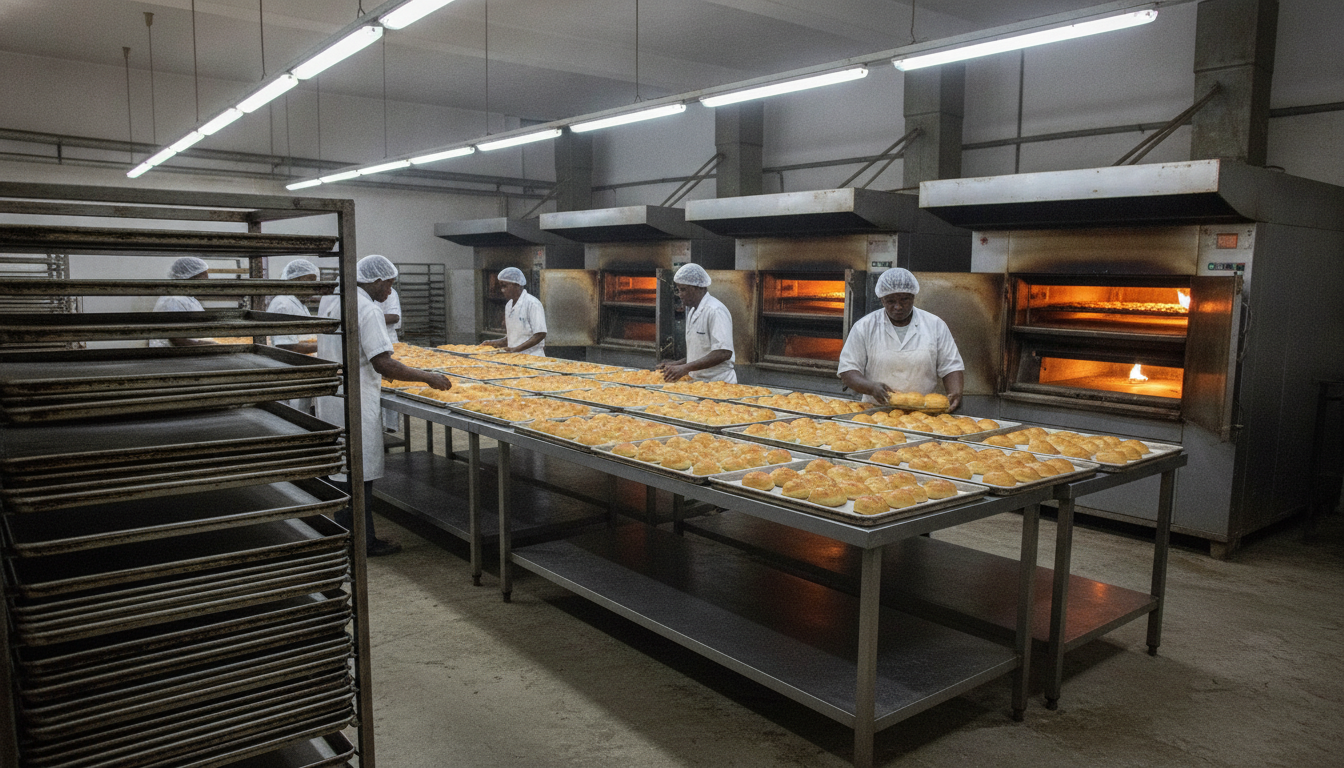
Heavy-duty cookie sheets differ from standard retail pans in three measurable ways: gauge thickness, corner reinforcement, and surface coating durability. Commercial bakeries and catering operations require pans that survive 500+ bake cycles without warping, peeling, or developing hot spots.
Gauge measures metal thickness in reverse: lower numbers mean thicker material. Standard retail cookie sheets use 18-20 gauge steel (approximately 0.9-1.2 mm). Heavy-duty commercial specs start at 14 gauge (1.6 mm) and run to 12 gauge (2.0 mm) for industrial bakery lines. Aluminum equivalents measure 1.2-1.5 mm thickness. Thicker material distributes heat more evenly and resists deformation when loaded with dense doughs or subjected to rapid temperature changes.
Commercial-grade cookie sheets feature rolled or wire-reinforced rims that prevent edge warping. Standard pans use a simple folded edge, which buckles under repeated thermal stress. A wholesale bakeware sets supplier offering factory-direct pricing should provide rim-reinforcement options without custom-tooling surcharges for orders above 500 units per SKU.
Non-stick longevity is routinely over-claimed, with coatings degrading sooner than advertised. Heavy-duty pans use either natural aluminum (requiring parchment or silicone mats), aluminized steel with a durable oxide layer, or multi-layer PTFE coatings rated for 1,000+ cycles. Buyers report that carbon steel pans rust within the 45-day return window even after prep, highlighting the importance of verifying coating specs and post-production oiling protocols before container shipment.
Selecting between carbon steel, stainless steel, and aluminum depends on oven type, budget constraints, and maintenance protocols in the destination market. Each material presents distinct trade-offs for West African distributors managing diverse customer bases.
Carbon steel delivers rapid, even heating and develops a natural non-stick patina over time. West African bakeries operating gas deck ovens favor 14-gauge carbon steel for baguettes and dinner rolls. The primary drawback: coastal humidity accelerates rust formation. Factories should apply a food-grade mineral oil coating before shipping and educate end-users on post-wash oiling protocols.
Aluminum’s superior thermal conductivity reduces bake time by 8-12% compared to steel, lowering energy costs in markets with expensive or unreliable electricity. Anodized aluminum resists corrosion without the maintenance burden of carbon steel. Distributors targeting small-format bakeries and pastry shops in Lagos, Nairobi, and Abidjan find aluminum cookie sheets offer the best price-performance ratio for mixed-product inventories.
Stainless steel (18/8 or 18/10 grade) withstands harsh detergents and high-temperature dishwashers common in hotel kitchens and catering operations. The material costs 30-40% more than carbon steel per unit but eliminates rust-related returns. Buyers serving coastal markets (Mombasa, Luanda, Dakar) prioritize stainless for its corrosion resistance in salt-air environments.
Container economics and port-to-warehouse lead times dictate sourcing strategy for West African bakeware distributors. A heavy duty cookie sheet manufacturer africa partnership must account for mixed-SKU loading, customs clearance timelines, and inland distribution challenges across Lagos, Mombasa, and Francophone port hubs.
In practice: A Nairobi bakeware distributor validated demand for 14-gauge aluminum cookie sheets by ordering 1-piece samples of four sizes, then placed a 50-unit-per-SKU first order mixing carbon steel and aluminum materials in a single container without locking capital in untested inventory
A 20-foot container holds approximately 8,000-10,000 cookie sheets (depending on size and nesting efficiency). Shansen’s Ningbo export team optimizes loading for Lagos Apapa, Mombasa, and Francophone West African ports (Abidjan, Dakar, Douala), mixing bakeware materials to maximize cubic-meter utilization. Distributors shipping to Lusophone markets (Luanda, Maputo) benefit from the same container-optimization protocols, reducing per-unit freight costs by 18-22% compared to single-SKU loads.
Sampling turnaround runs 7-10 days from order confirmation to Ningbo departure. Production lead time for a 5,000-unit mixed-material order averages 18-22 days, with an additional 25-35 days ocean freight to West African ports. Distributors planning for seasonal demand (Ramadan baking supplies, Christmas catering orders) should initiate sampling 90 days before peak season to allow for two sampling iterations and one production cycle.
Sample MOQ: 1 piece per SKU. Production MOQ: 30 pieces per SKU. Sampling lead time: 7-10 days. Production lead time: 18-22 days.
Food-grade compliance varies across West African markets, but three baseline certifications apply universally: SGS testing for material safety, FDA food-contact standards, and PFAS-free verification. Importers face rejection at customs or downstream liability if bakeware fails to meet these thresholds.
SGS (Société Générale de Surveillance) provides third-party verification of metal composition, coating safety, and heavy-metal limits. Nigerian and Kenyan customs increasingly require SGS certificates for imported kitchenware. Shansen’s Yongkang factory maintains SGS testing protocols for all food-grade bakeware lines, with test reports available for each production batch.
FDA 21 CFR 177.2600 defines food-contact safety limits for coatings and surface treatments used in bakeware. While FDA jurisdiction covers the United States, West African distributors serving multinational hotel chains and international franchises require FDA-aligned production to meet corporate procurement standards. Aluminum cookie sheets must comply with anodization and coating specifications that prevent metallic leaching into baked goods.
PFAS (per- and polyfluoroalkyl substances) and lead contamination represent the two highest-risk failure points for imported bakeware. Distributors targeting premium bakery and catering segments require factory documentation proving PFAS-free coatings and lead-free base materials. A low-MOQ bakeware manufacturer should provide material safety data sheets (MSDS) and third-party test reports without requiring custom testing fees for orders above 500 units.
Nigeria requires SONCAP (Standards Organisation of Nigeria Conformity Assessment Programme) certification for imported kitchenware. Kenya mandates PVOC (Pre-Export Verification of Conformity) before goods can clear Mombasa port. Francophone markets follow ECOWAS harmonized standards but add country-level documentation (Côte d’Ivoire’s certificate of conformity, Senegal’s import license). Shansen’s export team prepares country-specific documentation packages aligned with each destination’s customs requirements, reducing clearance delays by 5-8 days compared to generic export invoices.
Most heavy-duty cookie sheets sold in African markets are imported from China, Turkey, or India rather than manufactured locally. Shansen Bakeware in Yongkang, China, ships factory-direct to Lagos, Mombasa, and Francophone ports with MOQ from 1 piece per SKU, offering carbon steel, aluminum, and stainless steel options. South African distributors also source from local metal fabricators for small-batch custom orders, though pricing typically runs 40-60% higher than Asian imports for equivalent gauge and coating specs.
Heavy-duty cookie sheets use 14-16 gauge steel or 1.2-1.5 mm aluminum, compared to 18-20 gauge retail pans. Thicker material resists warping under high-temperature commercial ovens and distributes heat more evenly, eliminating hot spots that cause uneven browning. Heavy-duty pans also feature reinforced rims and multi-layer coatings rated for 1,000+ bake cycles, versus 200-300 cycles for standard retail non-stick. Commercial bakeries require heavy-duty specs to survive daily use without replacement every 8-12 months.
Aluminum offers superior heat conductivity and reduces bake time by 8-12%, lowering energy costs in markets with expensive electricity. Carbon steel provides better durability for high-volume bakeries but requires post-wash oiling to prevent rust in humid climates. Stainless steel costs 30-40% more but withstands harsh detergents and coastal salt air without corrosion. Distributors serving mixed customer bases should stock all three materials: aluminum for pastry shops, carbon steel for artisan bakeries, and stainless for institutional catering operations.
Verify four baseline criteria: SGS or equivalent third-party material testing, MOQ flexibility for market validation (30-50 pieces per SKU minimum), container-loading optimization for your destination port (Lagos, Mombasa, Abidjan), and PFAS-free coating documentation. Request 1-piece samples of each size and material before committing to production. Compare gauge thickness, rim reinforcement, and coating durability across three suppliers. Confirm the factory provides country-specific export documentation (SONCAP for Nigeria, PVOC for Kenya) to avoid customs delays.
Most African distributors source private-label bakeware from Chinese or Turkish factories due to limited local heavy-gauge metal-forming capacity. Shansen Bakeware offers OEM branding (logo embossing, custom packaging, branded silicone handles) with no tooling fees for orders above 500 units per SKU. South African metal fabricators provide small-batch custom work but typically require 1,000-unit minimums and 60-90 day lead times. For West African startups, Chinese OEM partnerships deliver better unit economics and faster sampling cycles than local manufacturing alternatives.
Ready to source heavy-duty cookie sheets with flexible MOQ and container-optimized loading for West African ports?
Request samples and export documentation →
Written by the Shansen Bakeware Export Team.
MOQ 1 set on stock configurations. Tell us what you need and we reply on WhatsApp.
Click the button below to open WhatsApp. If you're not logged in to WhatsApp Web yet, scan the QR code first — then come back here and copy the message into the chat.