Finding a reliable pfoa free silicone baking mold supplier that ships to Lagos, Mombasa, or Francophone African ports without tying up cash in high MOQs remains one of the most common frustrations for bakeware importers. African distributors routinely discover that suppliers claiming “food-grade” silicone cannot produce migration-test reports or demand 500-piece minimums per SKU before sampling, forcing buyers to gamble on untested quality.
PFOA (perfluorooctanoic acid) is a synthetic chemical historically used in non-stick coatings on metal bakeware, not in pure silicone formulations. When buyers search for a pfoa free silicone baking mold supplier, they are typically asking two questions: does the silicone contain PFAS compounds, and does the supplier have third-party test reports proving zero migration of fluorinated chemicals into food.
p>PFOA is one member of the broader PFAS (per- and polyfluoroalkyl substances) family. California Proposition 65 and AB 1200 restrict PFAS in food-contact products sold in the United States, and African importers selling into re-export markets or premium retail channels need documentation that silicone molds are PFAS-free, not just PFOA-free. A supplier claiming “PFOA-free” without addressing the full PFAS category may still ship molds that fail downstream compliance audits.
FDA 21 CFR 177.2600 sets migration limits for rubber and silicone articles used in food contact. Compliant silicone must not release more than 0.5% extractables when tested in food-simulating solvents at baking temperatures. Importers should request SGS or Intertek migration-test reports showing results below this threshold, not generic “FDA-approved” letters that do not specify test parameters.
Many suppliers provide a material declaration stating “100% food-grade silicone” without migration data. Heat accelerates chemical leaching; a mold that passes room-temperature tests can still release PFAS or plasticizers when cycled to 220°C in an oven. African bakery-supply buyers serving institutional clients need suppliers who run oven-simulation migration tests, not just raw-material certifications.
Before placing a sample order, request the following documents to verify that a pfoa free silicone baking mold supplier can meet food-safety and import-clearance requirements in Nigeria, Kenya, South Africa, or Francophone markets.
Every SGS report includes a unique reference number and QR code. Scan the code or enter the reference number on the SGS website to confirm the report is genuine and matches the product description. Importers have discovered forged SGS letters listing test results for a different product category or an expired test date.
A supplier stating “food-grade silicone” without SGS migration data is making an unverified claim. Food-grade refers to the raw material specification, not the finished mold’s performance under heat. African buyers serving bakeries or catering chains need finished-product migration tests, not raw-material data sheets.
Buyers report three recurring problems when sourcing silicone molds from suppliers without in-house quality control: inconsistent release performance, odor that persists after washing, and tearing at thin sections after 20-30 baking cycles.
Low-quality silicone molds require greasing even when marketed as “non-stick.” This happens when the supplier uses recycled silicone or adds fillers to reduce cost. A 1-piece sample baked with cake batter at 180°C for 25 minutes will reveal whether the mold releases cleanly without oil or whether batter sticks to corners and flutes.
New silicone molds emit a faint rubber smell that dissipates after the first wash. If the odor remains after three wash cycles, the silicone likely contains uncured catalyst residue or plasticizers that continue off-gassing. Importers selling to premium bakery clients cannot afford customer complaints about chemical-smelling cakes.
Silicone molds with intricate fluting or thin walls (under 1.5 mm) tear when buyers de-mold stiff batters or frozen desserts. This is a tooling issue, not a material defect. Request mold samples with your target batter viscosity and freeze-thaw cycle to test durability before committing to a bulk order.
Sample MOQ: 1 piece. Bulk MOQ: 30 pieces per SKU. Sampling time: 7-10 days from Yongkang factory to Ningbo port.
High minimum-order quantities lock up cash before a distributor can validate product-market fit. Shansen’s low-MOQ bakeware program allows African buyers to test 3-5 mold styles with 1-piece samples, then place a 30-unit-per-SKU first order without committing to 500-piece factory runs.
Order one unit of each mold style you are considering. Test baking performance, measure wall thickness with calipers, and run a freeze-thaw cycle to check for cracking. Sampling cost is the unit price plus international shipping; expect 7-10 days from order confirmation to Ningbo port dispatch.
Once you validate quality, the production MOQ is 30 pieces per SKU. A mixed-SKU order combining cupcake molds, loaf pans, and bundt molds totaling 90 pieces qualifies for bulk pricing. This structure lets new distributors test multiple SKUs without tying up $3,000-$5,000 in inventory.
Shansen optimizes container loading for African ports. A 20-foot container holds approximately 12,000-15,000 silicone molds depending on size and packaging. Shipments leave Ningbo port with door-to-door freight quotes to Lagos Apapa, Mombasa, Abidjan, Luanda, and Maputo available on request.
Not every supplier listing silicone molds on Alibaba operates a factory. Trading companies source from multiple workshops, leading to batch-to-batch inconsistency. Use this checklist to identify a vertically integrated pfoa free silicone baking mold supplier with in-house production.
A supplier offering only silicone molds may lack the engineering depth to troubleshoot heat-distribution issues or advise on material selection. Shansen’s 7 in-house bakeware lines (silicone, carbon steel, stainless steel, aluminum, cake-decorating tools, strainers, and multi-piece sets) let distributors source complete bakeware assortments from one factory, reducing freight cost and simplifying QC.
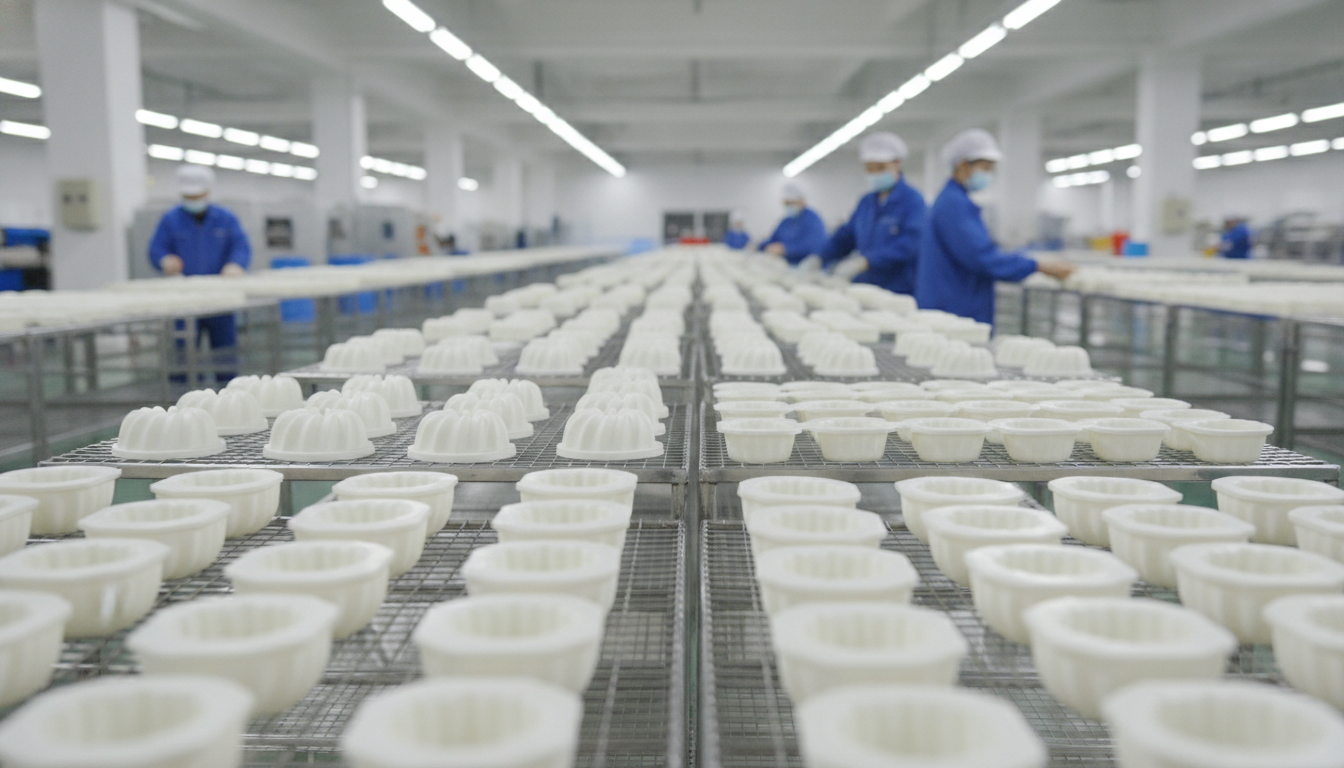
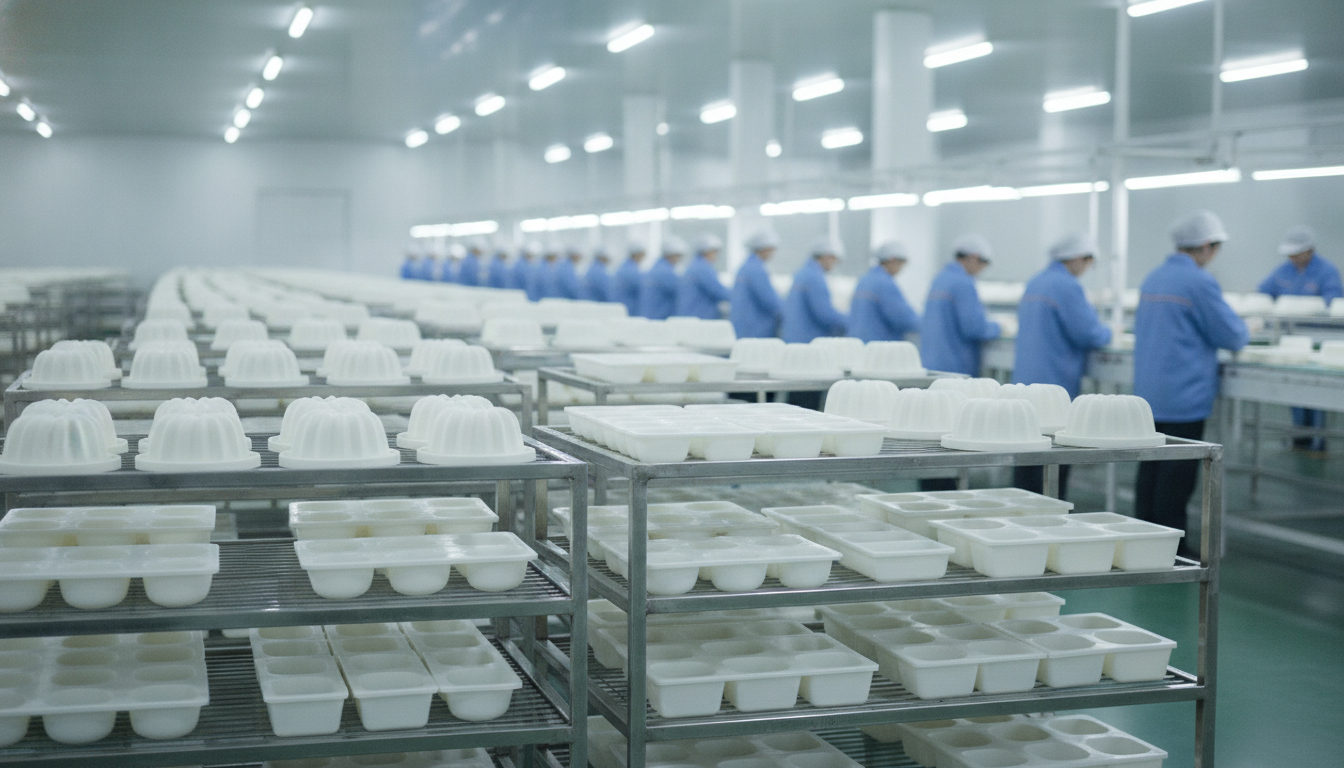
Request a video walkthrough of the production floor showing silicone injection molding machines, curing ovens, and QC stations. Trading companies will send stock photos or decline the request. A factory can provide a live video call within 24-48 hours.
Silicone molds accept debossed or raised logos on the base or outer rim. MOQ for logo-embossed molds is typically 300 pieces per SKU, but some suppliers offer 100-piece runs at a slight unit-price premium.
Standard packaging is poly-bag with barcode sticker. Custom OEM packaging options include printed cardboard sleeves, hang-tag labels, or full-color boxes with product photography and care instructions. Packaging MOQ is 500 units for printed sleeves, 1,000 units for full-color boxes.
Nigerian SON (Standards Organisation of Nigeria) and Kenyan KEBS (Kenya Bureau of Standards) require food-contact products to carry material composition, country of origin, and importer contact details. Shansen prints compliance labels in English, French, or Portuguese at no extra charge for orders above 500 units.
Production lead time for silicone baking molds averages 18-25 days from deposit to Ningbo port loading. Shipping time to Lagos Apapa is 28-32 days, to Mombasa 22-26 days, and to Abidjan or Dakar 30-35 days.
Silicone molds are lightweight but bulky. A 20-foot container can hold 12,000-15,000 units depending on mold size, making sea freight the most cost-effective option for orders above 3,000 pieces. Air freight is viable for sample orders or urgent restocks under 200 units, with 5-7 day delivery to Nairobi, Lagos, or Johannesburg.
Nigeria applies a 20% import duty on silicone bakeware under HS code 3924.10. Kenya’s duty is 25%, and South Africa’s is 20%. Francophone markets (Côte d’Ivoire, Senegal, Cameroon) range from 20-30% depending on ECOWAS trade agreements. Shansen provides commercial invoices, packing lists, and certificates of origin to streamline customs clearance.
In-house QC catches defects before containers leave Ningbo. African buyers should request photo or video documentation of these four inspection stages.
Incoming silicone is tested for Shore A hardness (typically 40-50 for baking molds), tensile strength, and tear resistance. Out-of-spec batches are rejected before molding begins.
The first 10 units from each mold cavity are baked with test batter at 180°C to verify release performance and dimensional accuracy. Any mold that fails release testing triggers tooling adjustment before full production.
QC staff inspect 5% of units during production for flash (excess silicone at seams), air bubbles, and color consistency. Defective units are pulled and recycled.
Final inspection covers packaging integrity, carton labeling, and a random sample of 2% of finished units tested for weight, dimensions, and visual defects. Buyers can request third-party inspection by SGS or Bureau Veritas at this stage.
Standard payment terms are 30% deposit via wire transfer or Alibaba Trade Assurance, with 70% balance due before shipment. Shansen accepts payment in USD, EUR, or CNY.
Production begins within 2-3 business days of deposit receipt. Buyers receive a production timeline with estimated completion date and Ningbo loading date.
Balance payment is due when goods are ready for loading. Once payment clears, the factory releases the Bill of Lading and commercial invoice for customs clearance. Buyers working with freight forwarders can arrange telex release to avoid original-document delays.
Alibaba Trade Assurance protects the buyer’s deposit if the supplier fails to meet agreed quality standards or delivery dates. This is recommended for first orders until the buyer establishes a payment history with the supplier.
Distributors often ask whether silicone molds outperform carbon steel or aluminum pans for specific baking applications. Each material has trade-offs in release performance, durability, and heat distribution.
Silicone molds excel for intricate shapes (bundt cakes, muffins, mini-cakes) where release performance is critical and bakers do not want to grease every cavity. They are also freezer-safe, making them ideal for frozen desserts and ice-cream cakes.
Carbon steel and aluminum pans deliver faster, more even baking for sheet cakes, loaf breads, and high-volume commercial bakeries. Metal pans also stack more compactly for storage and shipping. Distributors serving both home bakers and commercial clients often stock both silicone and metal lines.
Use these criteria to shortlist a pfoa free silicone baking mold supplier that can support your growth from initial samples to multi-container orders.
Decline suppliers who refuse to provide SGS migration reports, demand full payment before production, or cannot supply a factory video walkthrough within 48 hours. These are signals of a trading company or a workshop without QC infrastructure.
PFOA-free means the silicone bakeware contains no perfluorooctanoic acid, a synthetic chemical historically used in non-stick coatings. Pure silicone formulations do not contain PFOA, but buyers should verify that the supplier has SGS migration-test reports confirming zero PFAS (the broader chemical family) and heavy-metal leaching at baking temperatures up to 220°C.
Silicone baking molds are safe for food contact when they meet FDA 21 CFR 177.2600 standards, which limit extractables to 0.5% when tested in food-simulating solvents. Importers should request third-party migration-test reports from SGS or Intertek showing compliance, not generic “food-grade” certificates that do not specify test conditions or results.
Choose a supplier with in-house silicone production (not a trading company), SGS migration-test reports for PFAS and heavy metals, low sample MOQ (1-5 pieces per SKU), and experience shipping to African ports. Request a factory video walkthrough showing injection molding machines, curing ovens, and QC stations to verify production capability before placing an order.
PFOA is one chemical in the PFAS family (per- and polyfluoroalkyl substances). PFOA-free means the product does not contain perfluorooctanoic acid specifically, while PFAS-free means it contains no intentionally added fluorinated compounds. California AB 1200 restricts all PFAS in food-contact products, so importers selling into U.S. or premium markets need PFAS-free documentation, not just PFOA-free claims.
Food-grade silicone molds are safe from -40°C to 230°C, making them suitable for both oven baking and freezer storage. Buyers should verify the supplier’s temperature-range specification and request samples to test freeze-thaw cycles and oven performance at your target baking temperature before placing bulk orders.
Written by the Shansen Bakeware Export Team.
Ready to validate silicone mold quality with 1-piece samples and SGS migration reports?
Request Samples & Test Reports →
MOQ 1 set on stock configurations. Tell us what you need and we reply on WhatsApp.
Click the button below to open WhatsApp. If you're not logged in to WhatsApp Web yet, scan the QR code first — then come back here and copy the message into the chat.