📋 Table of Contents
Sourcing a food grade mesh sifter supplier that can deliver consistent quality to Lagos, Mombasa, or Abidjan without tying up cash in high MOQs is a challenge many African kitchenware importers face. Shansen Bakeware’s factory-direct model with 1-piece sample orders and container-optimized logistics from Ningbo to West and East African ports solves that problem. In this guide, we’ll examine mesh material safety, certification requirements, and how to audit a supplier before you commit.
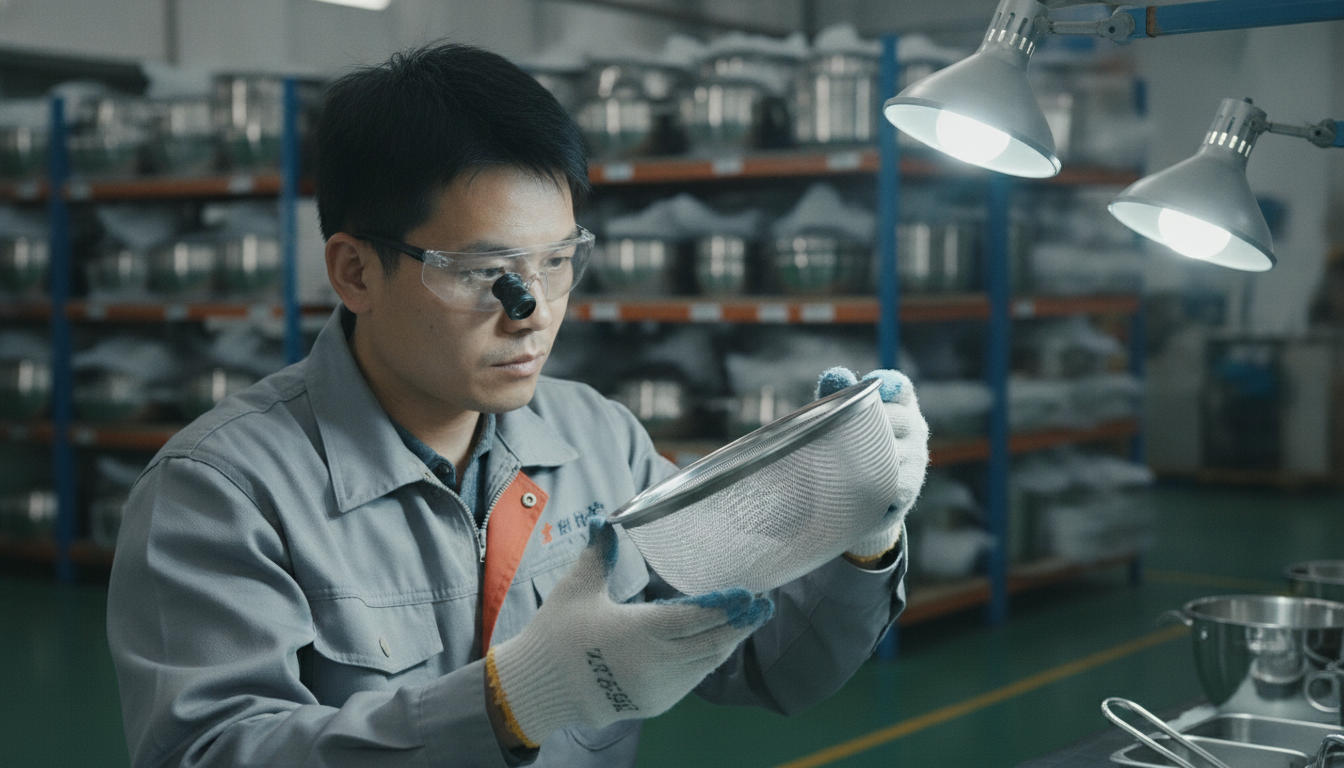
Every serious bakery buyer starts by matching mesh size to the local flour type and finished product. A food grade mesh sifter supplier should offer at least three gauge options to cover diverse African baking traditions, from finely milled cassava flour to coarse maize meal. Shansen’s in-house stainless steel line provides exactly that range, backed by SGS-tested food-grade materials.
Mesh size dictates how fine or coarse the final sifted product will be. In our Yongkang factory we produce standard 12, 40, and 80 mesh sifters, but custom sizes are available for OEM clients.
African coastal humidity demands 304-grade stainless steel, not 201. 304 contains 18% chromium and 8% nickel, providing the rust resistance that bakers in Mombasa and Lagos need. A cheaper 200-series steel will pit within months. Insist on documented SGS test reports for each batch. For customized branding, private-label bakeware manufacturers can laser-etch logos and mark the steel grade directly on the frame.
African food authorities are tightening regulations. In 2024, Kenya’s KEBS began rejecting shipments of kitchenware containing detectable lead. Your food grade mesh sifter supplier must hold up-to-date test certificates that go beyond generic statements. Shansen Bakeware submits every new mesh sifter SKU to SGS for SGS-tested, FDA-compliant bakeware certification covering Pb-free and PFAS-free status.
A credible supplier will provide a full SGS report showing:
Nigeria’s Standards Organisation of Nigeria (SON) and South Africa’s SABS require import certificates of analysis. We provide batch-specific SGS reports that satisfy all three standards, so customs clearance moves faster. For shipment consolidation to West African ports, our logistics team optimizes container space for mixed wholesale bakeware sets that include strainers, sifters, and cake-decorating tools.
MOQ fact: 1 piece for sampling, 30 pieces per SKU for production orders. Certification package: SGS-FDA report, KEBS pre-clearance document (if requested).
For bakeries producing more than 200 kg of dough per day, switching from a manual strainer to an electric vibrating sieve reduces labor cost by up to 40%. However, the upfront investment must match the local power supply reliability. Below is a cost comparison based on 2026 ex-factory pricing for standard models.
Shansen Bakeware ships both manual sifters and electric sieves from the same low-MOQ bakeware for startups program, meaning you can test one electric unit before scaling to container quantities.
Container loading from Ningbo to Africa’s major ports is optimized for mixed SKU pallets. In 2026, our average transit times and recommended port strategies are:
Time-to-market for a new mesh sifter line, from sampling to landed inventory in Africa, is 35-45 days. That includes 7-day sampling, 14-day production, and the shortest sea lane. Baking tools wholesale to Nigeria often clear customs fastest when batch SGS reports accompany the bill of lading.
A food grade mesh sifter supplier that truly understands West and East Africa will localize more than just the stainless steel grade. Shansen Bakeware’s OEM service covers product branding, packaging, and language adaptation for Francophone and Lusophone markets.
Each shipment to Douala or Luanda can include bilingual care cards and food grade certification inserts in French, Portuguese, or English. Our Yiwu sourcing showroom simplifies the artwork approval process, with digital proofs turned around in 48 hours.
304-grade stainless steel is the industry standard for food-grade mesh strainers. It contains 18% chromium and 8% nickel, offering high rust resistance even in humid kitchens. Always request an SGS test report to confirm compliance with KEBS or SON standards.
Use 80 mesh for fine wheat or cassava flour, 40 mesh for all-purpose wheat flour and sifting rice bran, and 12 mesh for rinsing whole rice grains. The correct mesh prevents clogging and ensures consistent bakery results.
304 stainless steel resists rust from humidity, but it is not 100% rust-proof. Proper drying after use prevents surface pitting. Avoid 201-grade steel, which corrodes quickly in coastal African environments like Mombasa and Lagos.
A manual strainer is hand-operated and suits small bakeries sifting under 15 kg per hour. An electric vibrating sieve uses a motor to achieve 85 kg per hour throughput, ideal for industrial baking lines. Electric models cost about 40 times more but reduce labor.
Yes. With the right mesh size and 304 stainless steel construction, food-grade mesh sifters handle high-volume cassava, maize, and wheat flour processing. Supplier-provided SGS certifications ensure they meet African industrial food-safety regulations.
Ready to test a food grade mesh sifter sample with zero high-MOQ risk?
Request 1-Piece Sample →
MOQ 1 set on stock configurations. Tell us what you need and we reply on WhatsApp.
Click the button below to open WhatsApp. If you're not logged in to WhatsApp Web yet, scan the QR code first — then come back here and copy the message into the chat.