
Silicone cake molds are flexible, non-stick baking tools molded from food-grade silicone rubber, typically rated to withstand temperatures from -40°C to +230°C. Factory MOQ for silicone bakeware sets starts at 1 set for sampling; OEM production runs for custom molds require tooling investment and 500-piece minimums per design. Lead times and pricing are confirmed at quotation.
📋 Table of Contents
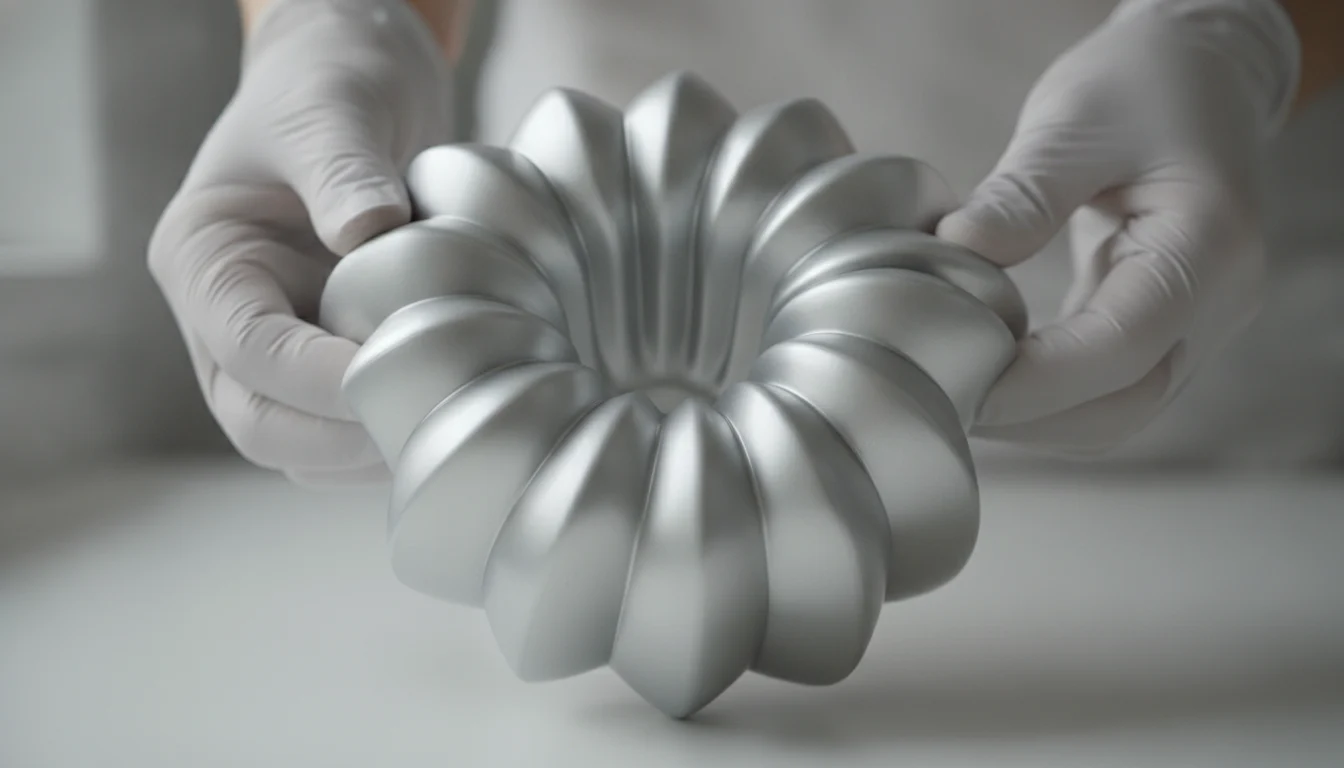
Food-grade silicone is a platinum-cured or peroxide-cured polymer that meets migration and temperature-resistance standards set by regulatory bodies. FDA 21 CFR 177.2600 specifies the extractable limits for silicone rubber articles intended for repeated food contact. European markets reference EN 1186 for migration testing. Buyers distinguish food-grade from industrial silicone by requesting third-party test reports that confirm compliance with these codes.
Platinum-cured silicone uses a platinum catalyst and produces minimal volatile organic compounds during curing, resulting in a neutral odor and higher purity. Peroxide-cured silicone relies on organic peroxides, which can leave trace residues and a faint smell during the first few baking cycles. Buyers report that a noticeable odor during initial use is more common with peroxide-cured molds, though washing and an empty baking cycle at 200°C for 20 minutes typically resolves it. Platinum-cured molds command a higher unit cost but eliminate the break-in step.
Standard food-grade silicone withstands temperatures from -40°C to +230°C, covering conventional baking, freezing, and microwave use. Continuous exposure above 230°C accelerates polymer degradation, leading to surface tackiness and reduced non-stick performance. Budget molds may lose elasticity after 50-100 baking cycles if the silicone grade or wall thickness is insufficient. Premium molds with reinforced fiberglass cores and 1.5 mm wall thickness maintain flexibility and release properties beyond 500 cycles.
Buyers verify material purity by requesting test reports that measure extractables in water, ethanol, and acetic acid simulants. The report should state the test temperature, contact duration, and migration limits in milligrams per kilogram. Reports dated within the past 12 months and issued by accredited labs such as SGS, Intertek, or TÜV provide the strongest assurance. Factories that issue generic certificates without batch-specific data or lab accreditation raise red flags.
Silicone and metal cake pans differ fundamentally in heat conductivity, release mechanism, and handling requirements. Metal pans conduct heat rapidly, producing crisp edges and golden crusts. Silicone molds transfer heat more slowly, yielding softer exteriors and lighter color. The choice depends on the desired crust texture, handling preference, and whether the buyer prioritizes release ease over browning performance.
Silicone cake molds excel in applications where release ease and intricate detail matter more than crust color. Bundt cakes, mini muffins, and decorative shapes with deep flutes benefit from silicone’s flexibility, which allows bakers to peel the mold away rather than invert and tap. Frozen desserts, mousses, and gelatin cakes also favor silicone because the molds tolerate freezer temperatures without cracking. Buyers targeting home bakers and casual users prioritize these attributes.
Professional bakeries and users seeking traditional cake texture prefer metal pans. Carbon steel and aluminum conduct heat efficiently, producing the Maillard reaction that creates golden crusts and firm edges. Layer cakes, sheet cakes, and sponge cakes benefit from the structural rigidity metal provides, eliminating the need for a supporting tray. Buyers serving commercial bakeries or customers who prioritize browning performance stock wholesale bakeware sets that include both silicone and metal options.
Flexible silicone molds sag or fold when filled with batter, making oven transfer hazardous unless the mold sits on a rigid baking sheet. This complaint appears frequently in buyer feedback. The mold’s flexibility, which aids release, becomes a liability during handling. Distributors address this by bundling silicone molds with metal trays or educating retail customers to place the mold on a sheet pan before filling.
Premium silicone molds incorporate fiberglass mesh or steel wire embedded in the silicone matrix, adding rigidity without sacrificing flexibility at the release stage. These reinforced molds maintain their shape when filled and reduce the risk of spills during oven loading. The reinforcement adds 15-25% to the unit cost but eliminates the need for a separate tray in many cases. Buyers targeting professional or high-volume users prioritize reinforced designs.
Wall thickness directly affects handling stability. Molds with 1.0 mm walls flex excessively under the weight of thick batters, while 1.5-2.0 mm walls provide better support. Large-cavity molds (above 1 liter) benefit from thicker walls and reinforced bases. Small-cavity molds such as mini muffin trays tolerate thinner walls because the batter volume per cavity is low. Buyers specify wall thickness in the technical brief to match the intended use case.
Standard silicone molds are designed to fit on half-sheet pans (46 cm × 33 cm) or quarter-sheet pans (33 cm × 23 cm), which are widely available in African wholesale markets. Buyers confirm that the mold dimensions, including any handles or tabs, do not exceed the sheet-pan footprint. Molds that overhang the tray edges remain unstable and defeat the purpose of the support system.
Buyers verify supplier compliance by requesting third-party test reports, inspecting sample molds, and confirming traceability for each production batch. Factories that resist providing documentation or offer only generic certificates warrant caution. Reputable suppliers issue batch-specific reports and maintain audit trails linking test results to shipment lot numbers.
Test reports for silicone cake molds should cover migration testing in food simulants (water, ethanol, acetic acid) and temperature-resistance verification. The report must state the test method (FDA 21 CFR 177.2600, EN 1186, or equivalent), the lab name, the test date, and the pass/fail result. Reports older than 24 months lose relevance because formulations and suppliers change. Buyers request fresh reports for each new order or production run.
Our Yongkang factory maintains SGS and FDA test reports dated 2020, 2021, and 2023, covering food-contact compliance for the silicone bakeware line. Reports are issued per order and include batch traceability.
Physical samples reveal quality issues that certificates cannot capture. Buyers inspect samples for surface defects, uniform wall thickness, and absence of seams or flash. A simple test involves filling the mold with water and checking for leaks or deformation. Odor testing requires baking the empty mold at 200°C for 20 minutes; any strong or acrid smell indicates low-grade silicone or incomplete curing. Buyers also verify that the mold returns to its original shape after being twisted or compressed, confirming elasticity.
Traceability links each production batch to its raw-material supplier, cure date, and test report. Factories that maintain traceability can isolate defective batches and prevent non-conforming product from reaching the market. Buyers request the batch number or lot code printed on the mold or packaging, then cross-reference it with the test report. Suppliers that cannot provide this linkage lack the internal controls needed for consistent quality.
Minimum order quantities and sampling procedures vary by product type and customization level. Silicone bakeware sets ship from 1 set for initial evaluation, allowing buyers to test market demand without inventory risk. Custom molds with proprietary shapes require tooling investment and higher production minimums. Understanding these tiers helps buyers structure their sourcing strategy.
Buyers order 1 silicone bakeware set to evaluate material quality, release performance, and packaging before committing to a container load. The sample ships via express courier, with transit times to Lagos, Mombasa, or Johannesburg confirmed at quotation. Buyers test the sample in their target market, gathering feedback on flexibility, odor, and ease of use. This low-risk approach validates demand before inventory investment.
Distributors who want branded packaging without custom shapes order 500 pieces per SKU using the factory’s existing mold library. The factory applies the buyer’s logo to the packaging and includes branded inserts or hang tags. This tier avoids tooling costs while enabling brand differentiation. Lead times and pricing are confirmed at quotation based on packaging complexity and order volume.
Proprietary shapes require mold fabrication, which adds tooling cost and development time. The factory produces a prototype mold, casts sample units, and iterates based on buyer feedback. Once approved, production begins at 500 pieces per design. Buyers negotiate mold ownership; some factories retain the mold and charge a per-unit royalty, while others transfer ownership after the initial production run. Custom molds suit buyers launching differentiated product lines or serving niche markets.
In practice: Ordering 1 sample set of silicone molds and testing release performance with local batter recipes before committing to a 500-piece private-label run prevents mismatched product-market fit and reduces inventory risk.
Silicone bakeware is lightweight and stackable, optimizing container utilization. A 20-foot container typically holds 8,000-12,000 units depending on mold size and packaging. The factory ships from Ningbo port, with direct routes to Lagos Apapa, Mombasa, and Francophone/Lusophone African ports. Buyers confirm transit times and Incoterms at quotation. Container loading is optimized for African wholesale distribution, balancing SKU variety with volume efficiency.
Yes, food-grade silicone withstands temperatures from -40°C to +230°C, allowing direct transfer from freezer to preheated oven without thermal shock. This property makes silicone molds ideal for frozen desserts, ice cream cakes, and make-ahead batters. Buyers verify the temperature range in the product specification sheet and confirm that the mold meets FDA 21 CFR 177.2600 or equivalent standards before marketing this feature to retail customers.
Sticking occurs when thick batters, chocolate, or deep-fluted designs create suction against the mold surface, or when the silicone grade is insufficient. Budget molds with thin walls or low-grade silicone lose non-stick performance after repeated use. Buyers reduce sticking by greasing intricate molds lightly with oil or butter, even though silicone is inherently non-stick. Premium platinum-cured molds with 1.5 mm walls maintain release properties beyond 500 cycles, while peroxide-cured molds may degrade faster.
Request a third-party test report from an accredited lab such as SGS, Intertek, or TÜV that confirms compliance with FDA 21 CFR 177.2600 or EN 1186. The report should be dated within the past 12 months, state the test method, and include migration limits in food simulants. Physical sample inspection reveals surface defects and odor issues; bake the empty mold at 200°C for 20 minutes and check for strong or acrid smells. Factories that provide batch traceability linking the test report to the production lot number demonstrate stronger quality controls than those offering only generic certificates.
Written by the Shansen Bakeware Export Team.
Ready to source food-grade silicone cake molds with verified test reports and flexible MOQ?
Request Your Sample Set →
MOQ 1 set on stock configurations. Tell us what you need and we reply on WhatsApp.
Click the button below to open WhatsApp. If you're not logged in to WhatsApp Web yet, scan the QR code first — then come back here and copy the message into the chat.