
Hotel chains structuring baking tray procurement for multi-site tender requirements should build a centralized tender document with standardized technical schedules, weighted scoring criteria (40% quality, 30% landed cost, 20% delivery, 10% supplier capacity), and total-cost-of-ownership formulas that include duty, VAT, freight, inland delivery, and replacement rates. The tender should specify material type (carbon steel, stainless steel, aluminum), gauge thickness, coating compliance (FDA 21 CFR 175.300 for non-stick carbon steel), MOQ per SKU, lead time, container loading from Ningbo to Lagos Apapa, Mombasa, or Francophone/Lusophone African ports, and require SGS/FDA test reports on request.
📋 Table of Contents
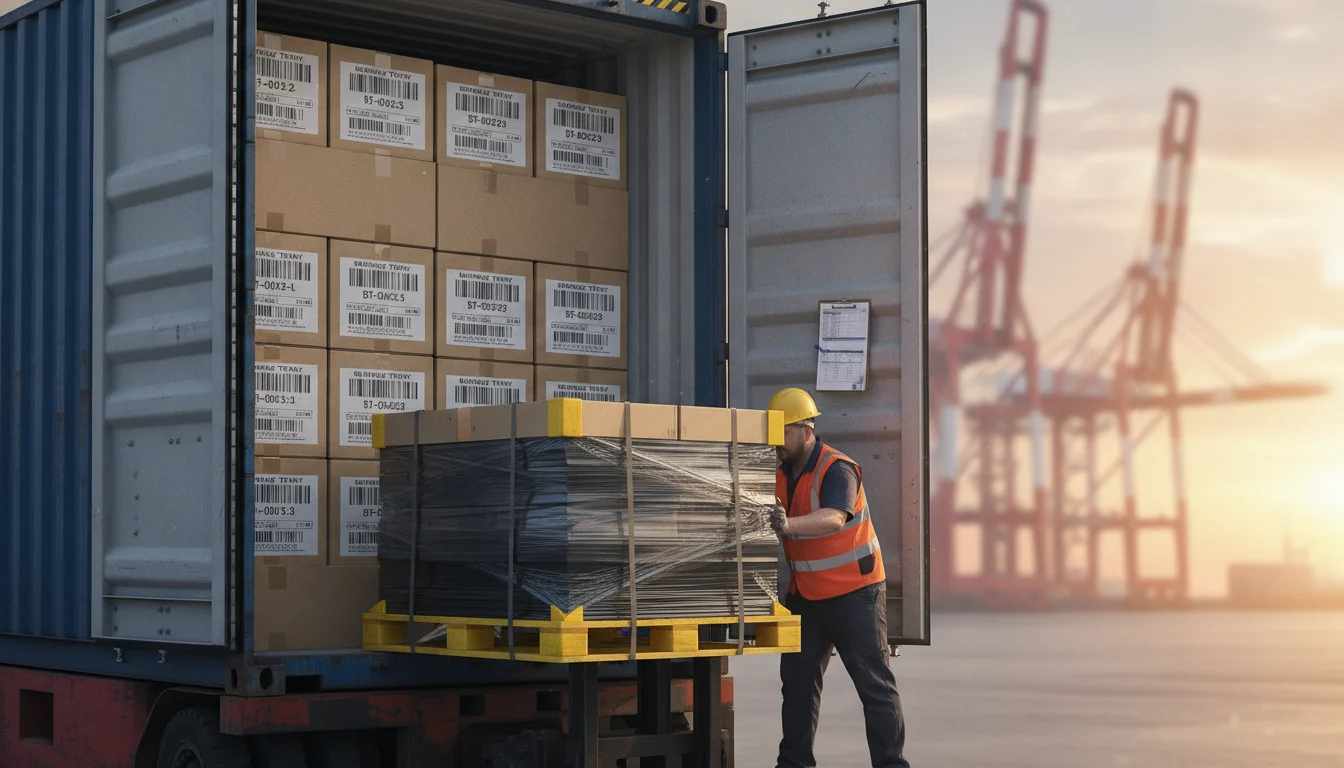
Hotel chains face a choice between centralized purchasing (head office negotiates a master contract and allocates stock to properties) and property-level purchasing (each hotel kitchen manager orders against an approved supplier list). Centralized models pool volume, standardize specifications, and secure better landed-cost pricing. Property-level models reduce lead time and let kitchen managers adjust quantities to seasonal demand. A hybrid approach works best: central tender sets the supplier, specifications, pricing, and delivery terms, while properties trigger reorders when stock falls below a defined safety level.
The head-office procurement team issues a single tender document covering all properties. The tender specifies material type (carbon steel, stainless steel, aluminum), gauge thickness, coating type (non-stick PTFE-free or bare metal), dimensions (full-size 18×26 inch, half-size 13×18 inch, quarter-size), MOQ per SKU, lead time, packaging (master carton quantity), and delivery terms (FOB Ningbo or DDP to Lagos, Mombasa, or regional hub). Suppliers submit one bid for the entire portfolio. The chain awards a 12- or 24-month contract and issues a call-off schedule by property.
Each property calculates its reorder point using the formula: reorder point = (daily usage × lead time in days) + safety stock. Daily usage is the average number of trays used per service period. Lead time includes supplier production time, ocean transit (Ningbo to Lagos 25-30 days, Ningbo to Mombasa 20-25 days), customs clearance, and inland delivery. Safety stock covers demand spikes during peak season or unexpected breakage. When inventory falls to the reorder point, the property notifies the central procurement team, which releases a call-off order to the contracted supplier.
Chains operating in Nigeria, Kenya, South Africa, Côte d’Ivoire, Senegal, Cameroon, Angola, and Mozambique should hold regional safety stock at a central warehouse in Lagos, Nairobi, Johannesburg, Abidjan, or Luanda. The warehouse holds 10-15% of annual volume as buffer stock. When a property’s reorder triggers, the warehouse ships immediately while the central team places a replenishment order with the factory. This cuts effective lead time from 25-30 days to 2-3 days and smooths container utilization.
A technical specifications schedule standardizes material, dimensions, coating, and compliance requirements across all properties. The schedule becomes an attachment to the tender document and forms part of the contract. Suppliers bid against identical specifications, eliminating ambiguity and ensuring fair comparison. The schedule should cover material type, gauge thickness, coating compliance, dimensional tolerances, packaging, and test-report requirements.
Specify material type and gauge for each SKU. Carbon steel is the most common choice for commercial baking trays because it conducts heat evenly, resists warping at high temperatures, and costs less than stainless steel. Gauge thickness determines rigidity: 18-gauge (1.2 mm) carbon steel is the standard for full-size sheet pans, while 20-gauge (0.9 mm) is acceptable for half-size trays. Stainless steel (304 or 430 grade) is specified for trays that will be washed in high-alkaline detergents or stored in humid environments. Aluminum is lighter and heats faster but dents more easily. Wholesale bakeware sets often mix materials to balance cost and durability across different use cases.
Non-stick carbon-steel trays must meet FDA 21 CFR 175.300 for food-contact coatings. The regulation sets migration limits for substances that can transfer from the coating into food. Suppliers should provide SGS or equivalent test reports dated within the past 36 months. The 2020 SGS report on Shansen’s carbon-steel line confirms compliance with FDA 21 CFR 175.300 and verifies PFAS-free and lead-free status. Test reports are issued per production batch on request. Bare carbon-steel trays (no coating) do not require 21 CFR 175.300 testing but should meet general food-contact migration limits under FDA 21 CFR 177.2600 if a silicone mat is used, or 21 CFR 175.300 if a separate non-stick treatment is applied.
Dimensional tolerances ensure trays fit standard oven racks and rolling carts. Specify tolerances of ±2 mm on length and width, and ±1 mm on rim height. Warp resistance is a common buyer complaint: some commercial baking sheets remain flat under repeated high-heat cycles, while others bend after a few uses. Warp resistance depends on gauge thickness, material temper, and manufacturing process. Require suppliers to confirm that trays will remain flat (maximum center deflection 3 mm) after 500 cycles at 230°C. Request a sample batch for in-house testing under real operating conditions before awarding the contract.
Weighted scoring criteria let procurement teams compare bids objectively across quality, cost, delivery, and supplier capacity. Each criterion is assigned a weight (percentage of total score), and each bid is scored on a 0-10 scale for that criterion. The weighted score is the sum of (criterion score × criterion weight) across all criteria. The bid with the highest weighted score wins, provided it meets all mandatory technical specifications.
Quality accounts for 40% of the total score. Sub-criteria include material gauge (10 points for 18-gauge carbon steel, 7 points for 20-gauge), coating compliance (10 points for SGS/FDA test reports dated within 24 months, 5 points for reports older than 24 months, 0 points for no report), warp-resistance test results (10 points for maximum 3 mm deflection after 500 cycles, 5 points for 3-5 mm, 0 points for >5 mm), and sample evaluation (10 points if in-house kitchen testing confirms flat baking, even browning, and easy release, 5 points for acceptable performance with minor issues, 0 points for warping or sticking). Sum the sub-scores and multiply by 0.4 to get the quality weighted score.
Landed cost accounts for 30% of the total score. Calculate the total annual cost per property using the formula in the next section. The bid with the lowest annual cost scores 10 points. Other bids score 10 × (lowest annual cost ÷ bid annual cost). Multiply the cost score by 0.3 to get the cost weighted score. This approach rewards the lowest total cost while still allowing higher-quality bids to win if their quality score is strong enough to offset a higher price.
Delivery reliability accounts for 20% of the total score. Sub-criteria include lead time (10 points for ≤45 days from order to delivery at property, 7 points for 46-60 days, 4 points for 61-75 days, 0 points for >75 days), on-time delivery track record (10 points if supplier provides references from three hotel or catering clients confirming >95% on-time delivery over the past 12 months, 5 points for two references, 0 points for fewer than two), and container-loading optimization (10 points if supplier confirms experience loading mixed SKUs into 20-foot or 40-foot containers for African ports, 5 points for general export experience, 0 points for domestic-only experience). Sum the sub-scores and multiply by 0.2.
Supplier capacity accounts for 10% of the total score. Sub-criteria include production capacity (10 points for ≥500,000 units/month, 7 points for 200,000-499,999 units/month, 4 points for <200,000 units/month), MOQ per SKU (10 points for ≤500 pcs per SKU, 7 points for 501-1,000 pcs, 4 points for >1,000 pcs), and emergency replenishment capability (10 points if supplier holds safety stock or can expedite a partial order within 15 days, 5 points if expedited orders are possible at a surcharge, 0 points if no expedited option exists). Sum the sub-scores and multiply by 0.1. Our Yongkang factory runs 7 in-house bakeware lines at 500,000 units/month capacity, with MOQ from 1 set on bakeware sets and 500 pcs per SKU on the carbon-steel line, meeting the top tier for both capacity and MOQ criteria.
Total cost of ownership (TCO) includes all costs from factory gate to property kitchen, plus replacement costs over the asset’s useful life. Hotel chains should compare bids on an annual-cost-per-property basis rather than FOB unit price alone. A lower FOB price can result in higher TCO if the supplier’s lead time forces higher safety-stock holding costs, or if poor warp resistance drives frequent replacements.
Landed cost per unit = FOB price + (ocean freight per container ÷ units per container) + (duty rate × FOB price) + (VAT rate × (FOB price + duty)) + (inland delivery cost per container ÷ units per container). Ocean freight from Ningbo to Lagos Apapa is confirmed at quotation and varies with fuel surcharges and seasonal demand. Duty rates in Nigeria range from 10% to 35% depending on HS code classification (bakeware typically falls under HS 7323 or 7615, attracting 20% duty). VAT in Nigeria is 7.5%, Kenya 16%, South Africa 15%, and Francophone West Africa 18-20%. Inland delivery from Apapa to a Lagos property costs less than delivery from Apapa to a property in Abuja or Port Harcourt; allocate inland cost by destination city.
Annual replacement cost = (landed cost per unit × annual usage per property) ÷ useful life in years. Useful life depends on material and usage intensity. Carbon-steel non-stick trays used in a high-volume hotel bakery last 18-24 months before the coating degrades. Bare stainless-steel trays last 5-7 years. Aluminum trays dent easily and may need replacement after 12-18 months in a busy kitchen. Calculate annual usage by multiplying daily tray usage (number of trays used per service period × number of service periods per day) by 365 days. Add a breakage allowance of 5-10% to account for trays dropped, bent, or discarded due to stubborn stains.
Safety-stock holding cost = (landed cost per unit × safety stock quantity × annual holding cost rate). Safety stock quantity is typically 10-15% of annual usage. Annual holding cost rate includes warehousing (rent, utilities, labor), insurance, and opportunity cost of capital tied up in inventory. A reasonable holding cost rate for hotel chains in African markets is 15-20% of inventory value per year. A higher safety stock reduces stockout risk but increases holding cost. A lower safety stock cuts holding cost but raises the risk of running out during peak season or when a shipment is delayed.
TCO Example: FOB $3.50/unit, ocean freight $1,200 per 40-foot container (10,000 units), duty 20%, VAT 16%, inland delivery $300, annual usage 2,000 units/property, useful life 2 years, safety stock 300 units, holding cost 18%. Landed cost = $3.50 + $0.12 + $0.70 + $0.49 + $0.03 = $4.84. Annual replacement cost = ($4.84 × 2,000) ÷ 2 = $4,840. Safety-stock holding cost = $4.84 × 300 × 0.18 = $261. Total annual cost per property = $4,840 + $261 = $5,101.
Supplier capacity and redundancy ensure continuous supply even when demand spikes or a production line goes offline. Hotel chains should verify that the primary supplier has sufficient monthly capacity to meet the chain’s total annual volume, plus 20% headroom for growth or emergency orders. Chains should also identify a secondary supplier with comparable specifications and pricing, and place a small trial order (10-15% of annual volume) to validate quality and delivery performance.
Ask suppliers to confirm their monthly production capacity in units, and to provide a breakdown by material type (carbon steel, stainless steel, aluminum). A supplier claiming 500,000 units/month should be able to demonstrate that capacity with production schedules, machine lists, or third-party audit reports. Verify that the capacity figure is actual output, not theoretical maximum. Request references from other hotel or catering clients who have placed orders of similar size, and ask those clients whether the supplier met delivery deadlines during peak-demand periods.
MOQ per SKU determines how much inventory a property must hold before it can reorder. A 500-piece MOQ on a half-size tray SKU is manageable for a 200-room hotel with a busy breakfast buffet, but forces a 50-room boutique property to hold 12-18 months of stock. Negotiate SKU-level MOQs during the tender process, and consider grouping low-volume SKUs into a mixed-SKU container to meet the supplier’s total-order MOQ without overstocking any single SKU. Lead time includes production time (typically 15-25 days for carbon-steel trays, 20-30 days for stainless steel), ocean transit (25-30 days Ningbo to Lagos, 20-25 days Ningbo to Mombasa), and customs clearance (3-7 days in Nigeria and Kenya, 5-10 days in Francophone Africa). Low-MOQ bakeware options help chains test new SKUs or serve smaller properties without tying up cash in slow-moving inventory.
Emergency replenishment covers unexpected demand spikes (a sudden booking of a large conference) or supply-chain disruptions (port congestion, customs delays). Ask suppliers whether they hold safety stock of common SKUs, and whether they can expedite a partial order via air freight. Air freight from China to Lagos or Nairobi takes 5-7 days but costs 4-6 times more than ocean freight. Chains should budget for one or two air-freight emergency orders per year, and negotiate a discounted air-freight rate as part of the master contract.
In practice: Splitting the annual volume 80/20 between a primary supplier (80%) and a secondary supplier (20%) ensures continuity if the primary supplier faces a production delay, while giving the chain to negotiate better terms with both suppliers based on actual performance data.
Country-specific tender requirements address documentation, language, payment terms, and Incoterms preferences that vary across Nigeria, Kenya, South Africa, Côte d’Ivoire, Senegal, Cameroon, Angola, and Mozambique. A single global tender document can be adapted with country-specific annexes covering these details.
Nigeria requires a proforma invoice (PI) for foreign-exchange allocation and a Form M for import clearance. The tender should specify that the supplier must issue a PI within 48 hours of contract award, and that payment terms are typically 30% deposit by telegraphic transfer (T/T), 70% against copy of bill of lading (B/L). Delivery is usually FOB Ningbo or CIF Lagos Apapa. The tender should require the supplier to confirm container-loading optimization for Apapa port (40-foot high-cube containers preferred, with reinforced corner posts to survive rough handling during offloading). Duty on bakeware (HS 7323.93 or 7615.10) is 20%, and VAT is 7.5%. The tender should state that the supplier must provide a commercial invoice, packing list, bill of lading, certificate of origin, and test reports (SGS/FDA) with each shipment.
Kenya uses the Kenya Revenue Authority (KRA) Pre-Import Verification of Conformity (PVoC) program, which requires an inspection certificate before goods can clear customs. The tender should specify that the supplier must arrange a PVoC inspection at the factory (or port of loading) through an approved inspection company (SGS, Intertek, Bureau Veritas). The inspection fee is typically paid by the buyer but should be confirmed in the tender. Delivery is usually CIF Mombasa. Duty on bakeware is 25%, and VAT is 16%. Payment terms are often 30% deposit, 70% against copy of B/L or after PVoC certificate issuance. The tender should require the supplier to provide a commercial invoice, packing list, bill of lading, certificate of origin, PVoC certificate, and test reports with each shipment.
South Africa has a well-developed customs system and does not require pre-shipment inspection for most bakeware imports. Delivery is usually CIF Durban or Cape Town. Duty on bakeware (HS 7323 or 7615) is 15%, and VAT is 15%. Payment terms are often 30% deposit, 70% against copy of B/L or on 30-day credit terms for established buyers. The tender should require the supplier to provide a commercial invoice, packing list, bill of lading, certificate of origin, and test reports. South African buyers often request SABS (South African Bureau of Standards) compliance, but SABS certification is not mandatory for bakeware; FDA or SGS food-contact test reports are generally accepted.
Francophone West Africa requires bilingual (French-English) tender documents, or French-only documents for suppliers who will engage with local customs brokers and distributors. The tender should specify that all invoices, packing lists, certificates of origin, and test reports must be provided in French or with certified French translations. Delivery is usually CIF Abidjan (Côte d’Ivoire), Dakar (Senegal), or Douala (Cameroon). Duty rates range from 10% to 30% depending on the country and HS code, and VAT is 18-20%. Payment terms are typically 30% deposit, 70% against copy of B/L. The tender should state that the supplier must provide a commercial invoice, packing list, bill of lading, certificate of origin (preferably EUR.1 or Form A for GSP preferential duty), and test reports in French. Custom OEM and private-label bakeware for Francophone markets often includes French-language packaging and labeling to meet local retail requirements.
Angola and Mozambique require Portuguese-language documentation for customs clearance. The tender should specify that all invoices, packing lists, certificates of origin, and test reports must be provided in Portuguese or with certified Portuguese translations. Delivery is usually CIF Luanda (Angola) or Maputo (Mozambique). Duty rates are 10-30%, and VAT is 14% (Angola) or 17% (Mozambique). Payment terms are often 50% deposit, 50% against copy of B/L due to higher perceived risk. The tender should require the supplier to confirm experience shipping to Luanda or Maputo, and to provide a commercial invoice, packing list, bill of lading, certificate of origin, and test reports in Portuguese. Angola’s customs process can be slow; the tender should specify a realistic lead time of 35-45 days from order to delivery at property.
MOQ per SKU for carbon-steel and stainless-steel baking trays typically ranges from 500 to 1,000 pieces, depending on the supplier’s production-run economics. Chains can meet this MOQ by pooling orders across properties, or by ordering mixed SKUs in a single container. Bakeware sets (multi-piece boxed sets) often have lower MOQs, starting from 1 set for sampling and 100-200 sets for a production run, because the supplier amortizes setup costs across multiple SKUs in one package.
Reorder point = (daily usage × lead time in days) + safety stock. Daily usage is the average number of trays used per service period (breakfast, lunch, dinner, banquet) multiplied by the number of service periods per day. Lead time includes supplier production time (15-30 days), ocean transit (20-30 days from Ningbo to Lagos or Mombasa), customs clearance (3-10 days), and inland delivery (1-5 days). Safety stock is typically 10-15% of lead-time demand, covering demand spikes and unexpected delays.
Splitting volume 80/20 between a primary supplier and a secondary supplier reduces supply-chain risk and gives the chain to negotiate better terms based on actual performance data. The primary supplier handles the bulk of the volume and receives the best pricing. The secondary supplier serves as a backup and receives 20% of the volume to maintain the relationship and validate quality and delivery performance. If the primary supplier faces a production delay or quality issue, the chain can shift more volume to the secondary supplier without disrupting operations.
Written by the Shansen Bakeware Export Team.
Structure your multi-site hotel restaurant baking tray procurement strategy tender with centralized specifications, weighted scoring, and total-cost-of-ownership formulas that account for duty, VAT, freight, and replacement cycles across African markets.
Request Tender Support & Sample Pricing →
MOQ 1 set on stock configurations. Tell us what you need and we reply on WhatsApp.
Click the button below to open WhatsApp. If you're not logged in to WhatsApp Web yet, scan the QR code first — then come back here and copy the message into the chat.