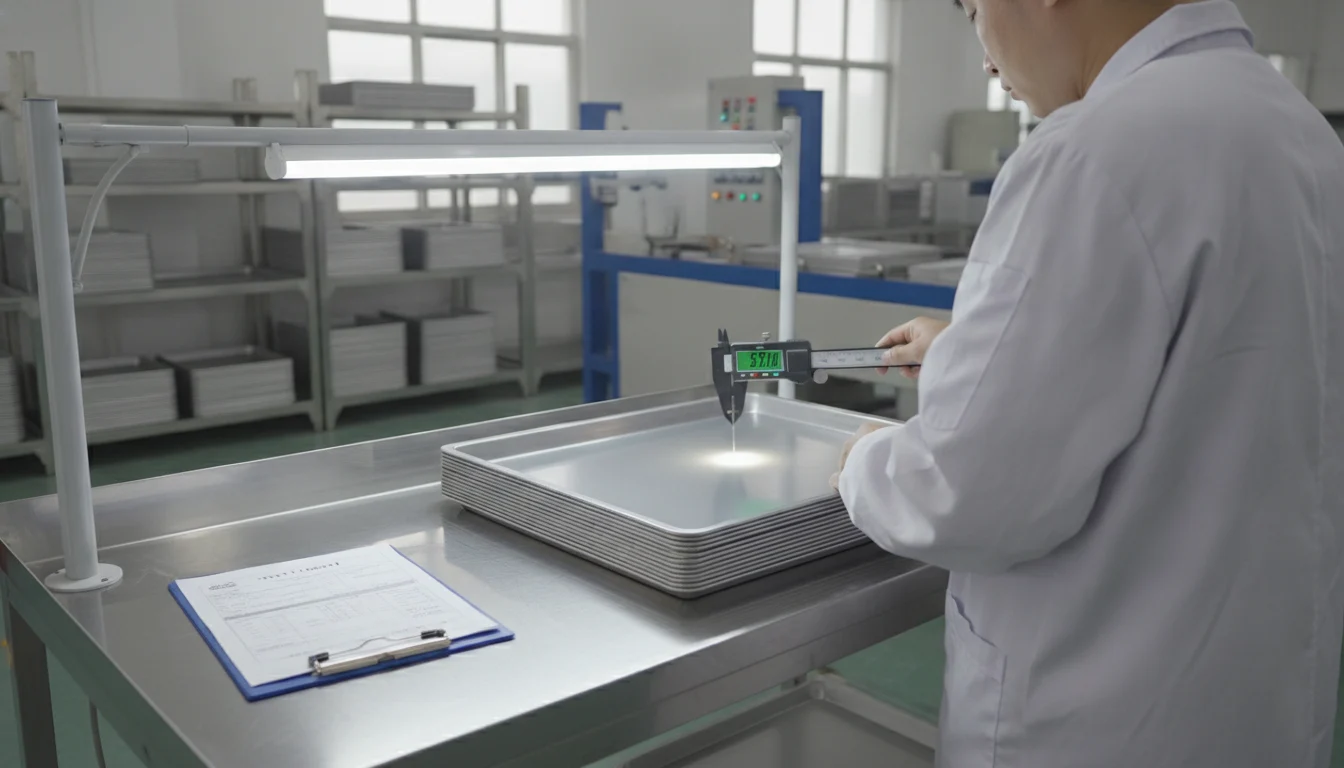
Non toxic baking sheets are manufactured from stainless steel, uncoated aluminum, or carbon steel with PFAS-free ceramic coatings that pass SGS and FDA 21 CFR 175.300 food-contact testing. Distributors importing into Nigeria, Kenya, South Africa, and Francophone/Lusophone markets source these at MOQ from 1 piece for sampling and 500 pieces for production runs, shipping from Ningbo to Lagos Apapa, Mombasa, and West African ports.
📋 Table of Contents
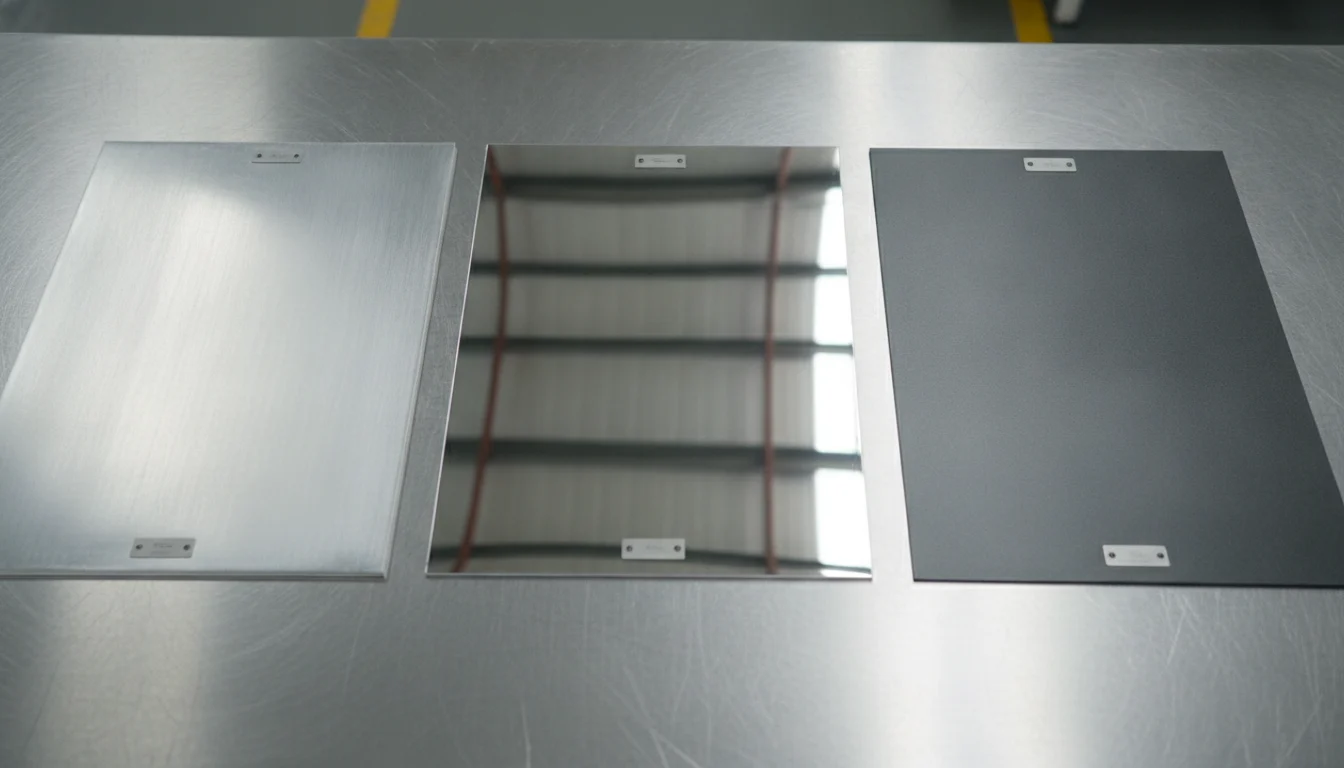
A baking sheet qualifies as non-toxic when its base material and any applied coating release no harmful substances during normal baking temperatures. This means zero migration of heavy metals like lead or cadmium, and zero PFAS compounds that break down into persistent pollutants. African distributors verify this through SGS or FDA test reports that measure migration limits under simulated use conditions.
Stainless steel 304 or 430 alloys contain no lead, cadmium, or reactive coatings. Aluminum sheets must be uncoated or anodized to prevent reactive oxidation that can leach into acidic foods like tomato-based doughs. Carbon steel requires a food-grade coating because bare carbon steel rusts and oxidizes rapidly in humid climates common across Lagos, Nairobi, and Abidjan.
Ceramic coatings marketed as PFAS-free use silica-based sol-gel chemistry instead of fluoropolymers. Buyers request batch certificates showing PFAS content below 100 parts per million, the threshold many African food-safety authorities adopt from EU standards. Coatings applied at thickness below 20 microns chip easily; 25-30 micron layers survive commercial bakery use for 18-24 months before replacement.
Non-toxic coatings must remain stable at 230°C, the upper range for most baking applications. Traditional PTFE coatings degrade above 260°C and release fumes; ceramic alternatives remain inert to 400°C but lose nonstick properties faster under metal-utensil abrasion. Distributors serving commercial bakeries specify heat limits on product labels to prevent misuse that voids food-safety claims.
Material choice depends on heat conductivity needs, budget constraints, and whether the buyer prioritizes durability or release properties. Stainless steel lasts longest but heats unevenly. Aluminum conducts heat uniformly but dents easily. Carbon steel with ceramic coating balances performance and cost but requires careful sourcing to avoid PFAS contamination.
Stainless steel 304 contains 18% chromium and 8% nickel, creating a passive oxide layer that resists corrosion in coastal humidity. Sheets warp less than aluminum under repeated thermal cycling. Buyers serving hotel chains and institutional bakeries choose stainless for its ability to survive 500+ dishwasher cycles without surface degradation. The trade-off is uneven heat: cookies at sheet edges brown faster than center cookies unless bakers rotate trays mid-bake.
Uncoated aluminum conducts heat three times faster than stainless steel, eliminating hot spots that cause uneven rise in pastries. Anodized aluminum adds a hard oxide layer that prevents reactive leaching into acidic doughs. Distributors in Nigeria and Kenya stock aluminum sheets for retail brands targeting home bakers who prioritize browning consistency over multi-year durability. Denting remains the primary complaint: dropped sheets develop permanent concavities that trap grease and complicate cleaning.
Carbon steel bases cost 30-40% less than stainless while delivering better heat distribution than bare stainless. Ceramic coatings applied via sol-gel process provide release properties without fluoropolymers. Buyers request SGS test reports confirming PFAS content below 100 ppm and lead below 90 ppm per FDA limits. Coating thickness of 25-30 microns survives metal spatula use in commercial bakeries for 18-24 months before nonstick properties degrade and replacement becomes necessary.
Traditional nonstick coatings contain per- and polyfluoroalkyl substances that persist in the environment and accumulate in human tissue. PTFE (polytetrafluoroethylene) and PFOA (perfluorooctanoic acid) are the most common. Distributors importing into African markets face growing regulatory scrutiny as Nigeria, Kenya, and South Africa adopt food-contact limits modeled on EU and US standards.
PFAS compounds do not break down in the environment. They accumulate in water supplies and food chains. When nonstick coatings degrade through scratching or high-heat exposure, PFAS particles migrate into food. African food-safety authorities increasingly require test certificates showing PFAS levels below 100 ppm total organic fluorine, the threshold established by Danish and German regulations that many importers adopt as a de facto standard.
PTFE remains stable at normal baking temperatures but releases toxic fumes above 260°C. Home ovens rarely exceed this, but commercial deck ovens in Lagos and Johannesburg bakeries routinely operate at 250-280°C for artisan breads. Fume exposure causes polymer fume fever in workers. Distributors serving commercial clients specify ceramic-coated or uncoated pans to eliminate this occupational health risk.
PFOA was phased out of US and EU manufacturing by 2015, but older inventory and non-compliant factories still produce PFOA-containing coatings. Replacement short-chain PFAS like GenX offer similar nonstick properties but carry unknown long-term health risks. Buyers verify coating chemistry through SGS test reports that quantify total fluorine content, not just PFOA alone, to catch undisclosed short-chain substitutes.
African customs authorities and retail buyers require food-contact test reports before clearing containers or listing products. SGS and FDA 21 CFR 175.300 certificates verify that baking sheets release no harmful substances under simulated use conditions. Distributors request batch-specific reports rather than generic factory certificates to ensure each shipment meets import standards.
FDA 21 CFR 175.300 sets maximum migration limits for coatings in repeated-use food-contact articles. Test labs simulate baking conditions by heating sheets with food simulants (water, 3% acetic acid, 50% ethanol) at 100°C for two hours, then measure migrated substances. Lead must remain below 90 ppm, cadmium below 75 ppm, and total extractables below 0.5% by weight. Shansen’s SGS test reports dated 2020, 2021, and 2023 confirm compliance across carbon steel and aluminum lines.
Factory audits verify that a manufacturer has quality systems in place. Batch testing verifies that a specific production lot meets safety limits. Distributors importing 500-piece orders request batch certificates tied to their purchase-order number. This protects against the risk that a factory passes an audit but sources substandard coating materials for cost-cutting after the audit closes. Batch reports cost $300-$600 per test but prevent cargo rejection at destination ports.
Nigerian customs requires SGS or Intertek pre-shipment inspection certificates for kitchenware imports above $5,000 FOB value. Kenyan authorities accept manufacturer test reports but reserve the right to re-test at destination. Francophone markets in Côte d’Ivoire, Senegal, and Cameroon follow CEDEAO (ECOWAS) standards that recognize EU and US food-contact certifications. Distributors include test-report PDFs in shipping documentation to expedite clearance and avoid container demurrage fees at Apapa or Kilindini ports.
Minimum order quantities and sampling terms determine whether a distributor can validate product quality and market fit before committing capital to bulk orders. Factories offering 1-piece sampling and 500-piece production MOQs let buyers test coating durability, warping resistance, and retail price acceptance across Lagos, Nairobi, and Johannesburg markets without tying up $10,000-$15,000 in inventory.
Shansen’s metal and carbon-steel bakeware lines ship samples at 1 piece per SKU. Distributors order 3-5 SKUs (half-sheet, quarter-sheet, muffin pan, loaf pan, round cake pan) to test coating performance, heat distribution, and warping under local oven conditions. Sampling cost runs $80-$150 including DHL express to Lagos or Nairobi, with delivery timeframe confirmed at quotation. This validation process allows testing whether ceramic coating survives metal-spatula use in a Nairobi test bakery before ordering 500 pieces for retail distribution.
Production runs start at 500 pieces per SKU for custom OEM orders with private-label packaging. A 20-foot container holds 8,000-10,000 baking sheets depending on size mix. Distributors combining 4-5 SKUs at 500-1,000 pieces each fill a half container, reducing per-unit freight cost to $0.40-$0.60 from Ningbo to Lagos Apapa or Mombasa. Full-container loads drop per-unit freight to $0.25-$0.35, making bulk orders viable for distributors serving supermarket chains across Nigeria, Kenya, and South Africa.
Shansen ships from Ningbo port with optimized container loading for African routes. Transit time to Lagos Apapa runs 35-40 days, Mombasa 28-32 days, and Abidjan 42-48 days. Distributors in Lusophone markets (Angola, Mozambique) route through Durban with 38-45 day transit. Consolidators in Yiwu offer LCL (less-than-container-load) options for orders below 2,000 pieces, but per-unit freight cost doubles compared to FCL, making LCL economical only for initial test orders before scaling to full containers.
Ordering samples at 1 piece per SKU before a 500-piece production run allows verification of coating adhesion and warping resistance under local bakery conditions without committing to untested inventory
Request an SGS or Intertek test report measuring total organic fluorine content, not just PFOA or PTFE. Many factories claim PFAS-free but use short-chain fluoropolymer substitutes. A legitimate report quantifies fluorine below 100 ppm and lists the test method (often EN 14582 or EPA 537). Batch-specific reports tied to your purchase order number confirm that your shipment, not just a factory sample, meets the standard.
Carbon steel warps when gauge thickness falls below 0.6 mm or when rapid temperature changes stress the metal. Buyers serving commercial bakeries specify 0.8-1.0 mm gauge and verify that sheets pass a thermal-shock test: heating to 230°C, then plunging into cold water. Sheets that remain flat after three cycles survive real-world use. Request a sample and conduct this test in your warehouse before ordering 500 pieces.
Yes. Factories offering multi-material lines let distributors combine stainless, aluminum, and carbon-steel SKUs in a single container. A typical mix for African retail distribution is 40% aluminum half-sheets (even heat for home bakers), 30% stainless quarter-sheets (durability for catering supply), and 30% ceramic-coated muffin pans (nonstick convenience). This diversifies your product range without splitting shipments or paying double freight.
Ready to source non toxic baking sheets with SGS/FDA test reports and 1-piece sampling?
Request samples and test certificates →
Written by the Shansen Bakeware Export Team.
MOQ 1 set on stock configurations. Tell us what you need and we reply on WhatsApp.
Click the button below to open WhatsApp. If you're not logged in to WhatsApp Web yet, scan the QR code first — then come back here and copy the message into the chat.