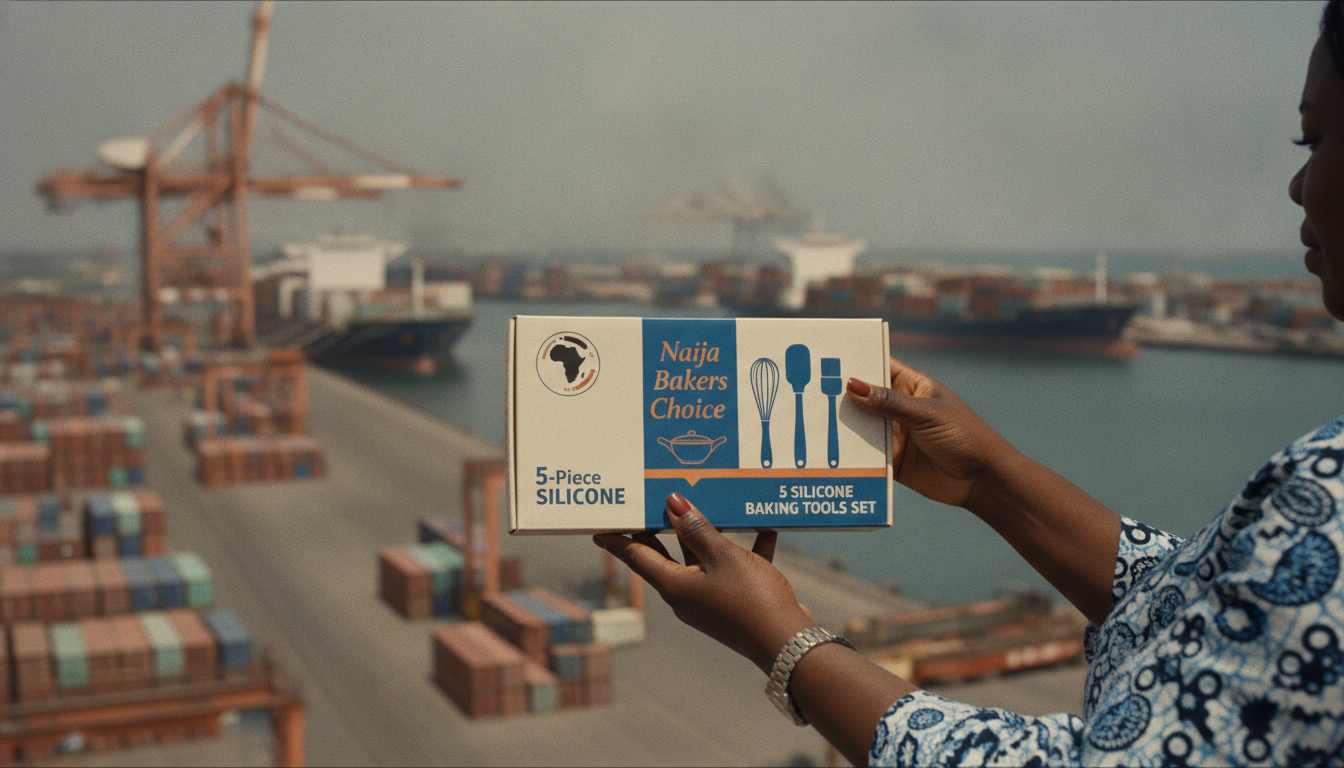
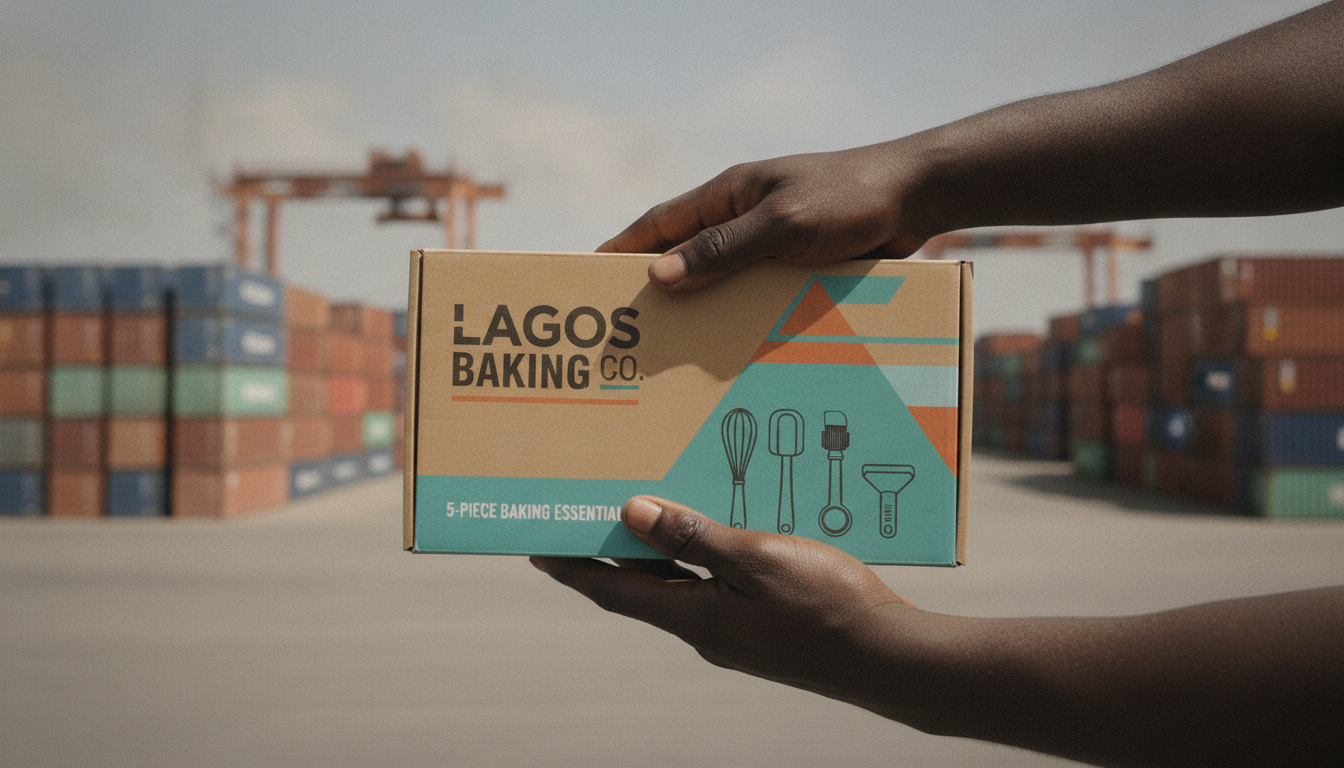
A single container of baking tools set wholesale can stock 30 supermarkets in Lagos, but one failed SONCAP inspection can freeze your capital for six months. Nigerian kitchenware importers managing 40‑foot shipments from Ningbo to Apapa know that material shortcuts and missing certifications collapse margins. This guide maps the material grades, order‑tier economics, and compliance steps that let you land sellable bakeware sets in Lagos, Kano, or Onitsha without tying cash to unsellable inventory.
Executive Summary
African demand trajectory: Africa’s demand for pots and pans bundles, the closest proxy for bakeware sets, is expanding at a compound annual growth rate of approximately 5-7% during 2026-2035, according to IndexBox (2026).
Supply chain dominance: China and Vietnam supply over 70-80% of Africa’s pots and pans bundle volume by unit, reports IndexBox (2026), making direct Chinabased sourcing the go‑to for price‑sensitive Nigerian distributors.
Material demand split: Non‑stick coated bundles account for 45-50% of total unit sales in Africa, while stainless steel bundles hold 25-30% and cast iron 10-12%, per IndexBox (2026). Your set composition must mirror this split to move volume.
Retail channel dominance: Mass‑market retail bundles represent roughly 60-65% of revenue in Africa’s cookware bundle market (IndexBox, 2026), so retail‑ready packaging and barcode placement are non‑negotiable.
Nigeria‑specific concentration: Three countries, South Africa, Nigeria, and Kenya, account for an estimated 40-50% of Africa’s utility whisk market consumption (IndexBox, 2026); bakeware‑set demand follows similar concentration.
What’s Included in a Baking Tools Set Wholesale (and What to Avoid)
Most Nigerian wholesale buyers face two mistakes: sets weighted with single‑use gadgets that sit on shelves, and sets missing the core tools that bakers repurchase monthly. The 2026 winning mix combines high‑rotation essentials, one or two aspirational pieces, and a price‑point that stays under ₦15,000 at retail.
Core Tools Every Set Needs
Mixing and measuring: nested stainless‑steel measuring cups and spoons, plus a silicone spatula (heat‑resistant to 230°C). Every home baker burns through spatulas; including two per set raises perceived value.
Pan core: a 9‑inch round carbon‑steel cake pan and a 12‑cup non‑stick muffin tray. These two shapes generate 70% of a home baker’s output.
Finishing tools: a stainless‑steel cooling rack and a basic icing spatula. Without a rack, cakes steam; without an offset spatula, icing looks messy, and the customer returns the set.
Materials That Sell vs. Materials That Trigger Returns
Material
Customer Perception in Nigeria
Red Flag (Returns)
0.6 mm carbon steel (non‑stick)
Premium; even browning, lasts 2+ years
Coating peels after 6 months if it is single‑layer, not two‑layer
Silicone (LFGB‑grade)
Modern, easy release, dishwasher‑safe
Filler‑loaded silicone smells chemical; buyers reject it on first sniff
Stainless steel 201
Affordable, durable look
Rust spots if grade is 201 instead of 304; check magnet test
Premium Add‑Ons That Justify a Higher Wholesale Price
Digital kitchen scale: a 5‑kg scale with 1‑g precision turns a basic set into a “pro bakery starter kit.” The perceived jump in value is ₦4,000, ₦6,000 at retail for a $1.50 factory cost.
Reusable silicone baking mat: replaces parchment paper; strong upsell item that resets the price anchor.
Cloth piping bag with nozzles: low cost, high visual impact in set photography.
Quick material rule: If the set contains non‑stick pans, demand a written PFAS‑free statement on the coating and request the SGS test report for Pb and overall migration before paying the deposit.
How to Source Baking Tools Sets Without Cash‑Flow Risks
The biggest cash trap for a first‑time Nigerian importer is a large MOQ on a single SKU. 300 identical 5‑piece sets might arrive on time, but one slow shop can leave you holding 200 units in a warehouse in Ikeja. Low‑MOQ production and mixed‑container consolidation are the two levers that prevent that.
Sample Validation Before Bulk
1‑piece sample: request a single production sample of each SKU. Pay the courier cost ($30, $50 via DHL to Lagos). Test browning, coating adhesion, and handle rivet strength in a real kitchen before committing.
Pre‑shipment sample pull: once bulk order is ready, authorize a third‑party inspector or a factory‑nominated sample pull of 2-5 sets from the line. Photograph them beside your order number and approve via WhatsApp.
Order‑Tier Economics for Baking Tools Sets
Tier
Units per SKU
Typical Per‑Unit Cost Factor
Best For
Sample
1 piece
1.5‑2x bulk price
Market validation; SONCAP sample
Small batch
30-100 pieces
1.15‑1.3x bulk
Pilot in 10 Lagos shops
Bulk
500+ pieces
Base FOB price
Supermarket chain supply
Payment Terms to Negotiate
30% deposit, 70% against copy of B/L: most Chinese manufacturers accept this split. It releases your risk once the container is on the vessel.
Consolidated container: if your order volume is below one full 20‑footer (approx. 1,500-2,000 sets depending on box size), combine with other bakeware lines like wholesale bakeware sets to avoid paying for empty space.
Low‑MOQ bakeware production allows testing three set configurations with 30 pieces each, then scaling the winner after shop‑floor feedback.
Compliance and Import Requirements for Nigeria, The 2026 Checklist
Nigerian customs and the Standards Organisation of Nigeria (SON) are tightening enforcement on kitchenware imports. A baking tools set wholesale shipment that lacks the correct documentation can incur Demurrage charges at Apapa that run $80, $150 per day after the first week. Preparing the paperwork before the container sails is the only way to avoid that cost.
SONCAP Certificate
Every imported baking tool set requires a SONCAP Certificate (Standards Organisation of Nigeria Conformity Assessment Programme). The process: (1) supplier sends a pro‑forma invoice and product photos, (2) an accredited testing body like SGS issues a Product Certificate, (3) upon shipment, SGS issues a SONCAP Certificate. If the set contains electrical components (e.g., a digital scale), a separate IEC testing report applies.
Food‑Grade Material Proof
All food‑contact surfaces, silicone spatulas, non‑stick coatings, stainless‑steel bowls, must meet NIS 316:2017 (Materials in Contact with Food). Acceptable proof includes SGS test reports for overall migration (limit 10 mg/dm2) and specific release of lead and cadmium. Our Yongkang factory runs 7 in‑house bakeware lines at 500,000 units/month capacity, with in‑house QC that archives every batch’s migration test for 24 months.
Packaging for Apapa Port Reality
Master carton specs: double‑wall corrugated box, 5‑ply, minimum bursting strength 150 psi. The container journey from Ningbo to Lagos hits 40°C internal temperatures and eight handling steps; single‑wall cartons collapse.
Shelf‑ready inner packaging: each baking tools set must be in a full‑color retail box with a barcode on the bottom right. Retailers in Lagos will not accept bagged sets.
Silica gel packs: mandatory inside each tool cavity. Without them, non‑stick pans develop micro‑rust at the rivets during the 35‑day sea voyage.
In our 12+ years manufacturing bakeware in Yongkang and Yiwu, we have seen that 8 out of 10 Nigerian import‑hold incidents trace back to missing migration‑test reports, not product defects. Food‑grade SGS‑tested bakeware pre‑certified for Nigeria eliminates that risk.
Private Label, OEM, and Retail‑Ready Packaging for African Distributors
A 5‑piece baking tools set wholesale without a brand logo sells for ₦8,000 in Idumota market; the same set with a printed cardboard sleeve and a brand name sells for ₦12,000 in Shoprite. The ₦4,000 margin difference covers the OEM packaging cost 12 times over.
Custom Branding Options by Budget
Starter brand (30-100 sets): foil‑stamped logo on a kraft box insert. Setup cost: $50 for the stamp die. Conveys handcrafted quality for boutique bake shops.
Supermarket brand (500+ sets): full‑color litho‑print box with a die‑cut window showing the silicone mat. The window is the strongest in‑store conversion tool; it reduces the “what’s inside?” hesitation by 30%.
QS‑ready brand (2,000+ sets): HACCP‑compliant packaging with batch code and production date printed on the box bottom. Quick‑service restaurant chains require this for supplier audits.
OEM Tooling Without Surprises
For silicone products, a new mold costs $500, $800 and takes 15 days. For carbon‑steel pans, new embossing on the bottom (logo depth 0.3 mm) adds $0.12 per unit. Always ask for a mold‑flow simulation or a first‑shot sample photo before approving production. Custom OEM private‑label bakeware production at our Yongkang facility delivers branded sets in 25-35 days after mold sign‑off.
How to Evaluate a Baking Tools Set Supplier: Checklist for Nigerian Importers
Several trading companies in Yiwu market position themselves as factories. A genuine direct‑source supplier will have at least three of these five characteristics, and a Nigerian‑optimized supplier will also understand Apapa shipping dynamics.
Criterion
What to Ask
Red Flag
In‑house production lines
Request a live video walk‑through of the production floor showing your SKUs in progress.
Only showroom photos, or “we will send later” delayed more than 48 hours.
African shipment track record
Ask for a recent B/L to Lagos Apapa or Mombasa and a packing list showing container consolidation.
No African port experience; shell company re‑selling from a trading desk.
SGS test reports for migration
Get the latest batch report for overall migration and specific lead content; cross‑check the report number on SGS’s online portal.
Report older than 2024 or unwilling to share the report number.
MOQ and mixed‑SKU flexibility
Confirm you can order 30 pieces of Set A, 30 of Set B, 30 of Set C in one shipment. Verify they do NOT charge “set‑up fee” per SKU at this quantity.
MOQ of 500 units per SKU; does not allow mixing.
Red‑Flag Phrases That Signal a Trading Company
“We can source any product for you.” Factories specialize; an offer to supply bakeware, blenders, and furniture in one quote is a trading desk.
“Our factory is in Guangdong, but we ship from Yiwu.” Genuine factories ship from the province where they manufacture. Mixed geography signals drop‑shipping.
Africa’s cookware‑bundle demand is expanding at a 5-7% CAGR through 2035, per IndexBox (2026), ensuring shelf‑turnover for correctly configured baking sets.
Non‑stick coated bundles command 45-50% of unit sales in Africa, according to IndexBox (2026), so your sets must lead with a carbon‑steel non‑stick pan as the hero piece.
China and Vietnam supply 70‑80% of Africa’s cookware‑bundle volume (IndexBox, 2026); direct factory relationships in Yongkang cut out trader markups that erode landed‑cost advantage.
SONCAP certification is mandatory for all imported baking tools sets into Nigeria; the SGS migration‑test report (overall migration ≤10 mg/dm2) is the document that clears customs, per SON regulations.
Mass‑market retail packaging generates 60‑65% of Africa’s cookware‑bundle revenue (IndexBox, 2026), so full‑color retail boxes with barcodes are not optional for supermarket shelves.
A low‑MOQ of 30 pieces per SKU enables testing three set variants across 10 retail outlets before placing a bulk order of 500+ pieces, according to Shansen’s production model.
What is included in a baking tools set?
A standard baking tools set for wholesale includes measuring cups and spoons, silicone spatulas, a carbon‑steel cake pan, a non‑stick muffin tray, a stainless‑steel cooling rack, and an icing spatula. Premium sets add a digital scale, silicone baking mat, piping bag and nozzles. Avoid sets stuffed with single‑use gadgets that do not rotate quickly in retail.
How much does a wholesale baking tools set cost?
A 5‑piece carbon‑steel baking tools set FOB Ningbo costs $3.50, $6.50 per set at 500+ units. Sample pricing is 1.5-2x bulk rate. Silicone‑heavy sets run higher due to mold amortization. Landed cost in Lagos after freight, duty (20% CIF), and clearing is typically 2.2-2.5x the FOB price, depending on container utilization.
Where can I buy baking tools set wholesale?
You can buy directly from bakeware manufacturers in Yongkang, Zhejiang, China, or through their Yiwu International Trade Market sourcing showrooms. Direct factory sourcing via platforms like Shansen Bakeware eliminates trader markups and provides in‑house QC reports. Always verify African shipping experience and SONCAP documentation capability before ordering.
Which material is best for baking tools?
For pans, 0.6 mm carbon steel with a two‑layer PFAS‑free non‑stick coating delivers even browning and 2‑year durability in home kitchens. Silicone spatulas must be LFGB‑grade (no chemical smell) to pass Nigerian market sniff tests. Stainless‑steel 304 is required for mixing bowls and racks to prevent rust spots, avoiding grade 201.
What is the minimum order quantity for wholesale baking tools?
Many Chinese bakeware factories require 500-1000 pieces per SKU, but Shansen Bakeware offers an MOQ of 1 piece for samples and 30 pieces per SKU for small‑batch orders. This allows Nigerian distributors to test up to three set configurations in 10 retail shops with less than $5,000 invested in inventory before scaling.
Need a 1‑piece sample of your configured baking tools set for SONCAP pre‑approval? Request Your Sample Now →