📋 Table of Contents
Launching a bakeware brand in Accra or Kumasi requires a manufacturing partner who can deliver food-grade quality, apply your custom logo without locking up capital in high minimum orders, and ship reliably to Tema port. Finding an OEM bakeware factory custom logo Ghana supplier means verifying production credentials, matching material lines to local bakery and retail demand, and structuring terms that protect your deposit while the container crosses the Atlantic.
Shell companies and trading agents populate online B2B directories, presenting factory photos they do not own. Verification separates manufacturers with in-house production lines from intermediaries who add margin without adding value.
Request a scanned copy of the supplier’s business license showing the registered scope of manufacture. Cross-check the company name against China Customs export records if accessible, or ask for redacted commercial invoices showing direct shipments to other African buyers. A genuine factory ships under its own name; a trader ships under the actual manufacturer’s name or uses a third-party logistics entity.
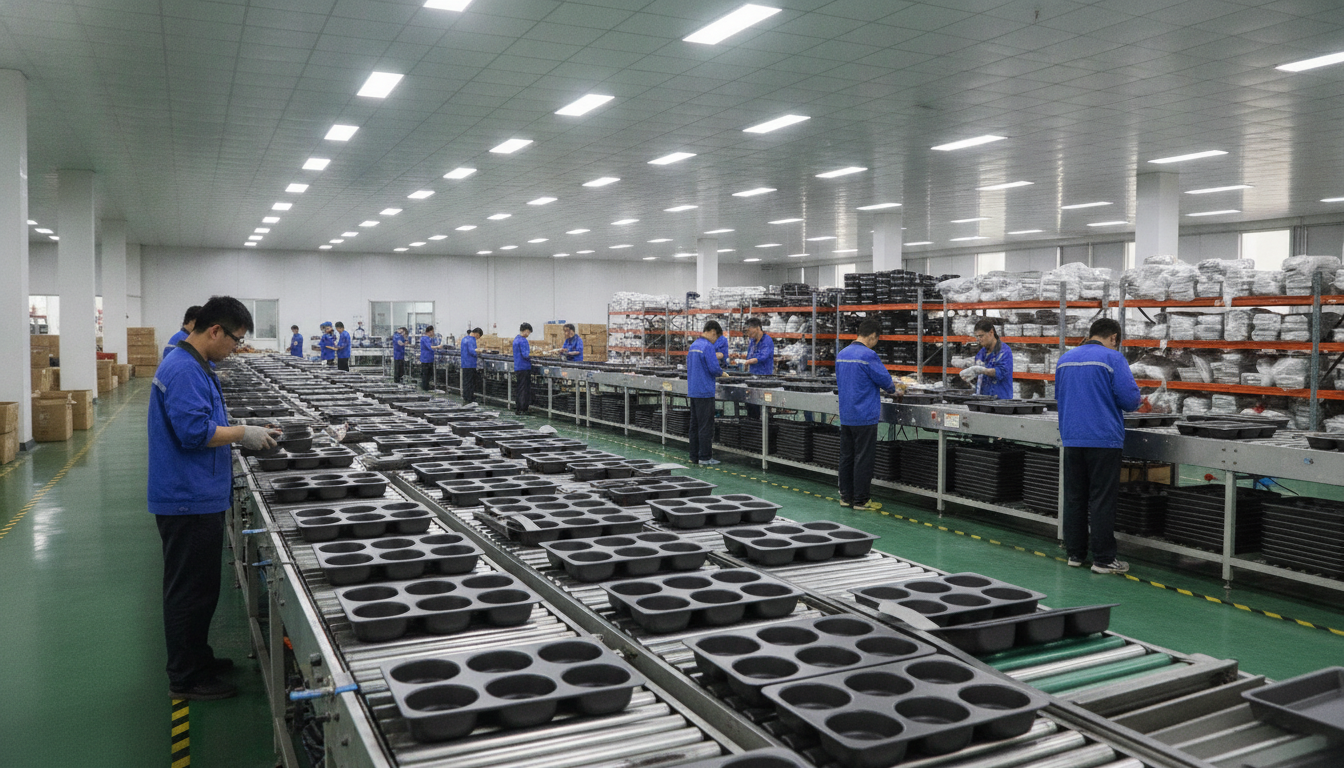
Ask for a time-stamped video tour showing raw material storage, stamping or molding equipment, coating application (for carbon steel and aluminum), and finished-goods inspection. The video should display the factory’s signage and show operators wearing branded uniforms if the facility maintains formal quality systems. Trading companies cannot produce this footage without revealing they are intermediaries.
SGS or Intertek test reports for food-contact migration, heavy-metal limits, and coating adhesion should list the factory’s name and address. Generic certificates without specific product codes or test dates offer no assurance. Shansen provides SGS test reports covering FDA 21 CFR 177.2600 silicone migration limits and PFAS-free verification for non-stick coatings, addressing the common buyer complaint that coating longevity claims often exceed actual performance.
Ghana’s bakeware market splits between commercial bakeries requiring durable, high-volume pans and urban retail buyers seeking affordable home-baking tools. Material choice determines product lifespan, price point, and target channel.
Carbon steel bakeware dominates Accra and Kumasi commercial bakery supply chains. Operators value the material’s even heat distribution, resistance to warping under continuous oven cycling, and lower per-unit cost compared to stainless steel. A common complaint buyers raise is that carbon steel pans rust when not properly seasoned or stored in humid coastal climates. Factories offering a food-grade non-stick coating or a seasoned finish reduce this risk. Shansen’s carbon steel line includes a PFAS-free non-stick option that extends rust-free service life in high-humidity environments.
Aluminum bakeware suits bread and pastry applications where consistent heat transfer prevents hot spots. The material’s lighter weight reduces shipping costs per unit, a meaningful advantage when calculating landed cost to Tema port. Anodized aluminum adds surface hardness and scratch resistance, extending the pan’s usable life in high-turnover bakery kitchens.
Silicone bakeware appeals to Accra’s growing home-baker segment, driven by social media recipe sharing and small-batch cake decorating. The material’s non-stick release eliminates the need for greasing, and its flexibility simplifies storage in compact urban kitchens. FDA 21 CFR 177.2600 sets migration limits for silicone in food contact; verify that your OEM bakeware factory custom logo Ghana supplier provides test reports confirming compliance before branding silicone molds with your logo.
Stainless steel bakeware targets premium retail and institutional buyers who prioritize longevity over initial cost. The material resists corrosion, requires no seasoning, and tolerates aggressive cleaning protocols. Stainless steel’s higher price point limits adoption in price-sensitive wholesale channels but positions a brand as a quality leader in upmarket Accra kitchenware stores.
Custom logo application differentiates your bakeware brand on Ghanaian retail shelves and builds recognition among bakery procurement managers. Application method, durability, and cost vary by material and order volume.
Laser etching produces a permanent, high-contrast logo on stainless steel bakeware. The mark withstands commercial dishwashing and does not fade over the product’s lifespan. Setup cost is higher than printing, making this method economical for orders above 500 units per SKU. Shansen’s Yongkang facility operates in-house laser equipment, eliminating subcontractor delays and allowing logo adjustments within the same production run.
Silkscreen printing applies logos to carbon steel and aluminum bakeware at lower setup cost than laser etching. The ink cures under heat, creating a durable bond suitable for hand-wash bakery environments. Silkscreen accommodates multi-color logos, supporting brand identity that includes color elements. Minimum order quantities for custom silkscreen typically start at 300 units per design, though Shansen’s low-MOQ bakeware for startups program allows 30-piece test runs with simplified single-color logos.
Embossing integrates the logo directly into the silicone mold during production, creating a raised or recessed brand mark that cannot wear off. This method requires a custom mold, adding tooling cost but delivering a premium look that justifies higher retail pricing. Tooling investment ranges from USD 800 to USD 2,000 depending on mold complexity, amortized across production runs. A Ghanaian distributor targeting boutique cake-decorating shops can recover tooling cost within the first 1,000-unit order if the embossed logo supports a 15-20% price premium over generic silicone molds.
Hang tags and printed sleeves offer branding flexibility without altering the bakeware itself. This approach suits distributors testing multiple product lines or seasonal SKUs where permanent logo application is not justified. Custom packaging also communicates care instructions and food-safety certifications, building buyer confidence at point of sale. Shansen’s custom OEM private-label bakeware service includes packaging design support and poly-bag or color-box options starting at 500 units per SKU.
High minimum order quantities tie up working capital before a Ghanaian distributor validates product-market fit. Sampling and phased ordering reduce financial risk while confirming that material, finish, and logo placement meet local buyer expectations.
Shansen’s 1-piece sampling policy lets buyers assess coating finish, logo clarity, and dimensional accuracy before committing to bulk production. Sample cost typically equals 2-3 times the bulk unit price, covering setup and express shipping to Accra. A distributor can test three bakeware styles (carbon steel loaf pan, silicone muffin mold, stainless steel baking sheet) with a total sample investment under USD 150, then select the best-performing SKU for the first container order.
Sample MOQ: 1 piece per SKU. Bulk MOQ: 30 pieces per SKU for custom logo orders. Sampling time: 7-10 days production plus 5-7 days DHL to Accra.
Once a sample passes validation, a 30-piece minimum per SKU allows a Ghanaian distributor to stock initial retail accounts or supply a small bakery chain without over-investing. This quantity fits within a single pallet and can be consolidated with other SKUs to fill a 20-foot container. Traditional OEM bakeware factories require 500-1,000 pieces per SKU, forcing new brands to carry inventory risk or delay market entry until sufficient pre-orders accumulate.
A 20-foot container holds approximately 8,000 to 12,000 bakeware units depending on product size and packaging. Mixing SKUs (loaf pans, muffin molds, baking sheets, cooling racks) maximizes container utilization and lets a distributor serve multiple retail segments with a single shipment. Shansen’s export team provides container-loading plans that account for weight distribution and cubic-meter efficiency, preventing costly air-space waste or port surcharges for unbalanced loads.
In practice: A Kumasi bakery-supply distributor ordered 1-piece samples of 4 carbon steel pan styles, selected 2 best sellers, then placed a 60-unit-per-SKU first order that filled half a shared container with a kitchenware importer, reducing per-unit freight cost by 28%
.
Food-safety standards protect end users and shield distributors from liability. Ghana Standards Authority regulations align with international norms, making FDA and SGS certifications valuable even though they are not always legally mandatory for import.
FDA 21 CFR 177.2600 defines migration limits for silicone rubber articles intended for repeated food contact. An OEM bakeware factory custom logo Ghana supplier should provide test reports confirming that silicone molds release no more than 3.0 milligrams per square inch of extractable material when subjected to food-simulating solvents. This standard prevents contamination of baked goods with uncured silicone polymers or residual catalysts.
SGS heavy-metal tests verify that carbon steel, aluminum, and stainless steel bakeware contain lead, cadmium, and mercury levels below internationally recognized safety thresholds. Ghana importers increasingly request these reports to meet retailer procurement standards and avoid reputational damage from product recalls. Shansen maintains SGS test reports for all food-grade SGS FDA certified bakeware lines, updated annually as material suppliers rotate.
Per- and polyfluoroalkyl substances (PFAS) in non-stick coatings face growing regulatory scrutiny. California’s AB 1200 bans PFAS in cookware and bakeware sold in the state starting in 2026, and European Union restrictions tighten in parallel. Ghanaian distributors serving health-conscious retail segments or exporting to diaspora markets in the United States benefit from PFAS-free certification, even though Ghana itself has not yet enacted PFAS-specific bakeware regulations. Shansen’s carbon steel and aluminum lines use ceramic-based non-stick coatings that carry third-party PFAS-free verification.
Ghana Standards Authority guidelines recommend that bakeware packaging include material composition, country of origin, care instructions, and importer contact information. Distributors should confirm that the OEM factory prints or affixes labels in English, avoiding the need for costly post-import re-labeling. Custom packaging also serves as a brand-building tool, communicating food-safety certifications and usage tips that reduce customer-service inquiries.
Tema port handles the majority of Ghana’s containerized imports. Understanding clearance procedures, duty rates, and inland haulage costs prevents budget overruns and delivery delays.
Ningbo port, Shansen’s primary export gateway, connects to Tema via direct and transshipment routes. Direct sailings average 35-40 days transit time, while transshipment through European or West African hubs adds 7-12 days. Booking during peak seasons (September to November, pre-holiday inventory build) requires 3-4 weeks advance notice to secure container space at competitive rates. Shansen’s logistics partner provides door-to-port service from the Yongkang factory, consolidating bakeware shipments with other buyers to optimize freight rates.
Ghana Customs classifies bakeware under HS code 7323 (table, kitchen, or household articles of iron or steel) or 3924 (tableware and kitchenware of plastics). Import duty ranges from 5% to 20% depending on material and finished-good classification. VAT at 12.5% applies to the CIF value plus duty. A customs broker licensed by Ghana Revenue Authority handles document submission, duty payment, and physical inspection coordination, typically charging USD 200 to USD 400 per container. Budget an additional 7-10 days for clearance, longer if the shipment is selected for detailed inspection.
Tema to Accra haulage costs USD 150 to USD 250 per 20-foot container, depending on fuel prices and traffic conditions. Distributors operating in Kumasi or Takoradi should add USD 100 to USD 200 for extended inland transport. Shansen provides a landed-cost calculator that sums FOB price, freight, insurance, duty, VAT, and haulage, giving Ghanaian buyers a single per-unit cost for pricing and margin planning.
Payment terms balance the factory’s production-cost exposure against the buyer’s need to verify quality before full payment. Standard terms for OEM bakeware factory custom logo Ghana orders follow West African trade-finance norms.
A 30% deposit upon order confirmation covers raw material procurement and production setup. The remaining 70% is paid against a scanned copy of the bill of lading, before the vessel departs Ningbo. This structure protects the buyer from paying in full before goods are shipped, while giving the factory assurance that payment will clear before the container arrives at Tema. Banks in Ghana commonly issue telegraphic transfers (T/T) for this purpose, with transaction fees ranging from USD 25 to USD 50.
Distributors placing orders above USD 20,000 may negotiate a letter of credit (L/C) through a Ghanaian commercial bank. The L/C guarantees payment to the factory upon presentation of shipping documents that meet agreed specifications, reducing both parties’ risk. L/C fees typically total 1-2% of the transaction value, plus bank handling charges. Shansen accepts sight L/Cs issued by major Ghanaian banks including Ecobank, Stanbic, and Standard Chartered.
Third-party inspection services such as SGS or Bureau Veritas conduct pre-shipment checks at the factory, verifying that logo placement, coating finish, and packaging meet the purchase order specifications. Inspection costs USD 300 to USD 500 per visit and provides an independent quality report that supports dispute resolution if defects are discovered upon container arrival. Shansen welcomes buyer-arranged inspections and provides factory access during final packing to facilitate transparent verification.
Some distributors negotiate a 5-10% retention held until after the first retail sell-through, released once no quality issues surface. This approach suits new buyer-supplier relationships where trust is still building. Shansen offers a 12-month warranty covering manufacturing defects (warping, coating delamination, weld failures) but excludes damage from misuse or improper storage, clearly defined in the sales contract to prevent post-delivery disputes.
In practice: An Accra kitchenware importer placed a USD 15,000 OEM order with 30% deposit, requested SGS pre-shipment inspection, and paid the 70% balance against scanned bill of lading, receiving the container at Tema 38 days after production completed with zero quality claims
.
Request a scanned business license showing manufacturing scope, a time-stamped production-line video tour, and third-party SGS or Intertek test reports listing the factory’s name and address. Cross-check the company name against export records if accessible. Shell companies and trading agents cannot produce these documents without revealing they are intermediaries.
SGS heavy-metal testing and FDA 21 CFR 177.2600 compliance for silicone are the most relevant certifications for Ghana-bound bakeware. PFAS-free verification for non-stick coatings adds value for health-conscious retail segments. Ghana Standards Authority does not mandate specific certifications for all bakeware imports, but retailers and distributors increasingly request these reports to meet procurement standards and avoid liability.
Shansen’s MOQ for custom logo bakeware is 30 pieces per SKU, allowing Ghanaian distributors to test market demand without over-investing in inventory. Sample orders start at 1 piece per SKU for design validation. Traditional OEM factories typically require 500-1,000 pieces per SKU, which ties up working capital and delays market entry for new brands.
Sampling takes 7-10 days for production plus 5-7 days for DHL express delivery to Accra. Bulk production runs 20-30 days depending on order size and customization complexity. Ningbo to Tema shipping adds 35-40 days by sea, with an additional 7-10 days for port clearance and inland haulage. Total lead time from order confirmation to warehouse delivery averages 70-85 days.
Yes. Shansen offers custom packaging including poly bags, color boxes, and hang tags starting at 500 units per SKU. Logo printing methods include laser etching for stainless steel, silkscreen for carbon steel and aluminum, and embossing for silicone molds. Packaging design support is included, and labels can be printed in English to meet Ghana Standards Authority recommendations for material composition and care instructions.
Ready to source food-grade bakeware with your custom logo and ship to Tema port?
Request 1-Piece Samples Today →
Written by the Shansen Bakeware Export Team.
MOQ 1 set on stock configurations. Tell us what you need and we reply on WhatsApp.
Click the button below to open WhatsApp. If you're not logged in to WhatsApp Web yet, scan the QR code first — then come back here and copy the message into the chat.