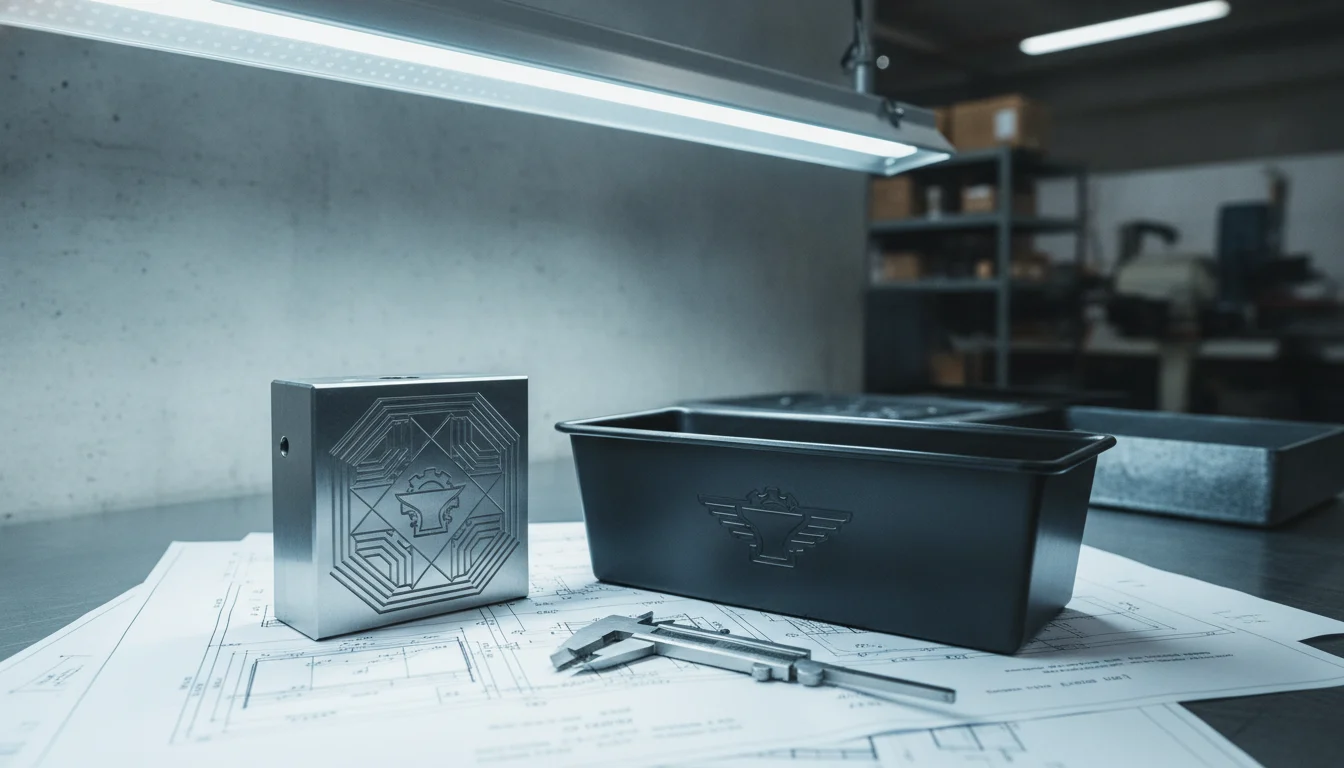
Custom logo bread tin tooling fee minimum quantity depends on the logo method and whether you use an existing mold or commission a new one. For embossing or debossing a raised or recessed logo into carbon-steel bread tins, expect a one-time tooling charge of roughly $150-$400 for a CNC-cut die and a minimum order quantity of 500-3,000 pieces, with the exact figures confirmed at quotation based on logo complexity, tin dimensions, and coating type. Printed or laser-engraved logos typically carry lower setup fees but may sacrifice durability in commercial bakery wash cycles.
📋 Table of Contents
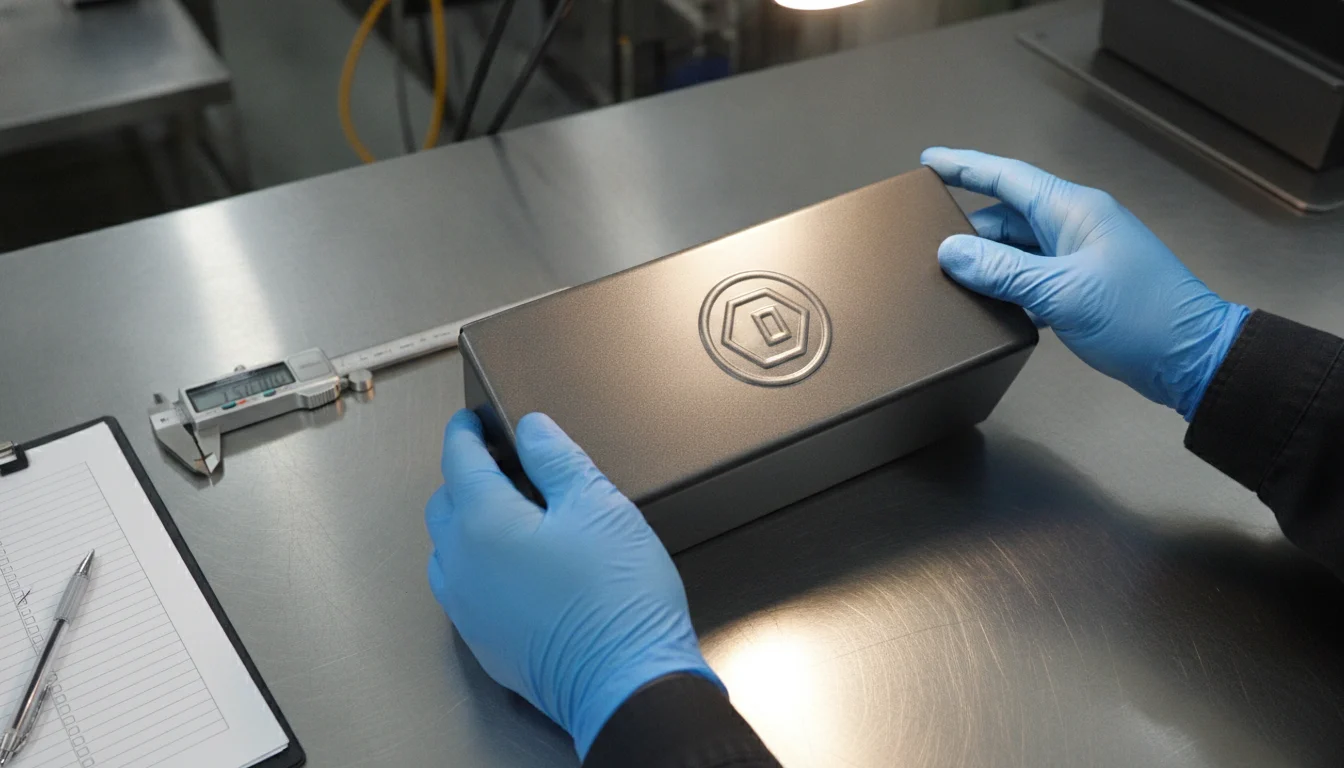
Tooling fees for custom logo bread tin projects cover the cost of machining a die, engraving plate, or screen, depending on the logo method you choose. The fee is separate from the per-unit price and is paid once; subsequent reorders using the same logo incur no additional tooling charge. Understanding what drives these fees helps you budget accurately and avoid surprises when the quotation arrives.
Embossing raises your logo above the tin surface, while debossing presses it inward. Both require a CNC-machined steel die that mirrors your artwork. Die complexity increases with fine detail, small text, or intricate shapes. A simple wordmark on a standard loaf tin may cost $150-$250 for the die, while a detailed crest or multi-line logo can push the fee to $300-$400 or higher. The die is reusable across thousands of production runs, so the investment spreads favorably over time for brands planning repeat orders.
Screen printing or pad printing a logo onto carbon-steel or aluminum bread tins requires a printing plate and color setup. Setup fees are typically lower than embossing dies, often $50-$150, but printed logos lack the permanence of embossed marks. High-volume bakeries running tins through industrial dishwashers multiple times per day report that printed logos fade or peel within months, making this method better suited to retail packaging or light-use scenarios than commercial production.
Laser engraving burns your logo into the metal surface with no consumable die or plate. Some factories charge a flat setup fee of $30-$80 to program the laser path, while others roll the cost into the per-unit price. Engraved logos are permanent and survive any wash cycle, but they appear as a subtle texture change rather than a bold raised mark. This method suits minimalist branding and works well on stainless-steel bread tins where embossing would distort the material.
Minimum order quantities for custom logo bread tin production balance the factory’s setup time against your cash-flow constraints and market-testing needs. The MOQ varies by whether you adapt an existing mold, use a stock shape with a new logo, or commission a fully custom tin design. Knowing these thresholds before you request a quotation prevents wasted time on proposals that exceed your budget or inventory capacity.
When you select a standard loaf-tin shape from the factory’s existing mold library and add only your logo, the minimum order quantity typically starts at 500 pieces. This tier suits distributors testing a new brand or bakery-supply buyers validating demand in a single city. Our Yongkang factory runs a carbon-steel bakeware line with 1-piece sampling and a 500-piece OEM production run, letting you confirm coating adhesion, release performance, and logo clarity before committing to larger inventory.
A fully custom bread-tin shape, non-standard dimensions, or a multi-level embossed logo requires new tooling that takes four to six weeks to machine and test. Factories spread this engineering cost across a larger batch, pushing the MOQ to 1,000-3,000 pieces. One tin manufacturer states a 3,000-piece minimum for new molds, allowing the quantity to be split across three or four designs to give a brand multiple SKUs without quadrupling tooling fees. Another supplier cites 2,000-3,000 pieces as the entry point for raised-logo projects, with existing-mold adaptations starting around 2,000 pieces.
Some factories publish tiered minimums: 500 pieces for in-stock designs with a printed logo, 1,000-2,000 pieces for moderate adaptations such as changing the handle style or adding a debossed mark, and 3,000 or more for full OEM projects involving new dimensions, coatings, and embossing. This structure gives you a clear decision tree: if your budget caps at 1,000 units, you know to work within existing molds and choose simpler logo methods.
Shansen MOQ: Carbon-steel line 1 pc sample, 500 pcs OEM run. Bakeware sets from 1 set. Lead times and tooling fees confirmed at quotation.
Choosing between embossing, debossing, printing, and engraving hinges on how often the tin will be washed, how bold you want the branding, and whether you plan repeat orders that amortize tooling costs. Each method carries trade-offs in upfront expense, production speed, and long-term appearance. The table below compares the four main approaches on the dimensions African distributors prioritize.
Embossed logos catch light and shadow, making your brand name visible from across a bakery production floor. The raised mark also provides a tactile signature that home bakers and professional pastry chefs associate with quality. Tooling costs are higher, but the die lasts indefinitely, so brands planning annual reorders of 1,000 or more units recover the investment quickly. Carbon-steel bread tins with embossed logos maintain a clean appearance even after years of daily use, because the logo is part of the metal itself rather than a surface coating.
Debossing presses your logo below the tin surface, creating a recessed mark that resists wear as effectively as embossing but with a quieter visual presence. This method suits premium brands targeting boutique bakeries or upscale kitchenware retailers who prefer understated branding. The tooling cost and MOQ mirror embossing, so the choice comes down to aesthetic preference rather than budget.
Screen printing or pad printing delivers vibrant color and fine detail at a lower setup cost, making it attractive for limited-edition holiday packaging or promotional giveaways. However, printed logos degrade under the repeated high-temperature wash cycles common in commercial bakeries. Distributors serving retail customers who hand-wash their tins occasionally find printing adequate, but those supplying bakery chains or catering operations should steer toward embossing or engraving.
Laser engraving works on any metal but shines on stainless-steel bread tins, where embossing can distort the thin gauge. The engraved mark is permanent and food-safe, with no risk of coating migration or flaking. Setup fees are minimal because no physical die is required, and the per-unit cost increase is often just a few cents. Brands positioning themselves in the premium segment appreciate the clean, modern look of an engraved logo on brushed stainless steel.
Lead times for custom logo bread tin production span sampling, tooling fabrication, production, and quality inspection. Payment terms vary by order size, your trading history with the factory, and whether you use a letter of credit or direct wire transfer. Clarifying both timelines and payment milestones before you sign a purchase order prevents cash-flow surprises and ensures your inventory arrives when your marketing campaign launches.
Producing a pre-production sample with your custom logo takes two to four weeks when the factory uses an existing mold and simply adds the embossing die or printing plate. If a new mold must be machined, the timeline extends to four to six weeks. One tin manufacturer notes that new molds add roughly four to six weeks to the project schedule. Sampling lets you verify logo placement, coating adhesion, and release performance before committing to the full production run, and it is standard practice to approve the sample in writing before the factory proceeds.
After sample approval, production of 500-3,000 custom-logo bread tins typically requires three to five weeks, depending on factory capacity and coating cure times. Carbon-steel tins with FDA-compliant non-stick coatings need controlled oven curing, which cannot be rushed without compromising food-contact safety. Our Yongkang facility maintains SGS and FDA test reports dated 2020, 2021, and 2023, with the 2020 report covering 21 CFR 175.300 non-stick coating on the carbon-steel line, and we issue batch-specific reports on request to meet import-clearance requirements in Nigeria, Kenya, and South Africa.
Factories commonly request a 30-50% deposit to cover tooling and raw-material costs, with the balance due before shipment. For orders above a certain threshold, often $10,000-$20,000, suppliers may accept a letter of credit that releases payment upon presentation of shipping documents and inspection certificates. First-time buyers without an established credit history should expect full prepayment or a deposit-plus-balance-before-shipment structure. Repeat customers with a track record of on-time payment sometimes negotiate net-30 or net-60 terms, but this is rare for custom tooling projects where the die is specific to your brand.
Clarify who owns the embossing die or printing plate. Some factories retain ownership and charge a storage fee if you do not reorder within 12-24 months, while others transfer ownership to you after the initial production run, allowing you to move the die to another supplier if needed. Contracts should state whether the tooling fee is a one-time purchase or a rental, and whether you have exclusive rights to the design or the factory may produce similar tins for other clients.
The custom logo bread tin tooling fee minimum quantity is only the factory gate price. African distributors must add freight, customs duty, VAT, port charges, and clearing-agent fees to arrive at the true landed cost per unit. These additional expenses often equal or exceed the ex-works price, especially for smaller shipments to Lagos, Mombasa, or Luanda. Breaking down each cost component helps you set retail prices that cover all expenses and still compete with local suppliers.
Shipping a 20-foot container of bread tins from Ningbo to Lagos Apapa, Mombasa, or Luanda varies by season, fuel surcharges, and carrier. Container rates fluctuate, so freight is confirmed at quotation rather than published in advance. Our factory optimizes container loading for African distributors, maximizing the number of units per container to reduce per-unit freight cost. A well-packed 20-foot container can hold 8,000-12,000 standard loaf tins, depending on nesting and packaging, spreading the freight charge across a larger quantity.
Nigeria applies a customs duty and VAT on imported kitchenware, with rates varying by HS code and whether the goods qualify for ECOWAS trade preferences. Kenya charges a similar structure, while South Africa uses the SACU tariff schedule. Distributors should consult a licensed customs broker in the destination country to calculate the exact duty and VAT before finalizing the order, as these charges are paid at the port before the container is released. Underpaying or misclassifying the goods can result in penalties, storage fees, and delayed clearance.
Port handling, terminal charges, and clearing-agent fees add another layer of cost. In Lagos, these charges can reach 15-25% of the CIF value for small importers without a bonded warehouse or preferential clearing arrangement. Mombasa and Durban offer more predictable fee structures, but delays in document submission or inspection can trigger storage charges that quickly erode margins. Working with an experienced clearing agent who knows the port procedures and has relationships with customs officials reduces the risk of unexpected fees.
A hypothetical order of 1,000 custom-logo carbon-steel bread tins might break down as follows: factory price $2,000, tooling fee $300, freight $800, customs duty $400, VAT $500, port and clearing $350, for a total landed cost of $4,350, or $4.35 per unit. The same calculation for 3,000 units spreads the tooling fee across more pieces, dropping the per-unit landed cost to roughly $3.20. This economies-of-scale effect explains why factories set higher MOQs for custom projects: the tooling investment only makes financial sense when spread across a sufficient volume.
In practice: Sampling 1 piece of each custom-logo bread tin SKU before committing to a 500-piece production run lets a distributor verify coating adhesion, logo clarity, and release performance against local bakery requirements without tying up working capital in untested inventory
Our low-MOQ bakeware program gives African distributors the flexibility to test custom-logo bread tins in their market before scaling to full container loads, reducing the financial risk of launching a new brand or entering a new city.
Most factories accept vector artwork in AI, EPS, or high-resolution PDF format and convert it to the toolpath for embossing or engraving at no additional charge. If you only have a low-resolution PNG or JPEG, the factory may charge $20-$50 to redraw the logo as a vector file. Providing clean vector artwork from the start avoids delays and ensures the embossed or engraved logo matches your brand guidelines exactly. Specify minimum line width and text height, because fine details below 1-2 mm may not reproduce clearly on a curved tin surface.
Factories typically store the die for 12-24 months at no charge, allowing you to reorder without paying the tooling fee again. After that period, some suppliers charge a monthly storage fee or scrap the die if you have not placed a repeat order. Negotiate die ownership and storage terms in the initial contract, especially if you plan to source from multiple suppliers or want the option to move production. Purchasing the die outright, usually for 1.5-2 times the original tooling fee, gives you full control and portability.
Adding a logo does not change the food-contact compliance of the base material and coating, so you can rely on the factory’s existing SGS or FDA test reports if the logo method does not introduce new substances. Embossing and debossing are purely mechanical and add no chemicals. Printing requires ink, which must meet FDA 21 CFR 175.300 or equivalent food-contact standards; request a certificate of compliance for the ink from the factory. Laser engraving introduces no foreign material and does not require additional testing. Our SGS-verified carbon-steel line maintains test reports on file, and we issue batch-specific documentation on request to support your import-clearance process.
Ready to request a custom-logo bread tin sample and confirm your tooling fee and MOQ?
Request Your Sample Quote →
Written by the Shansen Bakeware Export Team.
MOQ 1 set on stock configurations. Tell us what you need and we reply on WhatsApp.
Click the button below to open WhatsApp. If you're not logged in to WhatsApp Web yet, scan the QR code first — then come back here and copy the message into the chat.