📋 Table of Contents
For Nigerian kitchenware importers, securing baking tools set wholesale that meet food-grade standards without locking up capital in high MOQs can stall a launch before it starts. supermarkets in Abuja, or building a private-label brand, the right China factory eliminates risk: 1-piece samples, 7-day lead times, and container loads optimized for Apapa port. This guide maps how to source bakeware sets that comply with Nigerian import rules and sell at margins you can count on.
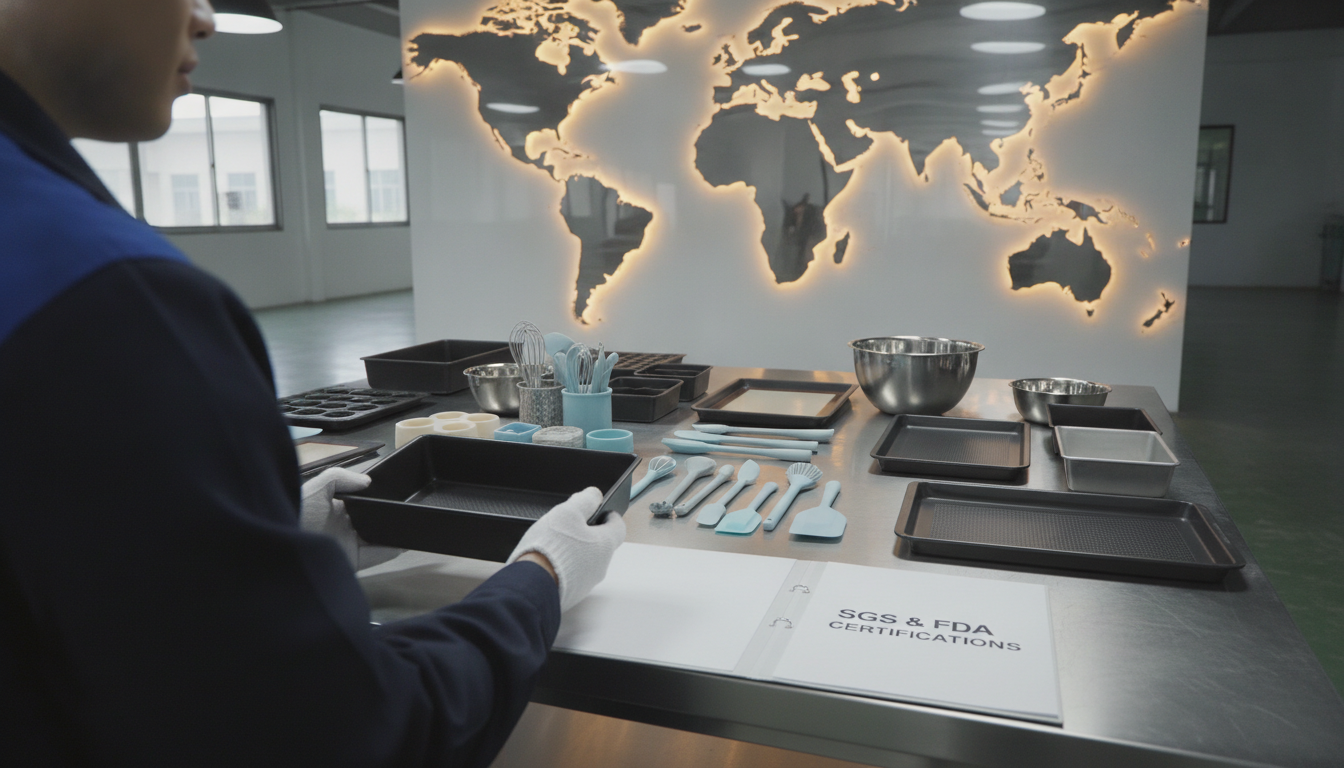
A baking tools set wholesale destined for Nigeria must survive frequent use, uneven heat sources, and humid storage. Material choice defines whether a set earns repeat orders or a flood of returns. Below we break down the four materials that dominate Nigerian bakery shelves.
Silicone is non-stick by nature, requires no greasing, and withstands oven temperatures up to 230°C. It’s lightweight, doesn’t rust, and folds flat for compact shipping. Nigerian buyers favor silicone loaf pans and muffin cups for both home and commercial bakers.
Carbon steel delivers consistent heat transfer, essential for bread and cake tins. With a premium non-stick coating, it releases baked goods easily and lasts through hundreds of cycles. In Lagos bakeries producing high volumes of sliced bread and round cake layers, carbon steel forms the backbone.
Stainless steel resists corrosion, tolerates metal utensils, and handles direct flame or induction cooktops. While heavier and pricier than carbon steel, it appeals to high-end bakeries and catering operations that need bakeware doubling as serving ware.
Aluminum heats up fastest and cools quickly, ideal for pastry work and biscuit trays. It’s the most cost-effective material for starter sets. Many Nigerian distributors bundle aluminum baking sheets with other items to hit a $25 retail price point.
Beyond materials, a ready-to-sell wholesale set should include multifunctional pieces: round cake pans, loaf pans, muffin trays, cooling racks, and mixing bowls. Optional cake-decorating tools and strainers add value for bakery-focused buyers. A factory that offers all seven product lines under one roof, like our Yongkang facility, simplifies sourcing and reduces logistic fragmentation.
Importing bakeware into Nigeria requires navigating SONCAP certification, Form M pre-arrival assessment, and laboratory testing. Without compliant documentation, containers can stall at Apapa for weeks, burning demurrage fees. Understanding these requirements before you place a purchase order protects margins.
Factory capacity: 500,000 units/month. MOQ: 1 piece per SKU. Sampling lead time: 7-10 days.
Logistics from Ningbo port to Lagos Apapa typically takes 35-45 days for full container loads. Our container loading is optimized for African distributors, maximizing cube utilization to lower per-unit freight costs. For a 20ft container, a mixed load of 8,000-10,000 bakeware sets is feasible depending on SKU diversity and packaging choices.
QC stops defects before they reach Nigerian ports. Ask your supplier for in-line inspection reports covering:
Nigeria’s bakeware market is price-sensitive, yet buyers increasingly demand certification. Aligning order volume with supplier MOQ flexibility directly impacts landed cost and working capital. While many Chinese factories quote 500-piece minimums, a few specialized manufacturers allow 1 piece per SKU for sample orders and scale from 30 pieces for commercial runs.
Smart importers often start with low-MOQ bakeware to test Lagos market reception, then graduate to bulk orders once best-selling SKUs emerge. Including private-label packaging early-even on small runs-raises perceived value. The IndexBox (2025) data shows private-label sets at $20-40 retail capture a third of volume in South Africa; Nigeria’s growing supermarket sector mirrors that pattern. When you’re ready to add your logo, custom OEM private-label bakeware services transform generic sets into branded assets without requiring inventory of printed packaging.
The best set combines carbon steel pans for even heat, silicone molds for non-stick release, and stainless steel tools for durability. A bakery-oriented kit should include 6-8 core items: loaf pan, round cake pans, muffin tray, cooling rack, and mixing bowls. Sourcing from a factory that offers all seven product lines-silicone, carbon steel, stainless steel, aluminum, cake-decorating tools, strainers, and multi-piece sets-reduces supplier count and logistics costs. For wholesale orders, see our food-grade rose silicone molds.
Wholesale unit costs range from $0.8 to $12 per piece depending on material, complexity, and order volume. A sample single piece may cost $3, $12. At 30-100 pieces per SKU, prices drop to $1.5, $5. Bulk container orders exceeding 500 sets per SKU can reach $0.8, $3. Nigerian importers should budget $2,000, $5,000 for a mixed 500-set sample-to-commercial container load, inclusive of shipping.
Directly from a China-based manufacturer with low MOQ and dedicated African shipping lines. Shansen Bakeware’s Yongkang factory ships from Ningbo to Lagos Apapa, offering 1-piece sampling and container loads optimized for Nigerian distributors. A physical showroom at Yiwu International Trade Market lets buyers inspect products before committing.
A standard wholesale baking tools set includes cake pans, muffin trays, loaf pans, cooling racks, mixing bowls, and spatulas. Premium sets add cake-decorating tools (piping bags, nozzles), strainers, and sifters. Suppliers with all seven in-house lines-silicone, carbon steel, stainless steel, aluminum, cake-decorating, strainers, and multi-piece bundles-can customize component ratios to match your market needs.
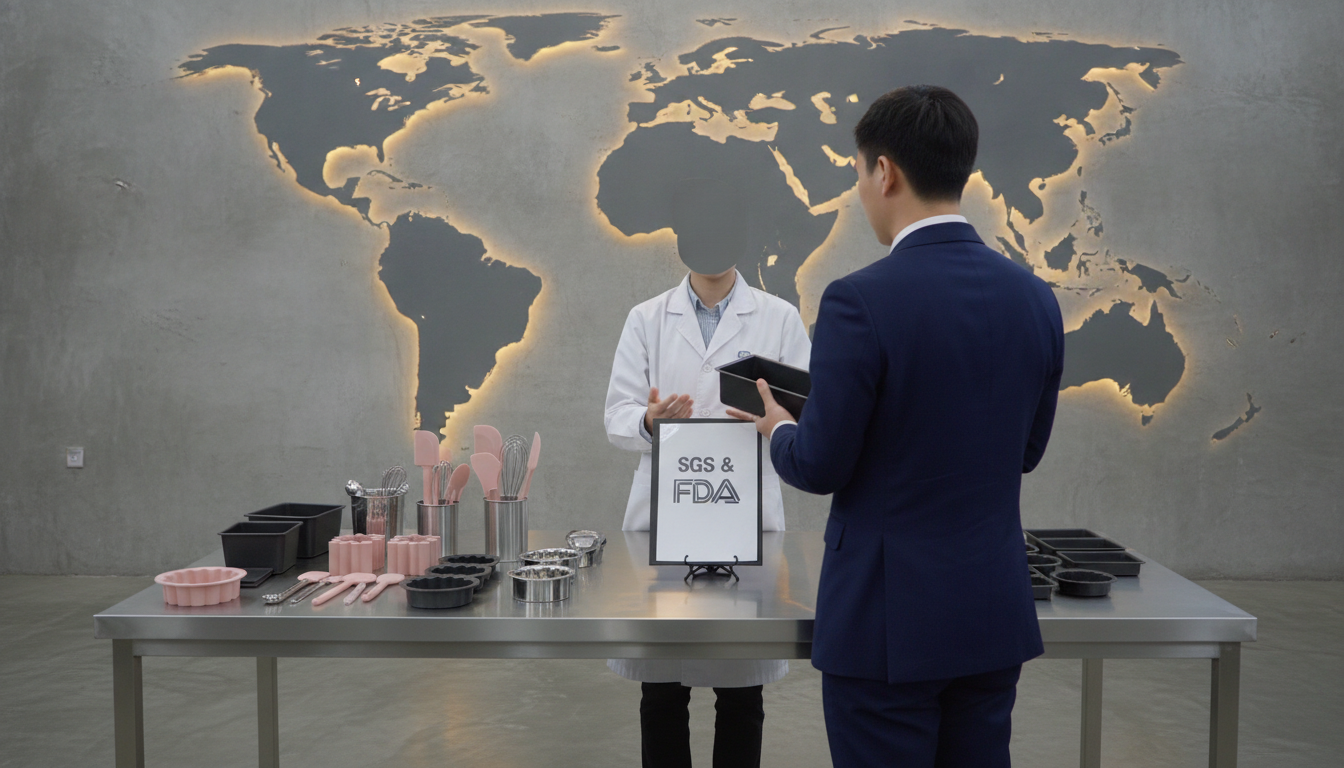
Verify certifications (SGS, FDA food-grade, PFAS-free), request a factory video tour, and order a 1-piece sample before bulk commitment. Check that the factory has multiple in-house lines-not just trading-to control quality. Confirm container loading experience to your port. A supplier offering 1-piece MOQ with 7-10 day sampling gives you a low-risk entry point.
Ready to source your first baking tools set wholesale to Nigeria?
Request 1-Piece Samples Now →
Browse OEM-ready bakeware from Shansen (SGS / FDA / PFAS-free / Pb-free, MOQ 1-50):